

Cybersecurity professionals across Canada are increasingly embracing remote work arrangements, with 87% of organizations now offering permanent work-from-home options for their IT security teams. This shift reflects the digital transformation of security operations, powered by cloud-based tools, secure VPNs, and advanced monitoring systems that enable effective threat detection and response from any location. Leading Canadian firms like TD Bank and Shopify have successfully transitioned their cybersecurity operations to hybrid models, demonstrating that critical security functions—from incident response to vulnerability assessment—can be performed remotely without compromising organizational safety. For business leaders evaluating remote cybersecurity roles, the key lies in implementing robust infrastructure, clear security protocols, and effective communication channels while ensuring compliance with Canadian data protection regulations. With proper systems in place, remote cybersecurity work not only enhances operational flexibility but also expands access to top talent across the country’s diverse technological landscape.
The Rise of Remote Cybersecurity Roles in Canadian Digital HR

Current Market Demand
The Canadian cybersecurity job market shows robust demand for remote workers, with major companies like TD Bank, RBC, and Shopify leading the way in offering flexible work arrangements. Recent data from the Canadian Centre for Cyber Security indicates that over 60% of cybersecurity positions now offer remote or hybrid options, a significant increase from pre-2020 levels.
Toronto-based cybersecurity expert Sarah Thompson notes, “Companies are increasingly recognizing that security monitoring, threat analysis, and incident response can be effectively managed remotely with proper infrastructure.” This shift has opened opportunities across provinces, allowing organizations to tap into talent pools beyond major urban centers.
The demand is particularly strong in sectors like financial services, healthcare, and government institutions. Statistics Canada reports a 21% year-over-year increase in remote cybersecurity job postings, with competitive salaries averaging $95,000 to $140,000 annually. This trend is expected to continue as organizations strengthen their digital security measures while embracing flexible work models.
Skills Required for Remote Cybersecurity Positions
Successful remote cybersecurity professionals combine technical expertise with essential soft skills. Technical requirements typically include proficiency in network security, cloud platforms, encryption protocols, and security information and event management (SIEM) tools. Knowledge of programming languages like Python and familiarity with common cybersecurity frameworks are also valuable.
Equally important are soft skills that enable effective remote work. Strong written and verbal communication abilities are crucial for collaborating with team members and explaining complex security concepts to stakeholders. Self-discipline, time management, and the ability to work independently are essential for maintaining productivity outside the office environment.
Problem-solving skills and adaptability are particularly vital, as remote security professionals must respond quickly to emerging threats. Canadian cybersecurity leaders emphasize the importance of continuous learning, as the field evolves rapidly. Additionally, remote workers should be comfortable using collaboration tools and maintaining secure home office setups that meet organizational security standards.
Implementation Challenges and Solutions
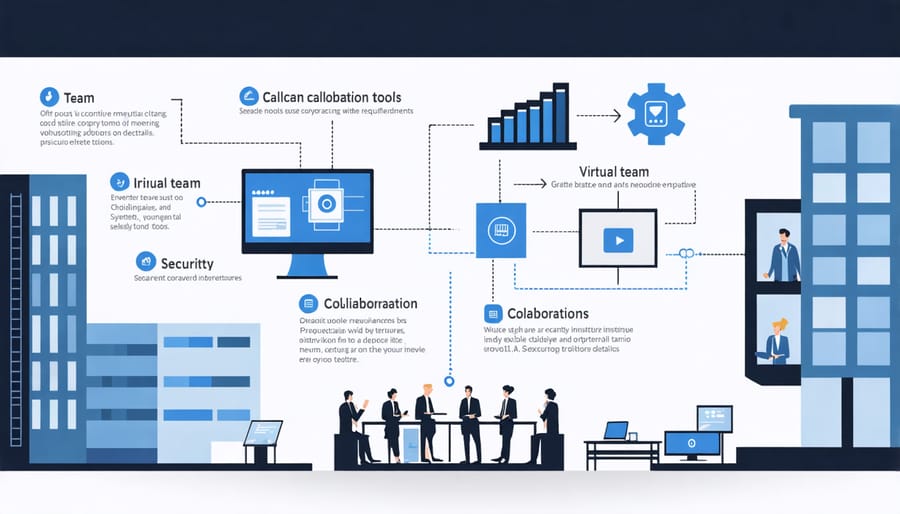
Security Infrastructure Requirements
To effectively work in cybersecurity from home, professionals need a robust technical infrastructure that meets industry standards. Essential requirements include a dedicated workspace with a secure, high-speed internet connection (minimum 100 Mbps), and a company-provided or approved laptop with updated security software. Virtual Private Networks (VPNs) and multi-factor authentication are non-negotiable elements to address common remote work security challenges.
Canadian organizations typically require remote cybersecurity staff to maintain encrypted communication channels, secure file storage systems, and backup solutions. A reliable UPS (Uninterruptible Power Supply) ensures continuous operation during power disruptions. Additional hardware requirements often include dual monitors, encrypted external drives, and hardware security keys.
IT leaders at major Canadian firms emphasize the importance of implementing endpoint detection and response (EDR) solutions on all remote devices. Regular security audits and compliance checks ensure that home office setups maintain the same level of security as corporate environments. This infrastructure investment demonstrates a company’s commitment to maintaining security standards while supporting flexible work arrangements.
Team Collaboration Strategies
Successful remote cybersecurity teams rely heavily on structured communication and collaboration tools. Leading Canadian organizations have found that implementing effective remote work strategies specifically tailored for security operations is crucial. Regular virtual stand-ups, secure communication channels, and clearly defined escalation procedures help maintain operational efficiency.
Industry leaders recommend using encrypted collaboration platforms, shared documentation systems, and automated workflow tools to streamline team interactions. Many Canadian enterprises have adopted a hybrid approach, combining scheduled in-person meetings for critical planning sessions with daily remote operations.
Security teams should establish clear protocols for incident response, including designated communication channels and backup contact methods. Regular team training sessions, virtual workshops, and knowledge-sharing meetings help maintain skill levels and team cohesion. Additionally, implementing collaborative threat intelligence platforms enables real-time information sharing and coordinated response efforts across remote team members.
To ensure accountability, managers should set clear performance metrics, maintain regular one-on-one check-ins, and create opportunities for team members to showcase their contributions and innovations.
Benefits for Canadian Enterprises
Cost Efficiency and Productivity
Remote cybersecurity work arrangements offer significant cost benefits for both employers and employees. Canadian organizations can reduce overhead expenses by minimizing office space requirements, utilities, and facility maintenance costs. Companies report saving an average of $10,000 per employee annually through remote work arrangements.
For employees, the elimination of commuting expenses and reduced work wardrobe costs contribute to substantial personal savings. Studies show that remote cybersecurity professionals save approximately 2-3 hours daily in commute time, which translates to increased productivity and better work-life balance.
Remote cybersecurity teams often demonstrate higher productivity levels due to fewer workplace distractions and flexible scheduling. According to the Canadian Centre for Cyber Security, organizations implementing remote security operations have reported a 20-30% increase in incident response efficiency.
Toronto-based cybersecurity firm SecureWorks found that their remote security analysts handle 25% more cases per day compared to office-based counterparts. This productivity boost stems from improved focus, better tools integration, and the ability to work during optimal hours. Additionally, organizations can access a broader talent pool across Canada without geographical limitations, leading to more diverse and skilled security teams.
Talent Acquisition and Retention
Remote work has become a powerful tool for organizations to attract and retain top cybersecurity talent. Companies offering flexible work arrangements often report higher success rates in their talent retention strategies, particularly in the competitive cybersecurity sector.
Canadian organizations leveraging remote work options have seen a significant expansion in their talent pool, enabling them to recruit specialists from across the country. This geographical flexibility has proven especially valuable for businesses in smaller markets competing for skilled professionals against major tech hubs like Toronto and Vancouver.
According to the Canadian Centre for Cyber Security, organizations offering remote work arrangements report up to 40% higher retention rates among cybersecurity professionals. This advantage stems from improved work-life balance, reduced commute times, and the ability to create customized work environments.
Moreover, remote work options have helped Canadian businesses attract international talent while maintaining competitive salary structures. This approach has been particularly effective for start-ups and mid-sized companies looking to build robust cybersecurity teams without the overhead costs associated with traditional office setups.
Future Outlook and Recommendations
Emerging Trends
The landscape of remote cybersecurity work continues to evolve rapidly, with several key trends shaping the future of this field. Canadian organizations are increasingly adopting AI-powered security tools that can be managed remotely, enabling security professionals to monitor and respond to threats from any location.
Cloud-based security operations centers (SOCs) are becoming more prevalent, allowing teams to collaborate effectively across different time zones and locations. This shift has led to the rise of “virtual SOCs,” where entire security operations can be managed remotely with the same efficiency as traditional on-site setups.
The adoption of zero-trust security frameworks has made remote work more secure and feasible for cybersecurity professionals. Organizations are investing in advanced authentication systems and secure access solutions that enable their security teams to work remotely while maintaining the highest security standards.
Another emerging trend is the increase in hybrid work models, where cybersecurity teams split their time between office and remote locations. This flexibility is particularly attractive to Canadian companies dealing with vast geographical distances and diverse talent pools across provinces.
Looking ahead, experts predict that remote cybersecurity roles will continue to grow, supported by advances in automation, artificial intelligence, and collaborative technologies. Companies are also developing specialized training programs specifically designed for remote security teams, ensuring consistent skill development and team cohesion in virtual environments.

Implementation Roadmap
Successfully transitioning to remote cybersecurity teams requires a structured approach and careful planning. Here’s a practical roadmap for Canadian organizations:
Begin with a thorough assessment of your current security infrastructure and identify gaps that need addressing for remote work. Establish secure VPN connections and implement multi-factor authentication as foundational elements.
Next, develop clear remote work policies that outline security protocols, communication standards, and performance expectations. Create detailed documentation for remote access procedures and emergency response plans.
Invest in appropriate tools and technologies, including secure collaboration platforms, endpoint protection solutions, and monitoring systems. Canadian companies like eSentire have successfully implemented these remote security frameworks, demonstrating their effectiveness.
Train your team thoroughly on remote security practices and tools. Schedule regular virtual training sessions and provide ongoing support resources. According to the Canadian Centre for Cyber Security, continuous training significantly reduces security incidents in remote settings.
Implement a phased transition approach:
– Phase 1: Pilot program with select team members
– Phase 2: Gradual expansion to more staff
– Phase 3: Full implementation with regular assessment
– Phase 4: Continuous improvement and adaptation
Monitor performance metrics and security indicators closely during the transition. Establish regular check-ins and feedback mechanisms to address challenges promptly. Remember to maintain compliance with Canadian privacy laws and industry regulations throughout the process.
Cybersecurity professionals can indeed thrive in remote work environments, as demonstrated by successful Canadian companies embracing this model. The key to success lies in implementing proper security protocols, maintaining clear communication channels, and utilizing appropriate technology infrastructure. Organizations considering remote cybersecurity positions should focus on establishing robust policies, investing in secure remote access tools, and developing comprehensive training programs. By following industry best practices and maintaining compliance with Canadian regulations, businesses can effectively support remote cybersecurity teams while ensuring optimal protection of their digital assets. Whether you’re a business leader or cybersecurity professional, the shift toward remote work presents exciting opportunities to enhance organizational security while offering valuable work-life balance benefits. Take the first step by assessing your organization’s readiness and developing a strategic plan for remote cybersecurity implementation.