

Secure startup funding in Canada’s competitive landscape through proven smart financing strategies for startups that maximize your chances of success. From angel investors to government grants, Canadian entrepreneurs now have more funding options than ever before – yet 82% of startups fail due to cash flow problems. The key lies in matching the right funding source to your venture’s stage, industry, and growth trajectory.
Traditional equity financing through venture capital remains robust, with Canadian VC investments reaching $7.2 billion in 2022. However, emerging alternatives like crowdfunding platforms, revenue-based financing, and specialized government programs have democratized access to capital. Strategic entrepreneurs leverage multiple funding streams, combining equity and non-dilutive options to fuel growth while maintaining control.
For early-stage ventures, understanding these diverse funding landscapes isn’t just about securing capital – it’s about building sustainable growth foundations. This comprehensive guide explores proven funding pathways, qualification criteria, and practical steps to position your startup for investment success in the Canadian market.
Angel Investors in the Canadian Market

Finding and Approaching Canadian Angel Investors
To connect with Canadian angel investors, entrepreneurs should first leverage professional networks like the National Angel Capital Organization (NACO) and local angel investor groups. Start by perfecting your pitch deck and ensuring your business plan demonstrates clear market potential and scalability. When securing investment capital, research potential investors’ portfolios and investment preferences to ensure alignment with your venture.
Networking events, startup competitions, and innovation hubs provide excellent opportunities to meet angels face-to-face. Consider joining accelerator programs or incubators that have established relationships with angel networks. LinkedIn can be a valuable tool for identifying and connecting with potential investors, but ensure your approach is professional and well-researched.
Before approaching investors, prepare comprehensive financial projections, understand your valuation, and be ready to discuss your competitive advantage. Many successful Canadian startups have secured angel investment through pitch competitions and demo days organized by innovation centers and business associations. Remember to focus on building relationships rather than immediately asking for funding, as angels often invest in founders as much as ideas.
What Canadian Angels Look For
Canadian angel investors typically seek startups with strong growth potential and a clear path to profitability. These investors prioritize teams with proven track records, deep industry knowledge, and the ability to execute their business plans effectively.
Most angels look for companies that have achieved initial market validation through early customer adoption or revenue generation. They expect startups to demonstrate a thorough understanding of their target market, competitive landscape, and unique value proposition.
A well-developed minimum viable product (MVP) and scalable business model are crucial factors. Angels want to see that founders have invested their own time and resources into the venture, showing genuine commitment and skin in the game.
According to the National Angel Capital Organization (NACO), Canadian angels particularly value startups that show potential for significant market expansion, both domestically and internationally. They typically invest between $25,000 and $150,000 per deal, though amounts can vary.
Key expectations include:
– Clear exit strategy
– Strong intellectual property protection
– Realistic valuation
– Transparent financial projections
– Effective governance structure
– Regular reporting and communication
Many Canadian angels also prefer companies eligible for government incentives and tax credits, maximizing the potential return on investment.
Venture Capital Opportunities
Notable Canadian VC Firms
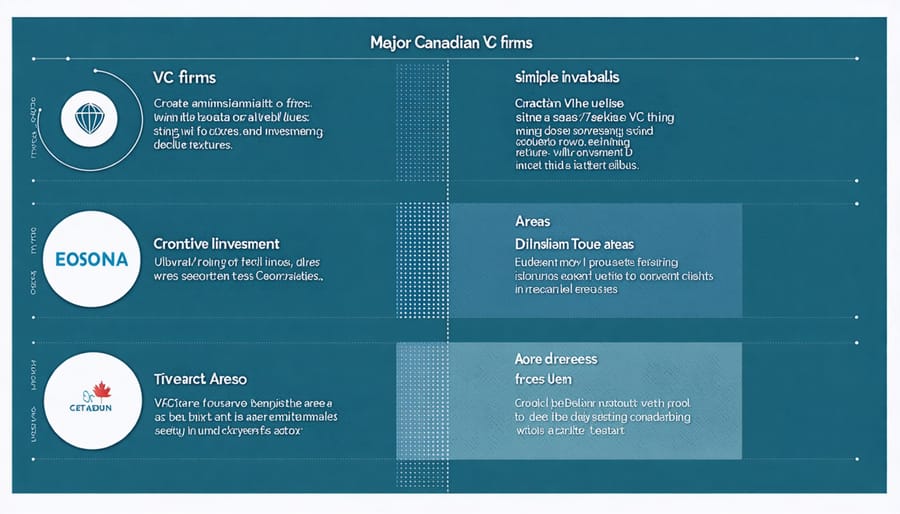
Canada’s venture capital landscape has evolved significantly, with several prominent firms leading the charge in startup funding. As emerging venture capital trends reshape the investment landscape, these firms continue to adapt and innovate.
OMERS Ventures, based in Toronto, stands out for its focus on Series A and B investments in technology companies, particularly in fintech, healthcare, and enterprise software. With a track record including Shopify and Hootsuite, they typically invest between $5-25 million per round.
Real Ventures, headquartered in Montreal, specializes in early-stage investments and has built a reputation for supporting pre-seed and seed-stage startups. Their portfolio includes successful companies like Element AI and League, with investments typically ranging from $500,000 to $2 million.
Inovia Capital, another major player, manages over $1.5 billion in assets and focuses on both early and growth-stage technology companies. They’re known for investments in Lightspeed and Vidyard, offering funding from seed to growth stages.
Georgian Partners distinguishes itself through its focus on software companies utilizing artificial intelligence and applied analytics. Their typical investment range is $10-50 million, targeting companies with established product-market fit and recurring revenue.
These firms not only provide capital but also offer valuable mentorship, industry connections, and operational expertise to help startups scale successfully in the Canadian ecosystem and beyond.
Securing VC Investment
Securing venture capital investment requires careful preparation and a strategic approach. Canadian startups seeking VC funding must first ensure they have a compelling business plan, demonstrable market potential, and a strong founding team. According to the Canadian Venture Capital Association, investors typically look for scalable businesses with potential for significant returns within 5-7 years.
To attract VC interest, startups should focus on developing a clear value proposition and maintaining detailed financial projections. Successful Canadian companies like Shopify and Hootsuite secured early-stage VC funding by demonstrating innovative solutions to market problems and showing strong growth metrics.
The typical process involves several stages:
– Initial pitch or introduction through warm referrals
– Due diligence review
– Term sheet negotiation
– Final investment agreement
“VCs invest in teams as much as ideas,” notes Sarah Wilson, partner at Toronto-based Round13 Capital. “We look for founders who understand their market deeply and can execute effectively.”
Before approaching VCs, startups should:
– Perfect their pitch deck
– Prepare detailed financial models
– Build a compelling prototype or MVP
– Establish key performance indicators
– Research potential investors thoroughly
Most Canadian VCs prefer Series A investments ranging from $2-10 million, though some participate in earlier seed rounds. Successful deals often involve syndication with multiple investors, providing additional networking opportunities and expertise for growing startups.
Government-Backed Equity Programs
Federal Investment Programs
The federal government offers several robust government funding programs designed to support Canadian startups through equity investments. The Strategic Innovation Fund (SIF) provides significant capital contributions to innovative enterprises, while the Industrial Research Assistance Program (IRAP) combines funding with expert guidance for technology-driven ventures.
The Business Development Bank of Canada (BDC) stands as a cornerstone investor for early-stage companies, offering equity investments ranging from $250,000 to $35 million. Their specialized cleantech and deep tech funds target ventures developing breakthrough solutions in strategic sectors.
Export Development Canada (EDC) provides equity support for startups with international growth potential, focusing particularly on companies that can strengthen Canada’s export capabilities. The Scientific Research and Experimental Development (SR&ED) program, while not direct equity funding, offers tax incentives that can help preserve equity during crucial development phases.
Success stories like Shopify and Lightspeed have benefited from these federal initiatives, demonstrating the potential impact of government-backed investment in scaling Canadian innovations.
Provincial Support Options
Each Canadian province offers unique funding programs tailored to support local startups and entrepreneurs. Ontario’s Investment Accelerator Fund provides up to $500,000 in seed funding for innovative technology companies, while British Columbia’s Small Business Venture Capital Program offers tax credits to investors supporting eligible businesses.
Quebec entrepreneurs can access Investissement Québec’s startup funding initiatives, which provide both equity investments and loan guarantees. In Alberta, the Alberta Enterprise Corporation partners with venture capital firms to increase access to growth capital for technology companies.
Atlantic Canada’s regional development agencies offer specialized funding through programs like the Atlantic Innovation Fund, supporting companies in sectors such as ocean technology and clean energy. Saskatchewan and Manitoba provide tax incentives and matching funds through their respective provincial business development banks.
Notable success stories include Toronto-based Shopify, which received early-stage support from Ontario’s investment programs before becoming a global e-commerce leader. These provincial programs often complement federal funding options and can be combined with other financing sources to create comprehensive funding packages for growing businesses.
Alternative Equity Financing Methods
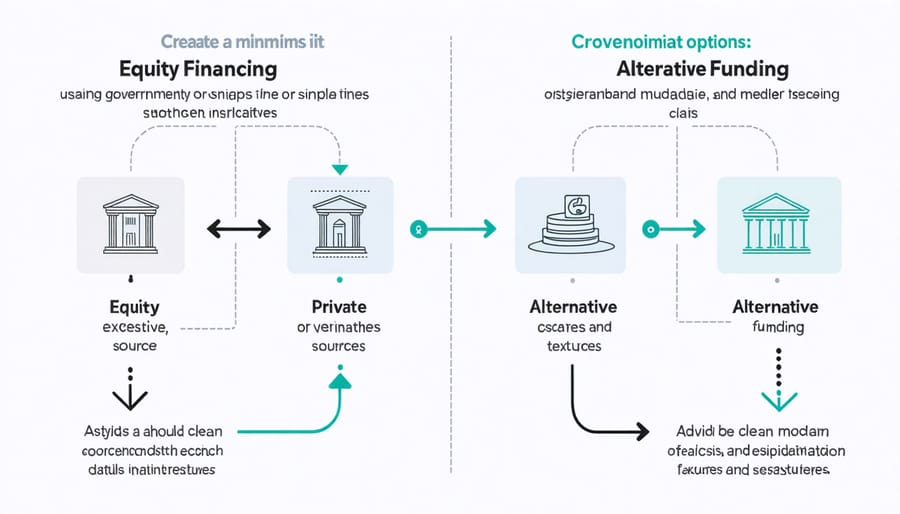
The startup funding landscape continues to evolve, offering entrepreneurs innovative ways to secure equity financing beyond traditional venture capital. Revenue-based financing has gained significant traction in Canada, where companies like Clearco (formerly Clearbanc) provide capital in exchange for a percentage of future revenue rather than equity.
Equity crowdfunding platforms have emerged as another viable option, with Canadian platforms like FrontFundr enabling startups to raise capital from retail investors. This democratized approach allows companies to build a community of brand advocates while securing necessary funding. Toronto-based Wave Financial successfully leveraged equity crowdfunding before its eventual acquisition for $405 million in 2019.
Token offerings and security token offerings (STOs) represent emerging alternatives in the Canadian market, providing blockchain-based investment vehicles that comply with securities regulations. These options offer increased liquidity and fractional ownership opportunities for investors.
Strategic corporate partnerships have also become increasingly popular, with established companies creating venture arms to invest in promising startups. For example, TD Bank’s TD Ventures actively invests in fintech startups, providing both capital and strategic support.
Angel syndicates and micro-funds present another alternative, pooling resources from multiple investors to provide more substantial funding while reducing individual risk. Networks like Angels of the North have successfully funded numerous Canadian startups through this model.
These alternative methods often offer more flexible terms and additional strategic benefits compared to traditional equity financing, making them attractive options for Canadian entrepreneurs seeking growth capital.
Securing funding for your startup requires careful consideration of multiple options and strategic planning. From traditional bank loans to venture capital, angel investors, and government grants, Canadian entrepreneurs have diverse funding pathways available. Remember to thoroughly evaluate each option’s requirements, terms, and long-term implications for your business. Start by developing a comprehensive business plan, maintaining detailed financial records, and building strong networking relationships within your industry. Consider beginning with smaller funding sources like accelerators or angel investors before pursuing larger investments. Take advantage of Canada’s supportive startup ecosystem, including innovation hubs and mentorship programs. By taking calculated steps and remaining persistent in your funding journey, you can position your startup for success while maintaining the right balance of control and growth potential.