

Solar panel costs in Virginia average $2.75 per watt in 2024, translating to $16,500-$23,000 for a typical 6-10kW residential system before incentives. Virginia homeowners recover their solar investment within 8-12 years through substantial energy savings, federal tax credits, and net metering programs. The state’s growing solar market, combined with decreasing equipment costs and rising electricity rates, creates an opportune moment for property owners to invest in solar technology.
Residential solar installations in Virginia have surged 40% since 2020, driven by the federal solar tax credit covering 30% of system costs and Virginia’s progressive clean energy policies. Local installers report increasing demand across Richmond, Northern Virginia, and Virginia Beach metropolitan areas, with commercial installations showing particularly strong growth in 2024.
For maximum return on investment, Virginia property owners should evaluate their roof orientation, local utility rates, and available incentive programs before committing to solar installation. Professional energy audits typically reveal potential savings of 20-30% on monthly electricity costs, making solar an increasingly attractive investment for both residential and commercial properties.
Current Solar Panel Costs in Virginia
Average Installation Costs
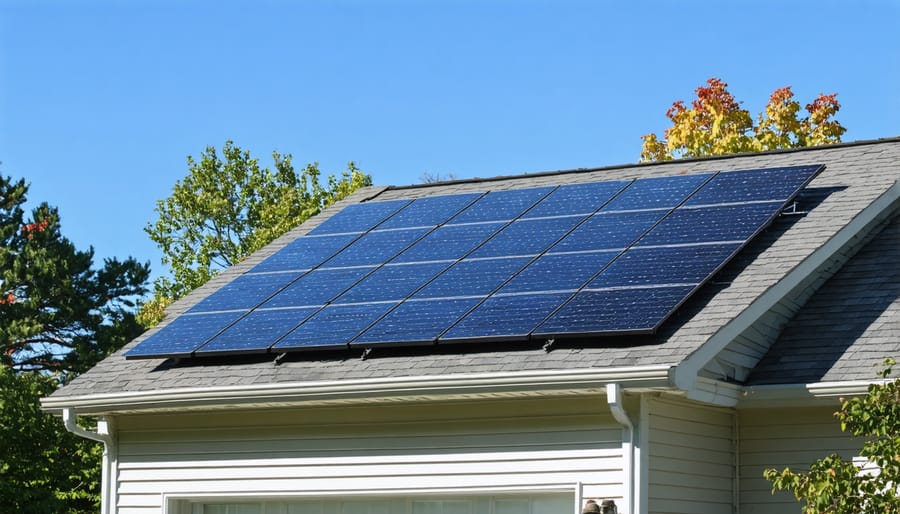
In Virginia, residential solar panel installations currently average between $2.65 and $3.15 per watt, making the typical 6kW system cost approximately $15,900 to $18,900 before incentives. These installation costs for businesses and homeowners can vary significantly based on factors such as system size, equipment quality, and installation complexity.
A breakdown of costs shows that equipment typically accounts for 60% of the total investment, with solar panels ranging from $5,000 to $8,000, inverters costing $1,000 to $2,000, and mounting hardware adding another $500 to $1,000. Labor and installation expenses make up the remaining 40%, averaging $5,000 to $7,000 depending on roof accessibility and local contractor rates.
Comparing these figures to previous years, Virginia has seen a steady decline in solar installation costs, with prices dropping approximately 3-4% annually over the past five years. This trend aligns with the broader national pattern of decreasing solar costs, making renewable energy increasingly accessible to Virginia residents.
When factoring in the federal solar tax credit of 30%, homeowners can reduce their net costs significantly. Additional local incentives and utility company rebates can further decrease the final investment, potentially bringing the total cost down to $11,000-$13,000 for a standard residential system.
Equipment and Material Costs
In Virginia, solar panel equipment costs typically range from $2.50 to $3.50 per watt, with most residential systems requiring between 6kW to 10kW capacity. For a standard 8kW system, equipment costs usually total $20,000 to $28,000 before incentives.
The primary components include:
– Solar Panels: $1.00 to $1.50 per watt ($8,000-$12,000 for 8kW)
– Inverters: $0.70 to $1.00 per watt ($5,600-$8,000)
– Mounting Hardware: $0.40 to $0.50 per watt ($3,200-$4,000)
– Balance of System Components: $0.40 to $0.50 per watt ($3,200-$4,000)
High-efficiency monocrystalline panels from premium manufacturers like SunPower or LG typically cost more but offer better performance and longer warranties. More affordable options from Canadian Solar or Jinko Solar provide reliable performance at lower price points.
Microinverters or power optimizers, while more expensive than string inverters, can increase system efficiency and provide better monitoring capabilities. Quality mounting hardware ensures system durability, particularly important in Virginia’s varied weather conditions.
Many suppliers offer package deals that bundle equipment components, potentially reducing overall costs by 10-15%. Working with certified installers who maintain relationships with multiple manufacturers can help secure better pricing while ensuring quality installations.
Cost Comparison: Virginia vs British Columbia
Market Differences
The solar market in Virginia presents distinct characteristics when compared to solar panel costs in British Columbia and other regions. Virginia’s market has experienced significant growth in recent years, driven by increased competition among installers and improved supply chain efficiencies. The state’s solar industry benefits from established distribution networks and partnerships with major manufacturers, contributing to more competitive pricing.
Local market dynamics play a crucial role in cost variations. Virginia’s solar market features a robust mix of national installers and regional companies, creating healthy competition that helps maintain reasonable prices. The presence of multiple distributors and warehousing facilities throughout the state reduces transportation costs and ensures steady equipment availability.
Supply chain relationships in Virginia have matured significantly, with installers maintaining strong connections to both domestic and international manufacturers. This market maturity translates to more predictable pricing and better warranty support for consumers. The state’s strategic location along the Eastern Seaboard also facilitates efficient import operations through major ports, reducing logistics costs.
Market competition has led to innovative financing options and service packages, giving Virginia residents more choices when investing in solar energy. Installers frequently offer comprehensive maintenance plans and production guarantees, adding value beyond the initial installation. The market’s maturity is also reflected in the standardization of installation practices and quality control measures, ensuring consistent service delivery across different providers.
These market conditions create a stable environment for solar investments, though prices can still vary based on specific location, system size, and chosen equipment quality.
Regulatory Impact
Virginia’s regulatory landscape significantly influences solar panel costs through various policies and incentives. The state’s Solar Freedom Act of 2020 has streamlined the permit process, reducing installation timeframes and associated costs. Homeowners can benefit from net metering policies, allowing them to sell excess power back to the grid, effectively lowering their long-term investment costs.
Similar to clean energy initiatives in Canada, Virginia’s renewable portfolio standard (RPS) drives market growth and affects pricing. The Virginia Clean Economy Act mandates 100% clean energy by 2045, creating a stable market environment that encourages competitive pricing from suppliers and installers.
Local building codes and zoning regulations can impact installation costs, with some jurisdictions requiring specific safety measures or structural modifications. However, Virginia’s standardized solar permit requirements help maintain consistent pricing across different counties. The state’s property tax exemption for solar installations provides additional financial relief, though rates vary by municipality.
Federal regulations also play a crucial role, particularly through the Investment Tax Credit (ITC), which allows Virginia residents to deduct 30% of their solar system costs from federal taxes. Recent policy updates have extended these benefits, making solar installations more financially attractive for property owners.
Understanding these regulatory factors is essential for calculating the true cost of solar installation, as incentives and requirements can vary significantly between different Virginia jurisdictions and may change annually based on policy updates.
Financial Incentives and Support
Virginia Solar Incentives
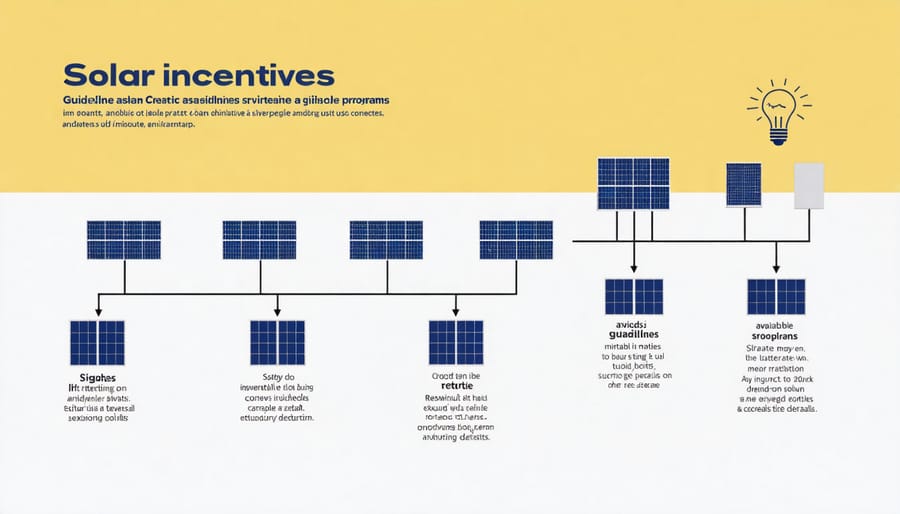
Virginia offers several attractive incentives that can significantly enhance your return on solar investment. The federal Solar Investment Tax Credit (ITC) remains the most substantial benefit, allowing property owners to claim 30% of their solar installation costs through 2032. This credit applies to both residential and commercial installations.
At the state level, Virginia provides a property tax exemption for solar installations, meaning your property taxes won’t increase despite the added value solar panels bring to your property. The net metering program enables solar system owners to receive credits for excess energy produced, effectively reducing their utility bills.
The Solar Freedom program, introduced under Virginia’s Clean Economy Act, has expanded access to solar energy by removing restrictive HOA solar regulations and simplifying the interconnection process. Additionally, commercial property owners can access C-PACE financing, which provides low-interest loans specifically for clean energy improvements.
Some local utilities offer additional incentives. Dominion Energy’s Solar Purchase Program pays customers for their solar generation, while specific counties provide supplementary tax incentives and grants. These combined incentives can reduce your initial investment by 40-50%, making solar installation particularly attractive for Virginia property owners.
Keep in mind that incentive programs and rates may change, so consulting with local solar providers for the most current offerings is recommended.
BC Solar Incentives
The Canadian government and British Columbia offer several attractive incentives to make solar panel installation more accessible. The federal Greener Homes Grant provides up to $5,000 for solar PV system installations, while BC Hydro’s Net Metering program allows homeowners to earn credits for excess energy production.
BC’s CleanBC Better Homes program offers additional rebates of up to $2,000 for residential solar installations, which can be combined with federal incentives. Commercial property owners can benefit from the Capital Cost Allowance (CCA) program, allowing accelerated depreciation of solar investments at a rate of 30% per year.
Many municipalities across BC provide supplementary incentives. For example, Vancouver offers building permit fee reductions for solar installations, while Victoria provides property tax exemptions for clean energy improvements.
The Indigenous Clean Energy (ICE) initiative supports First Nations communities with funding up to 75% of project costs for renewable energy installations. Additionally, the BC Indigenous Clean Energy Initiative (BCICEI) provides targeted support for Indigenous-led clean energy projects.
Local financial institutions offer green loans and special financing options for solar installations, with interest rates as low as 4.99%. Business owners can also access the Canada Small Business Financing Program, which covers up to 90% of equipment and installation costs.
Remember to consult with certified solar installers and financial advisors to maximize available incentives and ensure compliance with program requirements.
Installing solar panels in Virginia represents a significant but worthwhile investment, with average costs ranging from $15,000 to $25,000 for a typical residential system. The actual cost varies based on system size, installation complexity, and equipment quality. Virginia residents benefit from several financial incentives, including the federal Investment Tax Credit (ITC), which currently offers a 30% tax credit on installation costs.
When comparing Virginia’s solar market to other regions, it’s important to note that local factors such as labor costs, permit fees, and utility rates significantly influence the final price. Virginia’s moderate electricity rates and abundant sunshine make solar installations increasingly attractive, offering payback periods typically between 8-12 years.
To maximize your solar investment in Virginia, consider these key takeaways:
First, obtain multiple quotes from reputable installers to ensure competitive pricing. Research shows that homeowners who compare at least three quotes often save 10-15% on installation costs.
Second, take full advantage of available incentives. Beyond the federal ITC, explore local utility rebates and net metering programs that can significantly reduce your initial investment and improve long-term returns.
Third, timing matters. Planning your installation during off-peak seasons (late fall or winter) might result in better pricing and more flexible installation schedules.
Fourth, consider your roof’s condition and orientation. South-facing roofs typically generate optimal solar production, while roofs in good condition avoid costly repairs during installation.
Finally, evaluate your energy consumption patterns and size your system accordingly. Working with certified installers who provide detailed energy assessments ensures your system meets your specific needs while maximizing cost-effectiveness.
By carefully considering these factors and working with qualified professionals, Virginia homeowners can make informed decisions about their solar investments. The growing solar market in Virginia, combined with decreasing equipment costs and generous incentives, makes now an opportune time to transition to solar energy.