

Generation Z is reshaping workplace diversity and inclusion with unprecedented expectations that extend far beyond traditional compliance measures. Born between 1997 and 2012, this generation represents over 30% of Canada’s workforce by 2025, bringing distinct values that demand immediate attention from business leaders.
Unlike previous generations, Gen Z views diversity as non-negotiable rather than aspirational. They expect tangible action on racial equity, LGBTQ2S+ inclusion, accessibility, and mental health support embedded into daily operations, not just corporate statements. Research shows 77% of Gen Z candidates actively research a company’s diversity record before accepting job offers, making inclusion a direct competitive advantage in talent acquisition.
Canadian businesses face a critical choice: evolve workplace practices now or risk losing top emerging talent to competitors who understand this shift. Gen Z employees openly discuss salary expectations, challenge inequitable practices, and leverage social media to hold employers accountable. This transparency creates both pressure and opportunity for organizations willing to move beyond performative diversity initiatives.
The financial imperative is clear. Companies with strong diversity practices report 36% higher profitability and significantly improved innovation outcomes. For Canadian business owners navigating tight labor markets, meeting Gen Z’s inclusion standards isn’t simply ethical leadership—it’s essential business strategy. Organizations that authentically integrate diverse perspectives, create psychologically safe environments, and demonstrate measurable progress on equity goals will capture this generation’s talent, loyalty, and innovative potential. Those that don’t will find themselves increasingly irrelevant in tomorrow’s marketplace.
The Gen Z Difference: What Sets This Generation Apart
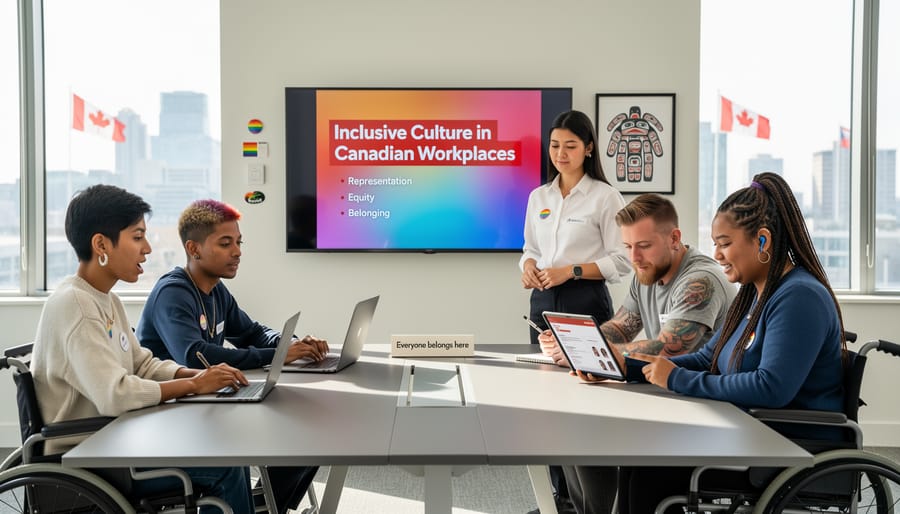
Demographics Driving Change
Gen Z represents the most diverse generation in Canadian history, with Statistics Canada data showing that approximately 45% of Gen Z Canadians identify as visible minorities, compared to 22% of the overall population. This demographic shift is transforming workplace expectations across the country. By 2025, Gen Z will comprise nearly 30% of the Canadian workforce, bringing unprecedented diversity in ethnicity, sexual orientation, and gender identity.
According to research from the Diversity Institute at Toronto Metropolitan University, 78% of Gen Z workers consider workplace diversity and inclusion policies essential when evaluating potential employers. This generation expects authentic commitment to equity rather than token gestures. Expert Sarah Kaplan, Director of the Institute for Gender and the Economy, notes that Gen Z employees actively seek organizations where diverse perspectives shape decision-making at all levels.
Canadian businesses are responding to these expectations. Shopify has implemented comprehensive diversity reporting and inclusive hiring practices, while Deloitte Canada has expanded its diversity recruitment programs specifically targeting Gen Z talent. These demographic realities mean that companies unable to demonstrate genuine commitment to diversity and inclusion will struggle to attract and retain top young talent in an increasingly competitive market.
Values That Matter Most
Gen Z employees prioritize D&I core values that extend beyond traditional diversity metrics. Authenticity ranks highest among this generation’s workplace expectations. They demand genuine commitment to inclusion rather than performative gestures, quickly identifying organizations that treat diversity initiatives as checkbox exercises.
Equity represents another foundational value. Gen Z distinguishes between equality and equity, insisting that workplaces address systemic barriers and provide tailored support where needed. They expect transparent pay structures, accessible career advancement opportunities, and leadership accountability for measurable diversity outcomes.
Mental health support has become non-negotiable. This generation openly discusses psychological well-being and expects employers to provide comprehensive mental health resources, flexible work arrangements, and psychologically safe environments free from discrimination.
Inclusive leadership completes their value framework. Gen Z seeks leaders who actively listen, demonstrate cultural competence, and empower diverse voices in decision-making processes. According to workplace culture experts, Canadian organizations embracing these values report higher Gen Z retention rates and stronger employer brand reputation. Understanding these priorities helps businesses create environments where diverse talent thrives and contributes meaningfully to organizational success.
Corporate Social Responsibility Meets Workforce Expectations
From Checkbox Exercise to Strategic Imperative
The diversity and inclusion landscape has undergone a dramatic transformation in recent years, largely driven by Gen Z’s arrival in the workforce. Where previous generations often accepted surface-level diversity initiatives—token hires, annual awareness months, or generic training sessions—Gen Z demands substantive, measurable change integrated into core business operations.
This generational shift has forced Canadian organizations to rethink their approach entirely. Shopify’s Chief Talent Officer, Jennifer Ceran, notes that “Gen Z candidates scrutinize our diversity metrics as closely as our compensation packages. They want evidence, not promises.” This scrutiny extends beyond recruitment to encompass supplier diversity, leadership representation, and community investment.
Progressive Canadian companies are responding by embedding diversity into their CSR initiatives, creating accountability structures that Gen Z respects. TD Bank, for instance, now publishes quarterly diversity dashboards and ties executive compensation to inclusion targets. Similarly, Vancouver-based Lululemon has integrated equity metrics into their annual sustainability reporting, treating diversity with the same rigour as environmental goals.
The transition from performative diversity to strategic imperative represents more than policy updates. It requires fundamental shifts in corporate culture, transparent communication, and willingness to address systemic barriers. Organizations that embrace this evolution position themselves as employers of choice for Canada’s emerging workforce, while those clinging to checkbox exercises risk irrelevance in an increasingly competitive talent market.
The ROI of Authentic Inclusion
Authentic inclusion delivers measurable returns that strengthen your competitive position. Companies with robust diversity and inclusion programs see 19% higher innovation revenue and 2.3 times higher cash flow per employee, according to recent research.
For Canadian businesses, Gen Z’s diversity expectations directly impact talent acquisition. Shopify, headquartered in Ottawa, attributes part of its recruitment success to transparent diversity reporting and inclusive workplace policies that resonate with younger candidates. The company’s commitment has helped attract top Gen Z talent in a competitive tech market.
Retention benefits are equally significant. When employees feel genuinely included, turnover drops by up to 50%. Toronto-based WealthSimple demonstrates this through employee resource groups and inclusive leadership training, resulting in stronger team cohesion and reduced hiring costs.
Innovation thrives in diverse environments. Different perspectives drive creative problem-solving and help identify new market opportunities. Vancouver’s Hootsuite leveraged diverse teams to expand into international markets more effectively, understanding cultural nuances that homogeneous teams might miss.
Market competitiveness increasingly depends on authentic inclusion. Gen Z consumers, who represent growing purchasing power, actively support brands demonstrating genuine commitment to diversity. Canadian businesses embracing these values position themselves to capture this demographic’s loyalty while building resilient, innovative organizations prepared for future challenges.
What Gen Z Expects From Canadian Employers
Transparent Diversity Data and Accountability
Gen Z employees expect organizations to demonstrate measurable commitment to diversity through transparent reporting and accountability mechanisms. Unlike previous generations who accepted corporate diversity statements at face value, this cohort demands concrete data, including workforce demographic breakdowns, pay equity analyses, and representation metrics across leadership levels.
Canadian companies leading this transparency movement are discovering competitive advantages. Shopify publicly shares diversity data and progress reports, setting industry standards that resonate with Gen Z talent. This openness extends beyond marketing—it requires robust corporate governance frameworks that embed accountability into organizational structures.
Business leaders should prepare for annual diversity audits and public reporting. According to HR experts, companies implementing transparent metrics experience higher Gen Z retention rates and stronger employer brand positioning. Pay equity reports, mandatory in some Canadian jurisdictions, represent minimum expectations rather than optional initiatives.
Smart organizations establish clear diversity targets with quarterly progress reviews. This data-driven approach aligns with Gen Z’s analytical mindset while demonstrating genuine commitment beyond performative statements. Transparency builds trust—the foundation of attracting and retaining Canada’s next generation workforce.

Inclusive Leadership and Decision-Making
Gen Z expects leadership teams that reflect the diversity of their workforce and society at large. This generation views representation at decision-making levels as a fundamental indicator of an organization’s commitment to equity. Research shows 77% of Gen Z candidates consider workplace diversity before accepting job offers, making inclusive leadership a competitive advantage for Canadian businesses.
Participatory workplace culture stands equally important to this demographic. Gen Z employees expect their voices to be heard regardless of position or tenure. They value transparent communication channels, regular feedback opportunities, and genuine consideration of their perspectives in strategic decisions. Toronto-based tech company Shopify exemplifies this approach by implementing cross-generational advisory councils where junior employees contribute to company-wide initiatives.
Business leaders should establish clear pathways for diverse talent advancement and create structured opportunities for employee input. Employee resource groups, mentorship programs connecting emerging leaders with executives, and regular town halls facilitate meaningful participation. According to workplace culture expert Sarah Saska, organizations that embrace collaborative decision-making see improved retention rates and innovation among Gen Z team members while strengthening their overall talent pipeline.
Beyond Gender and Ethnicity: Intersectional Inclusion
Gen Z views diversity through a multidimensional lens that extends far beyond traditional categories. This generation expects workplaces to actively support LGBTQ2S+ employees, implement comprehensive accessibility measures for people with disabilities, and recognize neurodiversity as a valuable asset rather than a limitation.
Toronto-based Shopify exemplifies this approach by offering gender-affirming healthcare benefits and creating neurodiversity hiring programs that tap into unique problem-solving abilities. The company’s inclusive practices have strengthened both innovation capacity and employee retention.
Canadian businesses should conduct accessibility audits of their physical and digital spaces, ensuring compliance with provincial human rights codes while going beyond minimum requirements. Consider implementing flexible work arrangements that accommodate various neurological profiles and establishing employee resource groups for underrepresented communities.
Addressing socioeconomic diversity matters equally. Progressive companies now offer skills-based hiring rather than degree requirements, removing barriers for talented individuals from diverse economic backgrounds. According to workplace inclusion expert Dr. Amira Hassan from York University, organizations that embrace intersectional inclusion see 35% higher engagement rates among Gen Z employees. This holistic approach creates environments where all employees can contribute their full potential.
Practical Strategies for Canadian Businesses
Audit Your Current State
Begin by conducting a comprehensive review of your current diversity and inclusion initiatives. Examine hiring data, employee demographics, retention rates across different groups, and promotion patterns over the past two years. Survey your Gen Z employees specifically about their experiences and perceptions of inclusivity within your organization.
Identify gaps between your current practices and Gen Z expectations. Are your diversity efforts visible and measurable? Do you have established mentorship programs or employee resource groups? Review your company communications, policies, and leadership composition to spot areas needing improvement.
Establish clear baseline metrics before implementing changes. Track diversity representation at all levels, employee satisfaction scores, and inclusion-related feedback. Canadian businesses like Shopify have successfully used data-driven approaches to measure progress, setting quarterly benchmarks for improvement.
Consider engaging a third-party consultant to provide objective assessment. Document your findings thoroughly and share results with leadership teams. This transparency demonstrates commitment to meaningful change and provides the foundation for developing targeted strategies that resonate with Gen Z values around authentic diversity and inclusion.
Build Inclusive Recruitment and Retention
Attracting and keeping Gen Z talent requires reimagining your entire hiring ecosystem. Start by diversifying your recruitment pipelines beyond traditional channels. Partner with Canadian universities, cultural organizations, and community groups to reach underrepresented candidates. Toronto-based tech company Shopify exemplifies this approach, actively recruiting from coding bootcamps and non-traditional education paths.
Craft inclusive job descriptions by removing gendered language, unnecessary degree requirements, and vague cultural fit statements. Focus on skills and potential rather than years of experience. Research shows Gen Z candidates scrutinize companies for authentic diversity commitments before applying.
Implement bias-free processes through structured interviews, diverse hiring panels, and blind resume reviews. Canadian HR expert Sarah Kaplan notes that “removing bias isn’t about lowering standards—it’s about evaluating talent fairly.” Consider using skills-based assessments to level the playing field.
Retention depends heavily on mentorship and growth opportunities. Establish formal mentorship programs pairing Gen Z employees with diverse leaders who can provide guidance and advocacy. Vancouver’s Lululemon has successfully implemented reverse mentorship programs where Gen Z employees educate senior leaders on emerging trends and perspectives, creating mutual value and strengthening organizational culture.
Create Psychologically Safe Environments
Gen Z prioritizes workplaces where they feel safe to express themselves authentically. Creating psychologically safe environments requires deliberate action across multiple fronts.
Employee Resource Groups (ERGs) provide crucial spaces for underrepresented employees to connect, share experiences, and advocate for change. These groups foster belonging while giving leadership valuable insights into diverse employee needs. Canadian companies like Shopify have successfully implemented ERGs that address various identity groups, creating meaningful impact on workplace culture.
Comprehensive mental health support is non-negotiable for Gen Z workers who openly prioritize well-being. Offer accessible counseling services, mental health days, and manager training on recognizing distress signals.
Establishing a speak-up culture ensures employees can voice concerns without fear of retaliation. Implement multiple reporting channels, anonymous feedback options, and transparent follow-up processes. When employees see their input drives real change, trust deepens and engagement soars. Regular pulse surveys help gauge whether psychological safety initiatives are working effectively.
Leverage Canadian Resources and Programs
Canadian businesses have access to substantial government support for advancing diversity and inclusion initiatives. The Federal Internship for Newcomers Program and the Canada Summer Jobs program provide funding to hire diverse talent, including Gen Z candidates from underrepresented communities. Employment and Social Development Canada offers grants through the Enabling Accessibility Fund and the Skills Link program, supporting organizations that create inclusive workplaces.
The Canadian government’s 50-30 Challenge encourages businesses to achieve gender parity and significant representation of diverse groups on boards and senior management. Participating companies gain recognition and access to valuable networking opportunities while demonstrating commitment to Gen Z’s diversity expectations.
Industry associations like the Canadian Council for Aboriginal Business and Pride at Work Canada provide resources, training programs, and certification opportunities. These partnerships help businesses develop authentic inclusion strategies that resonate with younger employees.
Many provincial governments offer additional incentives, including tax credits for hiring diverse candidates and funding for accessibility improvements. The Business Development Bank of Canada also provides specialized loans and advisory services for businesses implementing comprehensive D&I programs. Leveraging these resources demonstrates genuine commitment while offsetting implementation costs, making diversity initiatives more accessible to small and medium-sized enterprises.
Canadian Success Stories Leading the Way
Several Canadian companies successfully integrating Gen Z-focused diversity and inclusion initiatives are seeing measurable returns on their investments while strengthening their employer brands.
Shopify has emerged as a leader by implementing transparent pay equity audits and establishing employee resource groups led predominantly by Gen Z workers. The Ottawa-based e-commerce giant reported a 40% increase in Gen Z applications after publishing their diversity metrics publicly. “Transparency isn’t optional for Gen Z talent—it’s a requirement,” explains Dr. Sarah Chen, workplace diversity consultant at Toronto Metropolitan University. “Companies that share their progress, including shortcomings, build credibility with this generation.”
RBC Financial Group launched their “Future Forward” program in 2022, specifically designed to address Gen Z expectations around inclusion. The initiative includes reverse mentorship programs pairing Gen Z employees with senior executives, mandatory unconscious bias training, and flexible work arrangements that accommodate diverse needs. Within 18 months, RBC saw employee engagement scores among Gen Z workers increase by 35%, while turnover in this demographic dropped by 28%.
Lululemon has integrated Gen Z feedback directly into their corporate social responsibility strategy through quarterly town halls and anonymous suggestion platforms. Their commitment to representation extends beyond hiring practices to product development and marketing campaigns. “We’ve seen a direct correlation between our inclusive practices and brand loyalty among Gen Z consumers,” notes Jennifer Wong, Lululemon’s Director of People and Culture. The company reports that 68% of their Gen Z employees feel their voices influence company decisions, compared to the industry average of 42%.
These success stories demonstrate that authentic commitment to Gen Z diversity values delivers tangible business outcomes, from improved retention rates to enhanced competitive positioning in talent acquisition.

Meeting Gen Z’s diversity and inclusion expectations represents far more than a talent management challenge—it’s a significant competitive advantage and corporate social responsibility imperative for Canadian businesses. Organizations that embrace authentic diversity initiatives don’t just attract top young talent; they unlock innovation, expand market reach, and strengthen their position in an increasingly diverse marketplace.
The business case is clear. Companies with inclusive cultures report higher employee engagement, improved problem-solving capabilities, and stronger financial performance. For Canadian businesses competing globally, demonstrating genuine commitment to diversity positions them as industry leaders and socially responsible corporate citizens.
This isn’t about checking boxes or implementing superficial policies. Gen Z demands—and recognizes—authentic action. The good news? Canadian businesses have abundant resources to support this transformation. Organizations like the Canadian Centre for Diversity and Inclusion offer practical guidance, while government programs provide funding for inclusive hiring initiatives and workplace accommodations.
Forward-thinking Canadian companies are already proving that meeting these expectations drives growth. Shopify, with its transparent diversity reporting and inclusive policies, continues attracting exceptional Gen Z talent. Their success demonstrates that prioritizing diversity isn’t just ethical—it’s profitable.
The opportunity before Canadian business leaders is substantial. By viewing Gen Z’s diversity expectations as a catalyst for positive change rather than an obligation, organizations can build workplaces that reflect Canada’s multicultural identity while driving innovation and sustainable growth. The resources exist. The pathway is clear. The time to act is now.