

Tesamorelin is a synthetic analog of growth hormone-releasing hormone (GHRH 1-44) distinguished by a single but critical modification: the addition of a trans-3-hexenoic acid group to the N-terminus of the peptide chain. This hexenoyl modification fundamentally changes the therapeutic profile of the molecule, extending its half-life from minutes to hours and enabling once-daily dosing for patients with HIV-associated lipodystrophy. Without this modification, natural GHRH would degrade too rapidly in the bloodstream to serve as a viable pharmaceutical product.
The hexenoyl group acts as a protective shield, slowing enzymatic degradation while preserving the peptide’s ability to bind to GHRH receptors in the pituitary gland. This elegant chemical tweak represents a breakthrough in peptide therapeutics, demonstrating how targeted modifications can transform naturally occurring hormones into commercially viable drugs. The innovation emerged from Canadian life sciences research, with Theratechnologies of Montreal developing and commercializing the compound.
For biotech professionals and investors, understanding this modification illuminates broader opportunities in peptide drug development. The hexenoyl strategy has proven commercially successful, generating consistent revenue since FDA approval in 2010 and expanding into new therapeutic areas including cognitive function research. As peptide therapeutics continue gaining market share in 2026, modifications like this hexenoyl group offer a proven pathway to extend patent life, improve patient compliance, and differentiate products in competitive markets.
Understanding GHRH 1-44 and Why Modification Was Necessary
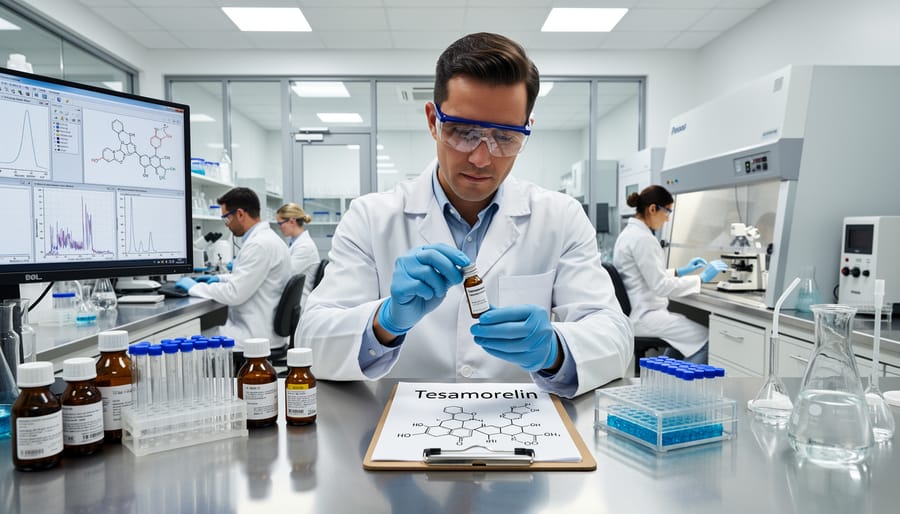
Growth Hormone-Releasing Hormone (GHRH) 1-44 is a naturally occurring peptide produced by the hypothalamus that signals the pituitary gland to release growth hormone into the bloodstream. The “1-44” designation refers to the peptide’s 44 amino acid sequence, which represents the biologically active form of this hormone. In healthy individuals, GHRH pulses trigger growth hormone secretion throughout the day, regulating metabolism, body composition, and tissue repair.
The therapeutic potential of GHRH 1-44 became apparent when researchers identified conditions where growth hormone levels were insufficient or dysregulated. Administering synthetic GHRH could theoretically restore normal physiological patterns without the risks associated with direct growth hormone supplementation. The problem was that native GHRH 1-44 proved commercially and clinically impractical.
The peptide degrades within two to seven minutes after entering the bloodstream. Enzymes called dipeptidyl peptidase-4 and neutral endopeptidase rapidly cleave the molecule, rendering it inactive before it can produce sustained therapeutic effects. This極端短 half-life meant patients would require continuous intravenous infusion or multiple daily injections to maintain therapeutic concentrations, an approach that was neither cost-effective nor feasible for most treatment settings.
For Canadian pharmaceutical developers, this represented both a scientific challenge and a business opportunity. The peptide’s proven biological activity made it an attractive therapeutic candidate, but its instability created a market gap. Companies that could engineer a stable GHRH analog would gain access to applications ranging from metabolic disorders to body composition management. The race was on to modify the peptide structure in ways that preserved receptor binding and biological activity while dramatically extending circulation time, transforming an impractical research molecule into a viable commercial product.
What the Hexenoyl Modification Actually Does
The Mechanism Behind Extended Half-Life
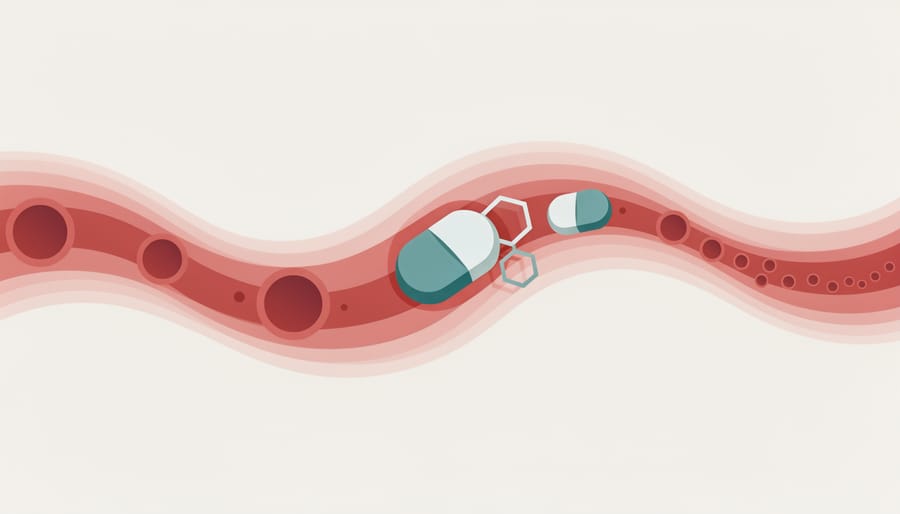
The hexenoyl modification transforms Tesamorelin from a rapidly degraded peptide into a long-acting therapeutic through a straightforward mechanism: albumin binding in the bloodstream.
When Tesamorelin enters circulation, the attached hexenoyl chain, being a fatty acid derivative, has an affinity for binding to serum albumin, the most abundant protein in human blood. This binding is reversible but substantial. Once attached to albumin molecules, the peptide becomes part of a much larger complex that circulates throughout the body.
This albumin association creates what researchers call a “reservoir effect.” Think of it as the peptide hitching a ride on a slow-moving transport vehicle instead of traveling exposed. While bound to albumin, Tesamorelin is protected from enzymatic degradation and renal filtration, the two primary mechanisms that would normally eliminate it within minutes. The peptide gradually releases from albumin at a controlled rate, maintaining therapeutic concentrations in the blood for several hours rather than being cleared almost immediately.
The result is pharmacologically significant: native GHRH has a half-life measured in minutes, while Tesamorelin’s half-life extends to approximately 26-38 minutes after intravenous administration and even longer with subcutaneous delivery. This extension allows once-daily dosing and consistent growth hormone stimulation, making it practical for treating chronic conditions. The modification doesn’t change how the peptide works at the receptor level; it simply keeps enough active peptide available long enough to produce therapeutic effects.
Preserved Receptor Activity
The hexenoyl modification’s attachment point at position 2 was deliberately chosen to preserve Tesamorelin’s therapeutic function. The GHRH receptor binding site sits primarily within the peptide’s N-terminal region, specifically amino acids 1-29, while the modification occurs at a location that doesn’t interfere with this critical interaction zone.
Preclinical studies demonstrated that Tesamorelin retains full agonist activity at the GHRH receptor despite the fatty acid attachment. The modified peptide binds to pituitary receptors and triggers the same cascade of intracellular signaling events that natural GHRH initiates, ultimately stimulating growth hormone synthesis and release. This preservation of biological activity was essential for regulatory approval and commercial viability.
The modification essentially creates a dual advantage: enhanced pharmacokinetic properties through albumin binding, combined with unchanged pharmacodynamic effects at the receptor level. Clinical trials confirmed that patients receiving Tesamorelin achieved the intended therapeutic outcomes, proving that the structural change didn’t compromise the drug’s ability to perform its intended function. This balance between improved stability and maintained efficacy represents a successful engineering approach that other peptide therapeutic developers have since studied and applied to their own programs.
Tesamorelin’s Development and Canadian Biotech Innovation
Tesamorelin’s journey from laboratory concept to approved therapeutic represents one of Canadian biotech’s most significant achievements in peptide drug development. Theratechnologies Inc., a Montreal-based biopharmaceutical company, spearheaded the clinical development and commercialization of this modified GHRH analog, demonstrating how strategic molecular innovation can create competitive advantages in global pharmaceutical markets.
The company licensed the tesamorelin compound in 2000 and focused development efforts on addressing HIV-associated lipodystrophy, a condition affecting patients on antiretroviral therapy. This targeted approach reflected smart business strategy: identifying an underserved patient population where the drug’s specific mechanism could deliver clear clinical benefits. Theratechnologies conducted Phase 3 trials demonstrating statistically significant reductions in visceral adipose tissue, leading to FDA approval in 2010 under the brand name Egrifta.
What makes this development story particularly relevant for Canadian businesses is how a mid-sized Quebec company successfully navigated the complex, capital-intensive process of bringing a novel peptide therapeutic to market. Theratechnologies leveraged partnerships with U.S. hospitals and research centers while maintaining Canadian headquarters and control. The company went public on the Toronto Stock Exchange in 2003, providing a blueprint for biotech financing through Canadian capital markets.
The strategic importance extends beyond one company’s success. Peptide modification technology has become a cornerstone capability for Canada’s life sciences sector, with research institutions like the University of Montreal and McGill University contributing fundamental knowledge in this area. Canada’s regulatory environment, through Health Canada’s progressive framework for biologics, has supported innovation in modified peptides while maintaining rigorous safety standards.
In global markets, Canadian expertise in peptide therapeutics positions the country as a specialized player rather than attempting to compete across all pharmaceutical categories. This focused strength attracts international partnerships and investment, particularly as the global peptide therapeutics market continues expanding. Theratechnologies’ success with tesamorelin validates the commercial viability of investing in molecular modification strategies that solve real-world therapeutic challenges.
Commercial and Therapeutic Applications
Tesamorelin received FDA approval in 2010 for treating HIV-associated lipodystrophy, a condition where fat accumulates abnormally in patients on antiretroviral therapy. This specific indication demonstrates how the hexenoyl modification solved a real therapeutic need: patients required a stable, effective peptide that could be administered through convenient subcutaneous injection. The commercial success of Tesamorelin validated the modification strategy and generated substantial revenue for Theratechnologies, proving that improved peptide stability translates directly to market viability.
Beyond this single application, the hexenoyl modification approach has influenced broader drug development strategies across the peptide therapeutics field. Pharmaceutical companies worldwide now routinely consider fatty acid modifications when designing peptide drugs that require extended circulation time. This technique has been adapted for diabetes treatments, obesity therapies, and other metabolic disorders where native peptides degrade too quickly.
The modification serves as a blueprint for improving entire classes of peptide medicines. Rather than accepting the inherent instability of bioactive peptides, researchers can now strategically attach lipophilic groups to extend half-life while preserving therapeutic function. This approach reduces dosing frequency, improves patient compliance, and enhances overall treatment outcomes.
For Canadian biotech firms, Tesamorelin represents proof that molecular engineering can create competitive advantages in global markets. The peptide modification platform developed through this work has applications extending far beyond a single drug, positioning Canada as a center of expertise in advanced peptide therapeutics. Companies developing next-generation biologics increasingly recognize that strategic chemical modifications, not just novel targets, drive commercial differentiation.
Investment and Business Opportunities in Peptide Modification Technology
The global peptide therapeutics market exceeded $50 billion in 2024 and continues its rapid expansion, with analysts projecting compound annual growth rates between 9% and 11% through 2030. For Canadian investors and businesses, peptide modification technology represents a substantial opportunity at the intersection of scientific innovation and commercial viability. Companies that master techniques like hexenoyl modification gain significant competitive advantages in drug development, addressing one of the pharmaceutical industry’s persistent challenges: how to make promising biological molecules work effectively in patients.
Several factors make Canada particularly well-positioned in this sector. Health Canada has established regulatory pathways that support innovative peptide therapeutics while maintaining rigorous safety standards, offering predictability for companies planning clinical development. The Strategic Innovation Fund and regional economic development agencies provide substantial capital support for biotech ventures demonstrating commercial potential. Organizations like CQDM (Consortium Québécois sur la Découverte du Médicament) facilitate pre-competitive research collaborations that reduce individual company risk while advancing core technologies.
Healthcare innovation grants from federal and provincial programs have specifically supported peptide modification research, creating a funding environment that rewards technical advancement. These programs recognize that intellectual property around modification techniques generates long-term value beyond individual drug candidates. A company that develops proprietary modification methods can apply that technology across multiple therapeutic areas and potentially license it to partners.
The investment thesis extends beyond pharmaceutical manufacturing. Contract research organizations specializing in peptide synthesis and modification, analytical laboratories providing characterization services, and consulting firms with regulatory expertise all benefit from sector growth. Montreal, Toronto, and Vancouver have developed biotech clusters where research institutions, clinical trial infrastructure, and business development resources concentrate, reducing the friction and cost of building peptide-focused companies.
Strategic partnerships between universities and industry have proven particularly productive. Academic labs generate fundamental insights into peptide chemistry and structure-activity relationships, while commercial partners provide development expertise, regulatory knowledge, and market access. These collaborations, often supported by government matching funds, create pathways from discovery to commercialization that strengthen Canada’s competitive position in a technology-intensive global market.
Frequently Asked Questions About Tesamorelin’s Hexenoyl Modification
How complex is manufacturing Tesamorelin compared to unmodified peptides?
The hexenoyl modification adds manufacturing steps but uses established solid-phase peptide synthesis techniques followed by standard fatty acid coupling chemistry. Most contract manufacturing organizations with peptide capabilities can handle this process, though quality control requirements are stricter for the modified product.
What’s the patent situation around hexenoyl-modified peptides?
Theratechnologies holds composition-of-matter patents covering Tesamorelin’s specific hexenoyl modification at position 2 of GHRH 1-44, which have provided market exclusivity. The broader concept of fatty acid modifications for peptide stabilization is well-known, but specific combinations and positions can still be patented.
Can this modification approach scale to commercial production volumes?
Yes, the chemistry scales well using standard batch peptide synthesis equipment. Theratechnologies demonstrated commercial viability with full-scale production for the North American market, and several Canadian contract manufacturers have developed expertise in similar modified peptide production.
What regulatory advantages does the modification provide?
The hexenoyl modification creates a distinct chemical entity, allowing companies to seek new drug approval rather than competing with generic versions of native GHRH. Health Canada and FDA treat properly characterized peptide modifications as novel therapeutics with full data protection periods.
What competitive moat does this type of modification create?
The modification provides approximately 10-15 years of patent protection, establishes technical manufacturing know-how, and creates regulatory barriers requiring competitors to conduct their own full clinical programs. First-mover advantages in physician familiarity and payer relationships add commercial protection beyond patent life.
These questions reflect real considerations for Canadian investors evaluating peptide therapeutic opportunities. The modification technology represents a proven commercialization pathway, not just a laboratory concept. Companies looking at similar approaches should assess their freedom to operate carefully, as the specific attachment chemistry and position matter for both patent clearance and therapeutic effect.
The business case strengthens when a modification solves a genuine clinical problem rather than creating incremental improvement. Tesamorelin’s hexenoyl group transformed an unusable peptide into a prescription product, justifying the development costs and regulatory investment required.
The hexenoyl modification demonstrates how a single, strategic chemical change can bridge the gap between scientific promise and commercial reality. What was once a peptide that degraded within minutes became Tesamorelin, a therapeutic that delivers sustained growth hormone release over hours. This transformation didn’t require revolutionary new mechanisms; it required precise molecular engineering to solve a fundamental stability problem.
For Canadian biotech entrepreneurs and investors, Tesamorelin’s development through Montreal-based Theratechnologies offers a clear blueprint: identifying and addressing specific limitations in promising molecules can create substantial competitive advantages. The peptide therapeutics market continues expanding, and Canada’s research infrastructure, regulatory expertise, and track record in this field position domestic companies to capture meaningful market share.
The success of this modification approach extends beyond a single drug. It validates peptide modification technology as a viable platform for developing multiple therapeutics, creating opportunities for specialized contract research organizations, manufacturing partners, and companies focused on next-generation peptide drugs. Strategic molecular modifications represent not just scientific achievement, but a practical pathway to building commercially successful biotech ventures in Canada’s growing life sciences sector.