

API banking revolutionizes how Canadian businesses handle financial transactions, representing one of the most transformative fintech innovations in Canadian business. At its core, API banking enables secure, real-time connectivity between financial institutions and third-party applications through Application Programming Interfaces (APIs). This technology empowers businesses to embed banking services directly into their operations, streamlining everything from payment processing to account management.
Unlike traditional banking methods, API banking creates a seamless digital ecosystem where financial data flows instantly and securely between authorized parties. For Canadian enterprises, this means faster transactions, reduced operational costs, and enhanced customer experiences. Leading financial institutions across the country are rapidly adopting API banking solutions, recognizing their potential to drive innovation and maintain competitiveness in an increasingly digital marketplace.
The transformation towards open banking through APIs represents a fundamental shift in how financial services are delivered, accessed, and integrated into modern business operations.
What is API Banking?
Core Components of API Banking
API banking relies on four fundamental components that work together seamlessly to enable secure financial transactions and data exchange. The foundation starts with RESTful APIs, which serve as the primary interface between different financial systems, allowing them to communicate effectively and securely.
The authentication layer forms the second critical component, implementing robust security protocols like OAuth 2.0 and SSL encryption to protect sensitive financial data. This ensures that only authorized parties can access and transmit information through the API infrastructure.
Data processing systems make up the third component, handling the conversion and standardization of financial information across different platforms. These systems ensure that data remains consistent and usable regardless of its source or destination.
The fourth component consists of developer tools and documentation, which enable financial institutions and fintech companies to integrate API banking solutions efficiently. This includes comprehensive API documentation, testing environments, and support resources that help streamline implementation.
As noted by Canadian fintech expert Sarah Thompson of Digital Finance Institute, “These core components create a robust ecosystem that’s transforming how Canadian businesses handle their banking operations, making financial services more accessible and efficient than ever before.”

How API Banking Differs from Traditional Banking
API banking revolutionizes traditional banking by offering real-time data access, automated processes, and seamless integration capabilities. While traditional banking relies on manual processes, physical documentation, and limited operating hours, API banking provides 24/7 service availability and instant transaction processing.
Businesses benefit from improved cash flow management through real-time payment tracking and automated reconciliation. Instead of waiting for manual updates or visiting branch locations, companies can access financial services directly through their business software. This integration reduces operational costs and minimizes human error.
API banking also enables customized financial solutions, allowing businesses to tailor banking services to their specific needs. Canadian businesses particularly appreciate the enhanced security features and standardized protocols that API banking provides, making it easier to comply with regulatory requirements while maintaining operational efficiency.
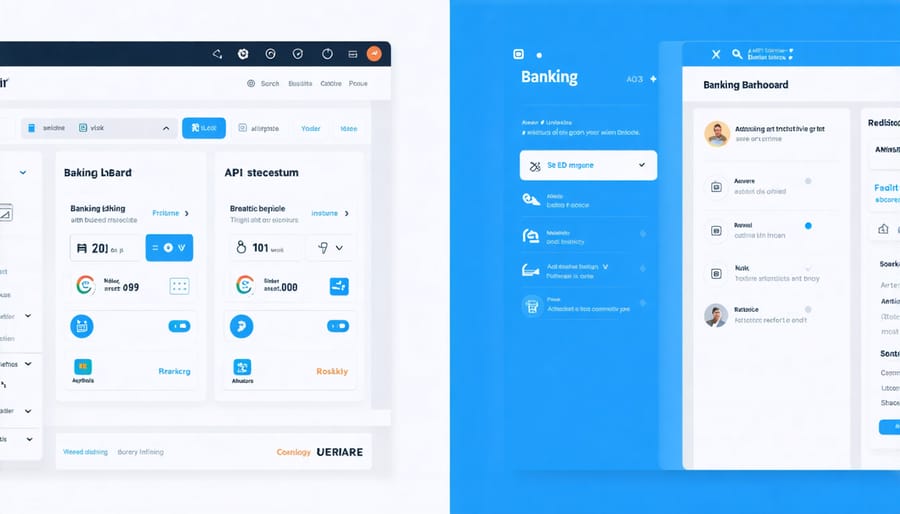
API Banking in Canada’s Open Banking Ecosystem
Regulatory Framework and Compliance
In Canada, API banking operates within a robust regulatory framework overseen by the Department of Finance Canada and the Office of the Superintendent of Financial Services (OSFI). As part of the evolving Canadian fintech landscape, financial institutions must comply with strict security and privacy requirements when implementing API solutions.
Key regulations include the Personal Information Protection and Electronic Documents Act (PIPEDA) for data protection, and the Bank Act for overall financial operations. Financial institutions must maintain Strong Customer Authentication (SCA) protocols and ensure their APIs meet the security standards outlined by the Canadian Center for Cyber Security.
The Canadian government’s Advisory Committee on Open Banking has established guidelines for secure data sharing and consumer protection. Banks and fintech companies must undergo regular security audits, maintain detailed documentation of their API implementations, and ensure transparent communication with customers about data usage and sharing practices.
Organizations implementing API banking solutions must also comply with anti-money laundering (AML) regulations and Know Your Customer (KYC) requirements while maintaining proper audit trails for all API transactions.
Canadian Success Stories
Several Canadian financial institutions and fintech companies have successfully implemented API banking solutions, transforming their business operations and customer experience. Wealthsimple, a Toronto-based financial services provider, leveraged API banking to create a seamless investment platform that now serves over 2 million clients across Canada. Their API integration enables real-time account opening and instant fund transfers.
Vancouver-based Mogo has revolutionized personal lending by implementing API banking solutions that allow for instant credit decisions and automated loan disbursement. Their system processes thousands of applications daily, reducing approval times from days to minutes.
Vancity Credit Union demonstrates how traditional financial institutions can embrace API banking. By implementing open banking APIs, they’ve enhanced their mobile banking experience and introduced innovative features like automated savings tools and personalized financial insights.
ATB Financial in Alberta partnered with fintech providers to create API-powered small business lending solutions, enabling quick credit assessments and faster fund disbursement for local entrepreneurs. This initiative has helped numerous small businesses access capital more efficiently, particularly during challenging economic times.
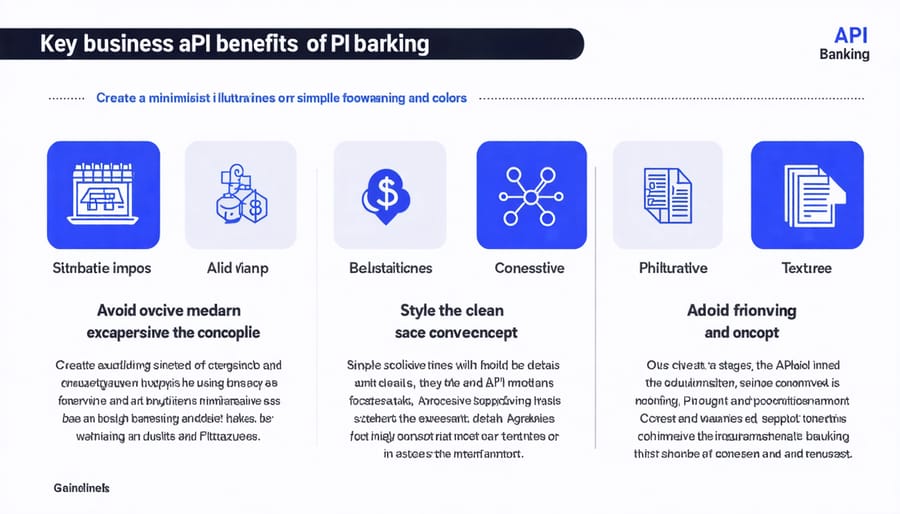
Business Benefits of API Banking
Enhanced Financial Operations
API banking integration revolutionizes how financial institutions handle day-to-day operations, enabling businesses to optimize business operations through automated processes and real-time data access. Canadian businesses leveraging API banking report significant improvements in transaction processing speeds, reduced manual intervention, and enhanced accuracy in financial reporting.
According to Sarah Thompson, CEO of FinTech Ontario, “Companies implementing API banking solutions have seen up to 60% reduction in processing times for routine financial tasks.” This efficiency translates into substantial cost savings and improved resource allocation.
Key operational improvements include:
– Automated reconciliation of accounts
– Real-time payment processing and verification
– Streamlined cash flow management
– Enhanced fraud detection capabilities
– Simplified regulatory compliance reporting
The Royal Bank of Canada demonstrates these benefits through its API integration system, which helped reduce transaction processing times from 24 hours to just minutes. Similar success stories are emerging across the Canadian financial landscape, with mid-sized businesses particularly benefiting from automated account management and instant payment solutions.
By implementing API banking solutions, organizations can maintain better control over their financial operations while reducing the risk of human error. This technological advancement also enables seamless integration with existing accounting systems, creating a more cohesive and efficient financial ecosystem.
Cost Reduction and Efficiency
API banking delivers significant cost savings and operational efficiencies for financial institutions and businesses alike. By automating routine transactions and processes, organizations can reduce their operational expenses by up to 30%, according to recent industry studies. Canadian banks implementing API solutions have reported substantial decreases in manual processing costs and error rates.
For example, TD Bank’s implementation of API banking services resulted in a 25% reduction in transaction processing costs within the first year. This efficiency stems from eliminating redundant processes, reducing paper-based operations, and minimizing human intervention in routine financial tasks.
The resource optimization benefits extend beyond direct cost savings. API banking enables institutions to:
– Reduce IT infrastructure costs through cloud-based solutions
– Minimize staffing requirements for routine transactions
– Lower compliance and reporting expenses through automated systems
– Decrease customer service costs with self-service capabilities
– Optimize resource allocation across different banking channels
Small and medium-sized businesses particularly benefit from these efficiencies, as they can access enterprise-level banking capabilities without investing in expensive proprietary systems. The pay-as-you-go model of many API banking services allows companies to scale their financial operations cost-effectively while maintaining high service quality.
As noted by the Canadian Bankers Association, financial institutions utilizing API banking solutions typically see return on investment within 12-18 months, making it a compelling option for businesses looking to optimize their banking operations.
Getting Started with API Banking
Implementing API banking solutions for your business begins with a clear strategy and methodical approach. Start by assessing your current banking needs and identifying specific areas where API integration could streamline operations. Common entry points include payment processing, account aggregation, or real-time transaction monitoring.
Next, select a banking partner that offers robust API services. Many Canadian financial institutions now provide comprehensive API platforms with developer-friendly documentation and testing environments. Consider factors like security protocols, service reliability, and technical support when making your choice.
Assemble a qualified technical team or partner with a fintech solutions provider to handle the integration. Your team should include developers familiar with RESTful APIs and financial services integration, along with security experts to ensure compliance with regulatory requirements.
Begin with a pilot project focusing on one specific functionality, such as payment initiation or account information services. This approach allows you to test the waters and identify potential challenges before full-scale implementation. According to leading Canadian fintech consultant Sarah Thompson, “Starting small and scaling gradually helps businesses maintain control while maximizing the benefits of API banking.”
Ensure comprehensive testing in a sandbox environment before moving to production. This includes security testing, performance optimization, and user acceptance testing. Develop clear documentation and training materials for staff who will use the new systems.
Finally, establish monitoring systems to track API performance, usage patterns, and transaction success rates. Regular reviews of these metrics will help optimize your API banking implementation and identify opportunities for expansion.
Remember to maintain open communication channels with your banking partner and stay informed about updates or new API capabilities that could benefit your business.
API banking represents a transformative force in Canada’s financial landscape, offering unprecedented opportunities for businesses to innovate and grow. As we’ve explored, these technological solutions are revolutionizing how companies interact with financial services, making transactions more efficient, secure, and cost-effective.
The future of API banking in Canada looks particularly promising, with the government’s commitment to open banking implementation and increasing adoption by major financial institutions. Industry experts predict that by 2025, API banking will become the standard operating model for most financial services, creating new opportunities for businesses of all sizes.
Canadian companies are already seeing remarkable results, with many reporting improved customer experiences, streamlined operations, and reduced costs. As technology continues to evolve, we can expect even more sophisticated API solutions that will further enhance financial services integration and accessibility.
For businesses considering API banking adoption, the time to act is now. With proper planning, security measures, and strategic implementation, Canadian companies can position themselves at the forefront of this financial revolution, ensuring long-term success in an increasingly digital economy.