

Canadian e-commerce businesses face unprecedented supply chain disruptions that demand immediate attention and strategic adaptation. As supply chain globalization trends reshape market dynamics, traditional fulfillment models no longer suffice in meeting consumer expectations for rapid delivery and product availability.
From small Shopify merchants to enterprise-level retailers, the challenges of inventory management, shipping delays, and rising logistics costs impact profit margins and customer satisfaction across the board. Recent studies show that 67% of Canadian e-commerce businesses experienced significant supply chain disruptions in the past year, with average fulfillment times increasing by 38%.
Yet within these challenges lie opportunities for innovation and growth. Leading Canadian retailers are leveraging advanced analytics, automated warehouse systems, and strategic partnerships to transform supply chain obstacles into competitive advantages. By understanding and addressing these critical challenges head-on, businesses can build more resilient, efficient, and profitable e-commerce operations.
This comprehensive guide examines the most pressing supply chain challenges facing Canadian e-commerce businesses today and provides actionable solutions to optimize operations, reduce costs, and enhance customer satisfaction in an increasingly complex digital marketplace.
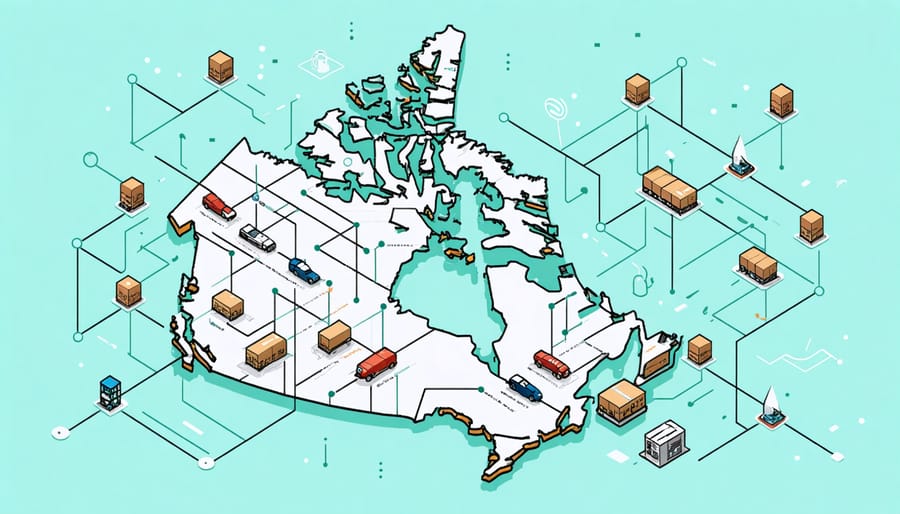
Modern E-commerce Supply Chain Pressures
Consumer Demand Volatility
Consumer demand volatility presents one of the most significant challenges for Canadian e-commerce businesses today. The rapid shifts in buying patterns, influenced by seasonal trends, social media, and market conditions, make accurate inventory forecasting increasingly complex. According to the Canadian Federation of Independent Business, over 60% of online retailers struggle with demand prediction and inventory management.
Effective cross-border e-commerce strategies and robust data analytics have become essential tools for managing this uncertainty. Leading Canadian retailers like Shopify merchants are leveraging artificial intelligence and predictive analytics to anticipate demand fluctuations and optimize stock levels.
To mitigate the impact of demand volatility, successful businesses are implementing flexible inventory systems and maintaining strong relationships with multiple suppliers. This approach, combined with real-time tracking and automated reordering systems, helps prevent both stockouts and excess inventory situations. Companies that embrace data-driven decision-making and maintain agile supply chain processes are better positioned to respond to sudden market changes while maintaining customer satisfaction and operational efficiency.
Last-Mile Delivery Complexities
Last-mile delivery presents unique challenges in Canada’s diverse geographical landscape. Urban centers like Toronto, Vancouver, and Montreal face congestion and limited parking, making timely deliveries increasingly complex. Meanwhile, rural communities struggle with longer delivery routes and seasonal weather challenges that can impact service reliability.
Many Canadian retailers are adopting innovative solutions to address these challenges. For instance, Walmart Canada has successfully implemented urban micro-fulfillment centers to reduce delivery times in metropolitan areas. Similarly, Canadian Tire’s partnership with autonomous delivery startups demonstrates the industry’s commitment to creative problem-solving.
According to the Canadian Federation of Independent Business, 68% of small businesses identify last-mile delivery costs as a significant concern. To manage these challenges, companies are exploring alternatives such as local pickup points, smart lockers, and partnerships with regional carriers.
The rise of same-day delivery expectations has further complicated logistics planning. Successful businesses are responding by establishing multiple distribution points and utilizing real-time route optimization technology. Some retailers have found success with hybrid delivery models, combining in-house fleets with third-party delivery partners to maintain service levels while managing costs effectively.
Technology Integration Hurdles
Legacy System Limitations
Many Canadian e-commerce businesses face significant operational hurdles due to legacy systems that weren’t designed for today’s digital commerce demands. These outdated platforms often struggle with real-time inventory management, cross-channel integration, and modern API connectivity, creating bottlenecks in the supply chain process.
A recent survey by the Canadian Federation of Independent Business found that 45% of small and medium-sized enterprises operate with systems over seven years old, leading to decreased efficiency and increased error rates. These legacy systems typically lack the flexibility to handle modern fulfillment methods like ship-from-store or buy-online-pickup-in-store (BOPIS) options.
Integration challenges are particularly evident when legacy systems need to communicate with newer platforms. For instance, Toronto-based retailer Northern Crown experienced a 30% reduction in order processing time after replacing their 12-year-old inventory management system. “The old system was like speaking a different language to our e-commerce platform,” notes Operations Director Sarah Chen.
Common limitations include:
– Inability to process real-time inventory updates
– Limited scalability during peak seasons
– Poor compatibility with mobile devices
– Difficult integration with third-party logistics providers
– Lack of support for modern payment methods
To remain competitive, businesses must evaluate their current systems and consider strategic upgrades that enable seamless integration across their supply chain network while maintaining data security and operational efficiency.

Data Management Solutions
Modern data management solutions have become essential for streamlining e-commerce supply chains in Canada. By implementing robust data analytics platforms and digital trade tools, businesses can effectively track inventory, predict demand patterns, and optimize their operations.
Cloud-based management systems offer real-time visibility across the entire supply chain, enabling better decision-making and improved coordination between partners. Canadian companies like Shopify have demonstrated the power of integrated data solutions, helping businesses of all sizes manage their operations more efficiently.
According to industry experts, successful implementation requires a three-pronged approach: proper data collection infrastructure, analytics capabilities, and staff training. Enterprise resource planning (ERP) systems tailored for e-commerce operations help consolidate data from multiple sources, while artificial intelligence and machine learning tools provide actionable insights for inventory management and demand forecasting.
Small and medium-sized enterprises can start with basic analytics tools and gradually scale up as their needs grow. Many Canadian service providers offer customizable solutions that integrate with existing systems, making the transition more manageable and cost-effective.
Key benefits include reduced operational costs, improved inventory accuracy, better customer service, and enhanced supply chain visibility. Regular monitoring and updates ensure these systems evolve with changing business needs and market conditions.
Strategic Solutions for Canadian Businesses
Inventory Optimization Techniques
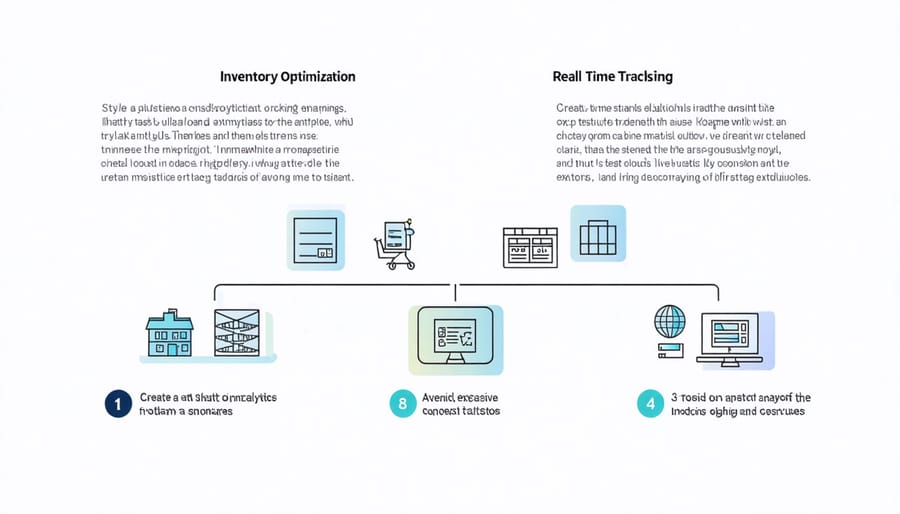
Effective inventory optimization is crucial for e-commerce success in Canada’s competitive market. By implementing data-driven forecasting techniques and smart inventory management strategies, businesses can significantly reduce carrying costs while maintaining optimal stock levels.
One proven approach is the ABC analysis method, where products are categorized based on their value and sales velocity. This allows businesses to prioritize inventory investment and storage space for their most profitable items. Canadian retailers like Shopify merchants have reported up to 30% reduction in holding costs using this method.
Demand forecasting tools that incorporate seasonal trends, historical data, and market indicators help predict inventory needs with greater accuracy. Many successful Canadian e-commerce businesses combine artificial intelligence-powered forecasting with human expertise to achieve better results.
Just-in-time (JIT) inventory management, when properly implemented, can significantly reduce warehouse costs. However, given recent supply chain disruptions, many Canadian businesses are adopting a hybrid approach – maintaining safety stock for essential items while using JIT for others.
Regular inventory audits and cycle counting help maintain accuracy and prevent stockouts. Industry experts recommend implementing automated inventory management systems that provide real-time visibility across multiple sales channels and warehouses.
For smaller e-commerce businesses, starting with basic inventory management software and gradually scaling up as operations grow has proven effective. This approach allows for better cost control while maintaining operational efficiency.
Partner Network Development
Building strong partnerships within your supply chain network is crucial for long-term success in e-commerce. Canadian businesses that invest time in developing reliable supplier and logistics partnerships often see significant improvements in their operational efficiency and resilience.
Industry leaders recommend a multi-partner approach to reduce dependency on single suppliers. For example, Toronto-based retailer Well.ca maintains relationships with multiple distributors across different regions, ensuring consistent product availability even during disruptions.
To develop strong partnerships:
– Establish clear communication channels and expectations
– Create detailed service level agreements (SLAs)
– Implement collaborative planning and forecasting systems
– Regular performance reviews and feedback sessions
– Invest in relationship-building activities
“Strategic partnerships are no longer optional—they’re essential for survival in today’s e-commerce landscape,” says Sarah Chen, Supply Chain Director at Canadian Logistics Alliance. “The most successful businesses are those that treat their partners as extensions of their own organization.”
Consider joining industry associations and attending trade shows to connect with potential partners. The Canadian Supply Chain Food Association reports that businesses with strong partner networks recovered 60% faster from supply chain disruptions during recent global challenges.
Remember to maintain transparency and share relevant data with your partners. This collaborative approach helps create a more adaptive and responsive supply chain that can better serve your customers and protect your business from unforeseen challenges.
Government Support Programs
Canadian e-commerce businesses can access numerous government support initiatives designed to ease supply chain challenges and promote growth. The federal government offers several government trade facilitation programs that help businesses streamline their operations and expand internationally.
The CanExport program provides up to $75,000 in funding to help small and medium-sized enterprises explore new export opportunities. Through the Trade Commissioner Service (TCS), businesses can access market intelligence, local contacts, and expert guidance for international expansion.
Business Development Bank of Canada (BDC) offers specialized loans and advisory services focused on supply chain optimization. Their Supply Chain Financing solution helps businesses maintain healthy cash flow while managing inventory and supplier relationships effectively.
Regional development agencies like FedDev Ontario and Western Economic Diversification Canada provide targeted support for digital transformation and supply chain modernization. These programs often include grants, loans, and technical assistance for implementing new technologies and improving operational efficiency.
The Strategic Innovation Fund (SIF) supports larger-scale supply chain initiatives, particularly those involving technology adoption and innovation. Additionally, the National Research Council of Canada Industrial Research Assistance Program (NRC IRAP) provides funding and advisory services for technology-driven supply chain improvements.
To access these resources, businesses can connect with their local economic development offices or visit the Innovation Canada website for a personalized list of available support programs.
Success Stories and Implementation
Several Canadian e-commerce businesses have successfully navigated supply chain challenges through innovative solutions and strategic adaptations. Shopify merchant Mountain Equipment Company (MEC) demonstrated remarkable resilience during the pandemic by implementing a hybrid fulfillment model. By converting select retail locations into mini-fulfillment centers, MEC reduced delivery times by 24% and cut shipping costs by 18%.
Montreal-based Frank And Oak revolutionized their supply chain operations by adopting an AI-powered inventory management system. This implementation resulted in a 30% reduction in stockouts and a 25% improvement in order accuracy. Their success stemmed from better demand forecasting and automated reordering processes.
Well.ca, headquartered in Guelph, Ontario, tackled last-mile delivery challenges by partnering with local courier services and implementing smart routing technology. This strategy led to a 40% reduction in delivery times and a 15% decrease in transportation costs. The company also established regional distribution centers across Canada, enabling same-day delivery in major urban areas.
Vancouver’s SPUD.ca demonstrates how sustainable practices can enhance supply chain efficiency. Their food delivery service implemented reusable packaging solutions and route optimization software, reducing packaging waste by 90% and delivery costs by 20%. This approach not only improved operational efficiency but also strengthened customer loyalty.
Smaller businesses have found success through creative solutions as well. Toronto-based skincare brand Three Ships Beauty optimized their supply chain by implementing a pre-order system during peak periods and maintaining transparent communication with customers about potential delays. This strategy helped them maintain customer satisfaction while managing inventory more effectively.
These success stories share common elements: embracing technology, maintaining flexibility, and prioritizing customer communication. They demonstrate that Canadian e-commerce businesses can overcome supply chain challenges through strategic planning and innovative thinking, regardless of their size or industry sector.
Successfully navigating e-commerce supply chain challenges requires a strategic, multi-faceted approach that Canadian businesses can implement with confidence. By focusing on key areas such as inventory management optimization, supplier relationship development, and technology integration, companies can build more resilient supply chains that meet modern consumer demands.
The path forward involves taking decisive action: investing in robust inventory management systems, diversifying supplier networks, and embracing automation where possible. Canadian businesses should prioritize building strong relationships with domestic suppliers while maintaining strategic international partnerships to ensure supply chain flexibility.
Success stories from across Canada demonstrate that businesses implementing these strategies are seeing tangible results. Companies that have invested in real-time tracking systems, adopted predictive analytics, and maintained transparent communication with stakeholders have shown remarkable resilience during market disruptions.
Moving forward, businesses should:
– Regularly assess and update their supply chain strategies
– Invest in employee training and development
– Build stronger relationships with logistics partners
– Implement sustainable practices
– Stay informed about emerging technologies and industry trends
Remember that supply chain optimization is an ongoing process rather than a one-time solution. By remaining adaptable and forward-thinking, Canadian e-commerce businesses can turn supply chain challenges into opportunities for growth and competitive advantage in the global marketplace.