

Hemp cannabidiol (CBD) represents one of Canada’s fastest-growing market opportunities, with industry projections suggesting a compound annual growth rate of 25% through 2028. As a non-psychoactive compound derived from legally cultivated hemp plants, CBD has transformed from a niche wellness product into a mainstream commercial powerhouse, attracting significant investment across retail, manufacturing, and agriculture sectors.
Canadian entrepreneurs are uniquely positioned to capitalize on this burgeoning market, thanks to established regulatory frameworks, advanced agricultural expertise, and growing consumer demand. The recent amendments to the Cannabis Act have streamlined production requirements, while maintaining strict quality standards that give Canadian CBD products a competitive edge in global markets.
For business leaders and investors, hemp CBD offers diverse revenue streams across the value chain – from cultivation and extraction to product development and retail distribution. Success stories like Peace Naturals and Canopy Growth demonstrate how strategic positioning in this sector can drive substantial returns, particularly when coupled with innovation in product development and distribution channels.
Whether you’re an established business owner looking to diversify or an entrepreneur seeking new opportunities, understanding hemp CBD’s market dynamics, regulatory requirements, and growth potential is crucial for making informed business decisions. With proper planning and execution, hemp CBD represents a promising avenue for sustainable business growth in Canada’s evolving cannabis landscape.
The Rise of Hemp-Derived CBD in Canadian Markets
Market Size and Growth Projections
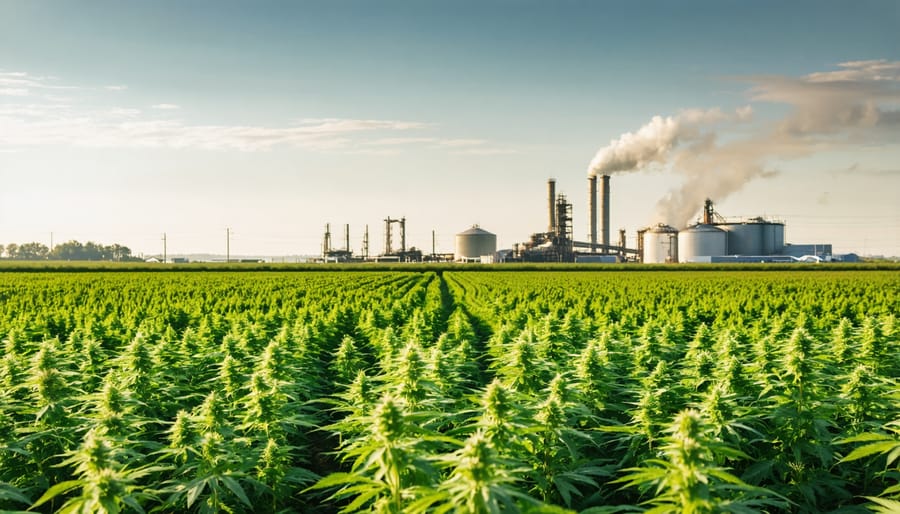
The Canadian hemp CBD market has experienced remarkable growth, with current valuations reaching CAD 2.1 billion in 2023. Industry analysts project the market to expand at a compound annual growth rate (CAGR) of 12.8% through 2028, potentially reaching CAD 3.8 billion.
According to Statistics Canada, licensed hemp cultivation has increased by 25% annually since 2020, with over 100,000 acres dedicated to CBD-rich hemp varieties. Ontario and Alberta lead production, accounting for 60% of national output.
“The Canadian CBD market is maturing rapidly, with consumer awareness and acceptance driving unprecedented demand,” notes Sarah Thompson, CEO of the Canadian Hemp Trade Alliance. Retail sales data indicates that CBD wellness products represent the fastest-growing segment, with a 34% year-over-year increase.
E-commerce platforms have emerged as significant distribution channels, contributing to approximately 45% of total sales. Brick-and-mortar retailers are expanding their CBD product offerings, with major pharmacy chains reporting 40% growth in CBD-related revenue. Export opportunities, particularly to European markets, are expected to provide additional growth vectors for Canadian producers.
Key Industry Players and Success Stories
Several Canadian companies have emerged as leaders in the hemp CBD industry, demonstrating remarkable success through innovation and strategic market positioning. Charlotte’s Web Holdings, based in British Columbia, has become one of North America’s largest CBD producers, known for their high-quality hemp extracts and sustainable farming practices.
Aurora Cannabis has successfully leveraged its established presence in the medical cannabis sector to develop a robust hemp CBD division, while Manitoba Harvest has distinguished itself through its focus on organic hemp products and comprehensive seed-to-shelf control.
These industry leaders attribute their success to several key factors: maintaining stringent quality control, developing strong relationships with local farmers, investing in research and development, and building trusted brands. For instance, Canopy Growth’s strategic partnership with Martha Stewart has helped normalize CBD products in the mainstream market.
Emerging players like Treaty Corp, an Indigenous-owned company, showcase the industry’s diversity and potential for growth. Their success stems from combining traditional knowledge with modern extraction technologies, while emphasizing sustainable practices and community engagement.
Regulatory Framework and Compliance
Federal and Provincial Requirements
In Canada, hemp CBD production and distribution are governed by a complex framework of federal and provincial regulations. The CBD legal status in Canada requires businesses to obtain specific licenses from Health Canada under the Cannabis Act and Industrial Hemp Regulations.
At the federal level, companies must secure either a standard processing license or micro-processing license, depending on their operation scale. Industrial hemp cultivation requires a separate hemp cultivation license, with strict requirements for THC content remaining below 0.3%.
Provincial requirements vary significantly across jurisdictions. Ontario and British Columbia maintain the most developed regulatory frameworks, with established distribution channels through provincial wholesale boards. Alberta offers a more flexible approach, allowing private retailers to source directly from licensed producers, while Quebec maintains stricter control through the SQDC.
Key compliance requirements include:
– Good Production Practices (GPP) certification
– Quality assurance personnel
– Standard operating procedures
– Security clearance for key personnel
– Thorough record-keeping systems
– Regular testing and quality control measures
Businesses must also comply with provincial packaging, labeling, and marketing restrictions, which often exceed federal requirements. Regular audits and inspections ensure ongoing compliance with these regulations, making it essential for businesses to maintain robust compliance management systems.
Licensing and Certification Process
Obtaining proper licensing and certification for hemp CBD operations in Canada involves a structured process through Health Canada. Prospective producers must first submit a detailed application under the Cannabis Act, including facility specifications, security measures, and quality assurance protocols.
The initial step requires completing the Cannabis Licensing Application Form, accompanied by comprehensive site plans and security clearance applications for key personnel. Applicants must demonstrate Good Production Practices (GPP) compliance and establish robust record-keeping systems.
Standard processing licenses typically take 8-12 months for approval, though timelines can vary based on application complexity and completeness. During this period, Health Canada conducts thorough background checks and may request additional documentation or facility modifications.
Success story: Calgary-based Pure Life Cannabis achieved licensing within six months through meticulous preparation and consultation with industry experts. “The key is attention to detail and maintaining open communication with regulators,” notes CEO Sarah Thompson.
Annual licensing fees range from $1,654 for micro-processing to $33,083 for standard processing. Additional costs include security clearance fees ($1,654 per person) and site modification approvals.
Post-licensing, businesses must maintain compliance through regular audits and inspections. Many operators choose to pursue additional certifications like organic designation or GMP certification to enhance market opportunities and demonstrate quality commitment.
For international export capabilities, separate permits and endorsements are required, typically processed within 30 business days of application.
Business Development Opportunities
Investment and Funding Options
The hemp CBD sector offers diverse investment and funding opportunities for Canadian entrepreneurs and businesses. Traditional financing options include bank loans, particularly from institutions like Farm Credit Canada, which has specialized programs for agricultural ventures. Private equity firms and venture capital groups are increasingly showing interest in well-structured hemp CBD businesses, with several Canadian investment firms creating dedicated cannabis industry portfolios.
Government grants and incentives provide another viable funding avenue. The Industrial Hemp Licensing Program offers support for qualified businesses, while various provincial programs provide funding for agricultural innovation and processing facilities. Organizations like the National Research Council of Canada (NRC) offer funding through their Industrial Research Assistance Program (IRAP) for CBD-related research and development.
Crowdfunding has emerged as a popular alternative, with platforms like FrontFundr enabling Canadian companies to raise capital while building a community of engaged investors. Angel investors, particularly those with experience in the cannabis or natural health products sectors, represent another significant funding source.
For established businesses, strategic partnerships and joint ventures offer opportunities to scale operations without substantial capital investment. Several Canadian CBD companies have successfully secured funding through public listings on the TSX Venture Exchange and Canadian Securities Exchange, providing access to public market capital while maintaining operational control.
The key to securing investment lies in developing a comprehensive business plan, demonstrating regulatory compliance, and showing clear market differentiation. Industry experts recommend maintaining flexibility in funding approaches and building strong relationships within the CBD ecosystem.
Strategic Partnerships and Support
The Canadian hemp CBD industry benefits from robust support through various government initiatives and strategic partnerships. Innovation Canada offers funding programs specifically designed to support CBD production and scaling, while regional development agencies provide targeted assistance for equipment purchases and facility expansion.
Industry associations like the Canadian Hemp Trade Alliance (CHTA) and Cannabis Council of Canada facilitate valuable networking opportunities and provide members with market intelligence, regulatory updates, and advocacy support. These organizations regularly host industry events where businesses can connect with potential partners, suppliers, and investors.
Several Canadian universities have established research partnerships with hemp CBD companies, advancing innovation in extraction methods and product development. The National Research Council of Canada (NRC) offers technical and research assistance through its Industrial Research Assistance Program (IRAP), helping businesses optimize their operations and develop new products.
Financial institutions are increasingly supporting the hemp CBD sector, with specialized lending programs and investment packages designed for cannabis-related businesses. Export Development Canada (EDC) provides support for companies looking to expand internationally, offering trade insurance and financing solutions.
Local economic development organizations across Canada often provide additional resources, including business incubation services, mentorship programs, and connections to regional networks of industry experts and potential partners.
Future-Proofing Your Hemp CBD Business

Innovation and Research Development
The Canadian hemp CBD industry continues to push boundaries in innovation and research development, with numerous institutions and private companies leading groundbreaking studies. Recent latest CBD research breakthroughs have opened new possibilities for product development and therapeutic applications.
Canadian researchers are particularly focused on improving CBD extraction methods, with several facilities developing more efficient and environmentally sustainable processes. The National Research Council of Canada has partnered with industry leaders to explore novel extraction technologies that could reduce production costs by up to 30%.
Emerging trends include the development of water-soluble CBD formulations, which significantly enhance bioavailability and create new opportunities for beverage manufacturers. Additionally, Canadian biotechnology firms are investigating CBD’s potential in targeted delivery systems and specialized medical applications.
Research opportunities are expanding in areas such as:
– Nano-encapsulation technology for improved absorption
– Sustainable cultivation practices
– Development of standardized testing methods
– Creation of CBD-infused functional foods
– Integration with artificial intelligence for precision dosing
Industry experts predict that these innovations will drive market growth and create new business opportunities. The collaboration between academic institutions and private sector companies continues to strengthen Canada’s position as a global leader in hemp CBD research and development.
Market Expansion Strategies
Successful expansion in the hemp CBD market requires a strategic blend of market research, distribution planning, and brand development. Canadian companies are increasingly focusing on vertical integration, controlling everything from cultivation to retail, to maximize profit margins and ensure product quality.
Digital presence has become crucial, with e-commerce platforms serving as primary growth drivers. Leading Canadian CBD brands have demonstrated success through omnichannel approaches, combining online sales with strategic retail partnerships. These CBD market innovations have opened new revenue streams while maintaining compliance with regulations.
Export opportunities present significant growth potential, particularly in markets with established CBD regulations. Companies should consider targeting regions with compatible regulatory frameworks, such as certain European Union countries and Australia. However, success in international markets requires thorough understanding of local regulations and consumer preferences.
Strategic partnerships with established retailers, wellness centers, and healthcare practitioners can accelerate market penetration. Many successful Canadian CBD companies have leveraged these relationships to build credibility and expand their customer base. Additionally, developing specialized product lines for different market segments, such as pet care or sports recovery, has proven effective in capturing new demographics and increasing market share.
Investment in research and development remains crucial for long-term success, enabling companies to stay ahead of emerging trends and maintain competitive advantages in this rapidly evolving industry.
The Canadian hemp CBD industry stands at a pivotal moment, presenting unprecedented opportunities for growth and innovation. As we’ve explored throughout this article, the market demonstrates robust potential, supported by increasing consumer demand, evolving regulations, and emerging scientific research.
For entrepreneurs and investors considering entry into this dynamic space, timing is crucial. The regulatory framework continues to mature, creating a more stable environment for business operations. Success stories like Canadian producers expanding into international markets and local processors developing innovative CBD products demonstrate the industry’s viability and growth potential.
Key takeaways for potential stakeholders include the importance of thorough market research, compliance with Health Canada regulations, and investment in quality control systems. Building strong relationships with licensed producers, understanding the supply chain dynamics, and focusing on product differentiation are essential strategies for success.
The future outlook remains promising, with projections indicating sustained growth in both domestic and international markets. Opportunities exist across various sectors, from cultivation and processing to retail and product development. Innovation in extraction methods, product formulations, and delivery systems continues to drive industry advancement.
For those ready to enter the hemp CBD market, we recommend:
– Conducting comprehensive due diligence
– Developing a detailed business plan
– Consulting with industry experts and legal advisors
– Building relationships with established players
– Staying informed about regulatory changes
– Investing in quality assurance and testing
The time to act is now. With proper planning, dedication to compliance, and a focus on quality, entrepreneurs and investors can position themselves successfully in this growing industry. The Canadian hemp CBD sector welcomes innovative minds and strategic investors ready to contribute to its evolution and success.