

Machine learning is revolutionizing investment banking in Canada, transforming everything from risk assessment to trading strategies. Leading financial institutions like RBC and TD Bank now leverage artificial intelligence to analyze millions of data points in seconds, delivering unprecedented insights for investment decisions.
Canadian banks are deploying ML algorithms to detect market patterns, predict investment outcomes, and automate routine trading operations with remarkable accuracy. These innovations have reduced transaction costs by up to 30% while significantly improving portfolio performance for institutional and retail investors alike.
The impact extends beyond trading floors. Machine learning now powers sophisticated credit scoring models, fraud detection systems, and personalized wealth management solutions. For example, BMO’s AI-driven advisory platform analyzes customer behavior patterns to provide tailored investment recommendations, resulting in a 40% increase in client satisfaction scores.
As we enter 2024, the integration of machine learning in investment banking isn’t just a competitive advantage – it’s becoming a necessity for survival in the digital age. Canadian financial institutions investing heavily in ML infrastructure are seeing tangible returns, with improved operational efficiency and enhanced client services leading to stronger market positions.
The New Era of AI-Powered Investment Analysis
From Human Intuition to Data-Driven Decisions
Investment banking has traditionally relied on human expertise, market intuition, and fundamental analysis to make critical decisions. However, the increasing complexity of financial markets and the exponential growth in data volume have necessitated a shift towards more sophisticated analytical approaches. Machine learning in investment analytics is revolutionizing how financial institutions process and interpret market information.
Canadian banks like RBC and TD have been at the forefront of this transformation, gradually integrating data-driven decision-making tools alongside traditional analysis methods. These institutions now use advanced algorithms to analyze vast amounts of structured and unstructured data, identifying patterns and correlations that human analysts might miss.
According to Sarah Thompson, Chief Analytics Officer at a leading Canadian investment firm, “The transition from purely human-driven analysis to ML-augmented decision-making has enhanced our ability to identify investment opportunities while managing risks more effectively.” This hybrid approach combines the precision of machine learning with human judgment, creating a more robust investment strategy framework that benefits both institutions and their clients.
Real-Time Market Intelligence
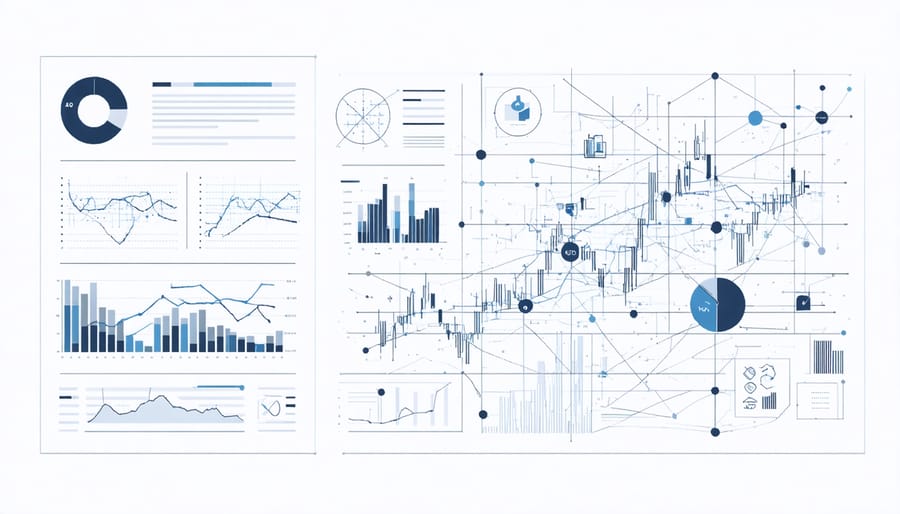
Machine learning systems are revolutionizing how investment banks process and analyze market data, enabling them to make faster, more informed decisions. These sophisticated algorithms can simultaneously monitor multiple data streams, including stock prices, trading volumes, news feeds, and social media sentiment, providing real-time market insights that would be impossible for human analysts to process manually.
Canadian financial institutions, such as RBC Capital Markets, are leveraging ML algorithms to detect market patterns and anomalies within milliseconds. These systems can analyze historical data alongside current market conditions to identify trading opportunities and potential risks before they become apparent to traditional analysis methods.
The technology excels at processing unstructured data from various sources, including financial reports, economic indicators, and global news events. For instance, TD Securities uses ML-powered platforms to analyze market sentiment by processing thousands of news articles and social media posts instantaneously, helping traders anticipate market movements.
By combining real-time data processing with predictive analytics, these systems provide investment bankers with actionable insights that enhance decision-making and risk management capabilities while maintaining compliance with regulatory requirements.
Key Machine Learning Applications in Canadian Banking
Risk Assessment and Management
Machine learning has revolutionized data-driven risk management in investment banking by providing sophisticated tools for analyzing and predicting potential investment risks. Canadian financial institutions are leveraging ML algorithms to assess market volatility, credit risks, and trading patterns with unprecedented accuracy.
These advanced systems can process vast amounts of historical and real-time data to identify risk patterns that human analysts might miss. For instance, RBC’s risk assessment platform uses ML algorithms to evaluate thousands of market indicators simultaneously, helping portfolio managers make more informed decisions about investment exposure.
ML-powered risk management tools excel in several key areas:
– Real-time market risk assessment
– Credit default prediction
– Fraud detection and prevention
– Portfolio optimization
– Regulatory compliance monitoring
Leading Canadian banks have reported significant improvements in risk prediction accuracy, with some systems achieving up to 85% accuracy in identifying potential investment risks before they materialize. These tools are particularly valuable during market volatility, as they can quickly adjust risk models based on changing conditions.
The integration of ML in risk assessment has also improved operational efficiency, reducing the time required for risk analysis from days to minutes. This enhanced capability allows investment banks to respond more quickly to market changes and protect client investments more effectively.

Portfolio Optimization
Machine learning has revolutionized portfolio optimization by enabling investment managers to process vast amounts of market data and make more informed allocation decisions. Canadian financial institutions are increasingly adopting AI-powered investment strategies to enhance portfolio performance and reduce risk.
These sophisticated algorithms analyze historical market trends, economic indicators, and company fundamentals to identify optimal asset combinations. By considering hundreds of variables simultaneously, ML models can suggest portfolio adjustments that human managers might overlook. For example, RBC Global Asset Management uses ML algorithms to evaluate over 10,000 securities daily, helping portfolio managers maintain ideal risk-return ratios.
ML-driven portfolio optimization also excels at factor investing, where algorithms identify specific characteristics that drive returns. This approach has proven particularly effective in volatile markets, with Canadian pension funds reporting improved risk-adjusted returns through ML-enhanced allocation strategies.
The technology also enables dynamic rebalancing, automatically adjusting portfolios as market conditions change. TD Asset Management demonstrates this capability through their smart beta funds, which use ML to maintain optimal exposure to various investment factors while minimizing transaction costs.
For individual investors, these advances mean access to sophisticated portfolio management techniques previously available only to institutional clients, democratizing professional-grade investment strategies across the Canadian market.
Fraud Detection and Compliance
Machine learning has revolutionized fraud detection and compliance monitoring in investment banking, offering unprecedented accuracy and efficiency. Canadian financial institutions are leveraging these advanced systems to protect assets and maintain regulatory compliance while reducing operational costs.
Leading Canadian banks employ ML algorithms that analyze millions of transactions in real-time, identifying suspicious patterns and potential fraud before they impact clients. These systems learn from historical fraud cases to detect new and evolving threats, adapting their parameters continuously to stay ahead of sophisticated criminal schemes.
For regulatory compliance, ML systems automatically monitor trading activities, communications, and transaction patterns to ensure adherence to financial regulations. These tools can flag potential violations of anti-money laundering (AML) laws, Know Your Customer (KYC) requirements, and other regulatory frameworks.
TD Bank’s Chief Risk Officer, Ajai Bambawale, notes: “Machine learning has transformed our ability to protect customers and meet regulatory requirements. We’re seeing a 60% reduction in false positives while capturing more actual fraud attempts.”
The implementation of ML-powered compliance systems has also streamlined reporting processes. Banks can now generate comprehensive regulatory reports automatically, reducing manual effort and human error. This automation allows compliance teams to focus on investigating genuine concerns rather than processing routine paperwork.
These advances in fraud detection and compliance are particularly crucial for maintaining Canada’s reputation as a secure and well-regulated financial market, benefiting both domestic and international investors.
Success Stories from Canadian Financial Institutions

TD Bank’s ML Innovation
TD Bank has emerged as a leader in leveraging machine learning technology for investment analysis in the Canadian banking sector. The bank’s innovation hub, located in Toronto’s financial district, has developed sophisticated ML algorithms that analyze vast amounts of market data to identify investment opportunities and assess risks.
A notable achievement is TD’s automated portfolio management system, which uses ML to process over 100,000 data points daily, helping investment advisors make more informed decisions for their clients. The system considers multiple factors, including market trends, economic indicators, and company fundamentals, to generate investment recommendations.
“Our ML systems have significantly improved our ability to identify market patterns and predict potential investment outcomes,” says Sarah Chen, TD’s Head of AI Innovation. “This has resulted in more precise risk assessment and better-tailored investment strategies for our clients.”
The bank has also implemented ML-powered fraud detection systems that protect investment transactions and monitor unusual trading patterns. This dual approach to using ML for both investment analysis and security has positioned TD as an industry pioneer.
Recent results show that TD’s ML-enhanced investment services have improved portfolio performance metrics by approximately 15% while reducing analysis time by 60%. The bank continues to invest in ML technology, with plans to expand its capabilities in natural language processing for market sentiment analysis and automated research synthesis.
RBC’s AI Research Initiatives
Royal Bank of Canada (RBC) has emerged as a leader in applying machine learning technologies within investment banking operations. Through its Borealis AI research institute, RBC has developed sophisticated ML solutions that enhance trading strategies, risk assessment, and client service delivery.
A notable achievement is RBC’s AI-powered trading platform, which analyzes vast amounts of market data in real-time to identify trading opportunities and optimize execution timing. The system has demonstrated impressive accuracy in predicting market movements and has significantly improved trading efficiency.
In wealth management, RBC has implemented ML algorithms that create personalized investment portfolios based on individual client risk profiles and financial goals. These systems continuously adapt to changing market conditions and client circumstances, ensuring optimal portfolio performance.
The bank’s fraud detection capabilities have also been revolutionized through machine learning. RBC’s ML models can identify suspicious patterns across millions of transactions, significantly reducing financial crime while maintaining seamless customer experiences.
Dr. Foteini Agrafioti, Head of Borealis AI, notes: “Our investment in AI research has transformed how we approach complex financial decisions. We’re seeing remarkable improvements in accuracy and efficiency across our operations.”
RBC continues to expand its ML initiatives, with recent focus areas including natural language processing for market analysis and automated credit risk assessment. These innovations have positioned RBC at the forefront of AI adoption in Canadian banking, delivering measurable benefits to both institutional and retail clients.
Future Opportunities and Challenges
Emerging Technologies
The rapid fintech transformation in Canadian banking has paved the way for groundbreaking machine learning technologies. Natural Language Processing (NLP) systems are becoming increasingly sophisticated, enabling banks to analyze unstructured data from social media, news articles, and company reports in real-time. These advances help identify market trends and investment opportunities with unprecedented accuracy.
Quantum computing applications are showing promise in portfolio optimization and risk assessment, with major Canadian banks investing in quantum-ready algorithms. Edge computing is also gaining traction, allowing for faster processing of market data and improved trading execution.
Another significant development is the integration of explainable AI (XAI) models, which provide transparency in decision-making processes – a crucial factor for regulatory compliance and client trust. Advanced federated learning systems are enabling banks to collaborate on AI models while maintaining data privacy, creating more robust prediction capabilities across the industry.
These emerging technologies are reshaping investment banking operations, promising enhanced efficiency and more sophisticated investment strategies for Canadian institutions.
Preparing for the Future
To thrive in the ML-driven investment banking landscape, investors need to develop a multi-faceted approach to adaptation. First, focus on developing digital literacy and understanding basic machine learning concepts. This doesn’t mean becoming a data scientist, but rather gaining enough knowledge to make informed decisions about ML-powered investment tools and strategies.
Consider partnering with financial advisors who have expertise in ML-driven investment strategies. These professionals can help bridge the knowledge gap and provide valuable insights into how algorithms influence market dynamics. Many Canadian financial institutions now offer training programs and resources to help clients understand their ML-powered services.
Stay informed about regulatory changes affecting ML in banking, as this will impact investment strategies and opportunities. The Canadian Securities Administrators regularly update guidelines on automated trading and AI-driven investment tools.
Build a diversified portfolio that combines both traditional and ML-driven investment approaches. This balanced strategy helps mitigate risks while taking advantage of technological advancements. Remember that while ML tools can enhance decision-making, human judgment and experience remain crucial components of successful investing.
Finally, regularly review and update your investment strategy to accommodate emerging ML technologies and changing market conditions.
Machine learning has fundamentally transformed investment banking in Canada, offering unprecedented opportunities for investors and institutions alike. As we’ve explored throughout this article, AI-driven technologies are revolutionizing risk assessment, portfolio management, and trading strategies across the financial sector.
Canadian financial institutions have demonstrated remarkable success in implementing these technologies, with major banks like RBC and TD leading the way in AI adoption. Their experiences show that machine learning not only enhances operational efficiency but also provides more accurate market insights and better risk management capabilities.
For Canadian investors, several key takeaways emerge. First, consider working with financial institutions that have robust ML capabilities, as they’re likely to offer more sophisticated investment solutions. Second, stay informed about AI-driven investment products and services, which can provide better-tailored portfolio recommendations and risk assessment.
Looking ahead, the integration of machine learning in investment banking will continue to evolve. Investors should maintain a balanced approach: embrace technological innovations while understanding their limitations. Regular consultation with financial advisors who understand both traditional banking principles and emerging technologies is recommended.
Success in this new landscape requires adaptability and continuous learning. Canadian investors who stay informed about ML developments while maintaining sound investment principles will be best positioned to benefit from these technological advancements in the financial sector.