

Canada’s multifaceted leadership structure shapes everything from government policy to Canadian business leadership, creating a unique ecosystem that drives national success. At the federal level, the Prime Minister and Cabinet establish strategic direction, while provincial premiers and territorial leaders manage regional governance. This hierarchical yet collaborative system extends into the private sector, where corporate boards, C-suite executives, and industry associations form an intricate network of decision-makers.
Understanding this leadership landscape proves crucial for business growth and market navigation. Canadian organizations thrive through a distinctive blend of public-private partnerships, indigenous governance integration, and cross-sector collaboration. Major corporations like Royal Bank of Canada and Shopify demonstrate how successful enterprises leverage this structure to foster innovation while maintaining strong stakeholder relationships.
For entrepreneurs and established businesses alike, mastering Canada’s leadership framework opens doors to government contracts, industry partnerships, and market expansion opportunities. The system’s emphasis on consultation, consensus-building, and sustainable development creates a stable environment for long-term business planning and investment.

Federal Government’s Role in Business Leadership
Innovation, Science and Economic Development Canada
Innovation, Science and Economic Development Canada (ISED) plays a pivotal role in fostering business leadership and economic growth across the nation. This federal department operates as a central hub for supporting Canadian businesses through various programs, funding initiatives, and strategic guidance.
ISED’s primary focus areas include promoting innovation, facilitating scientific research, and driving sustainable economic development. The department manages key programs such as the Strategic Innovation Fund, which has invested billions in cutting-edge Canadian companies, and the Regional Development Agencies that provide targeted support for local business communities.
Through its comprehensive approach, ISED helps businesses scale up, access new markets, and adopt innovative technologies. The department’s initiatives include digital adoption programs, intellectual property support, and strategic partnerships with industry leaders. Notable success stories include supporting emerging tech companies in artificial intelligence and clean technology sectors.
For Canadian entrepreneurs and business leaders, ISED serves as a valuable resource for accessing government support, industry insights, and networking opportunities. The department maintains strong relationships with industry associations, academic institutions, and international partners to create a robust ecosystem for business growth.
Recent initiatives have focused on digital transformation, clean technology development, and strengthening Canada’s position in the global innovation economy. ISED continues to adapt its programs to meet evolving business needs while ensuring Canadian companies remain competitive in the international marketplace.
Business Development Bank of Canada
The Business Development Bank of Canada (BDC) stands as a crucial pillar in Canada’s business leadership ecosystem, serving as the nation’s only financial institution dedicated exclusively to entrepreneurs. As a Crown corporation, BDC plays a vital role in fostering business growth and developing strong leadership across the country through specialized financing, advisory services, and capital investment solutions.
BDC’s leadership development initiatives focus on empowering Canadian entrepreneurs with the tools and resources needed to scale their businesses effectively. Through its comprehensive advisory services, BDC helps business owners strengthen their leadership capabilities, implement strategic planning, and adapt to changing market conditions.
The organization’s impact extends beyond traditional lending, offering specialized programs that target key growth sectors and underserved communities. For instance, their Women in Technology Venture Fund supports women-led technology companies, while their Indigenous Growth Fund helps Indigenous entrepreneurs expand their businesses.
Success stories from BDC’s portfolio demonstrate the organization’s effectiveness in nurturing business leadership. According to recent data, companies supported by BDC typically show stronger growth rates and better survival rates than the national average. Their approach combines financial support with practical guidance, helping entrepreneurs develop both their business acumen and leadership skills.
BDC’s leadership structure itself models best practices, with a diverse executive team and board of directors representing various sectors and regions across Canada. This inclusive approach ensures that the organization remains responsive to the diverse needs of Canadian entrepreneurs while maintaining its position as a driving force in the nation’s business leadership development.
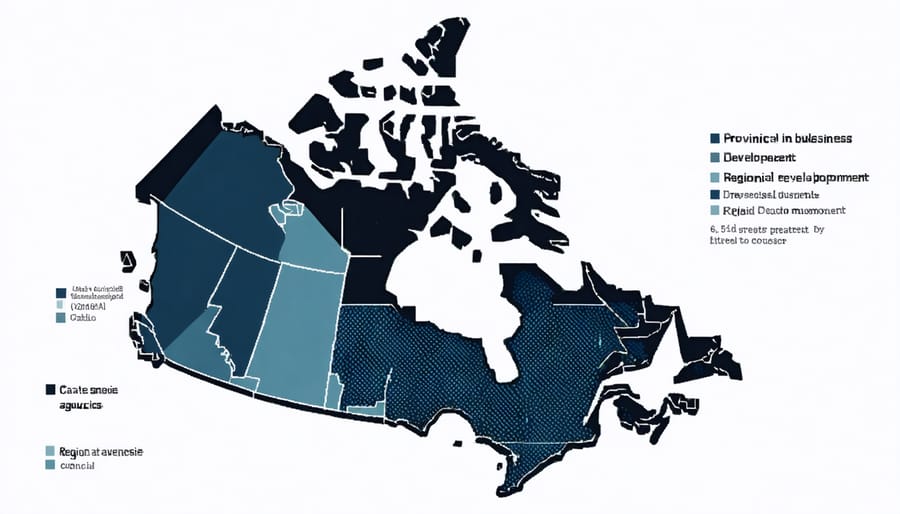
Provincial and Regional Leadership Networks
Provincial Business Councils
Provincial business leadership councils play a vital role in shaping regional economic policies and fostering business growth across Canada. These organizations serve as powerful advocates for local business interests while facilitating collaboration between government officials and industry leaders.
Each province maintains its own distinct council structure, typically comprising experienced executives, entrepreneurs, and industry experts who understand their region’s unique challenges and opportunities. These councils work to attract investment, promote innovation, and develop strategies that strengthen provincial economies.
In Ontario, for example, the Ontario Business Council has successfully championed initiatives that have led to significant job creation and economic growth. Similarly, the British Columbia Business Council has been instrumental in developing trade relationships with Pacific Rim countries.
These provincial councils provide valuable resources for businesses, including market intelligence, networking opportunities, and advocacy support. They also work closely with federal authorities to ensure provincial business interests are represented in national policy discussions.
Through regular forums, policy recommendations, and direct engagement with government officials, these councils help create an environment where businesses can thrive while contributing to Canada’s overall economic success.
Regional Development Agencies
Regional Development Agencies (RDAs) play a vital role in fostering business growth and innovation across Canada’s diverse economic regions. These agencies serve as essential bridges between federal initiatives and local business communities, providing targeted support and funding to drive regional economic development.
Canada’s six major RDAs – including Western Economic Diversification Canada and the Atlantic Canada Opportunities Agency – work closely with local businesses to identify growth opportunities and overcome regional challenges. They offer specialized programs tailored to each region’s unique economic landscape, from supporting traditional industries to fostering emerging technology sectors.
These agencies deliver crucial financial assistance through grants, loans, and investment programs, helping businesses scale operations and enter new markets. For example, the Federal Economic Development Agency for Southern Ontario has successfully supported numerous tech startups in the Toronto-Waterloo corridor, contributing to its emergence as a major innovation hub.
RDAs also facilitate valuable networking opportunities and knowledge sharing between business leaders. They coordinate with local chambers of commerce, industry associations, and educational institutions to create robust support ecosystems for entrepreneurs. This collaborative approach ensures that regional business leadership remains strong and responsive to local economic needs while staying aligned with national economic objectives.
Success stories like Vancouver’s growing clean technology sector demonstrate how RDAs effectively nurture local business leadership and drive sustainable economic growth.
Private Sector Leadership Organizations
Industry Associations
Industry associations play a vital role in shaping Canada’s business landscape and fostering leadership culture transformation across sectors. The Canadian Chamber of Commerce, as the country’s largest business association, represents over 200,000 businesses and actively influences policy decisions while providing leadership development opportunities for its members.
The Business Council of Canada, comprising CEOs from leading enterprises, works closely with government officials to advance economic policies and strengthen corporate leadership practices. Their Leadership Forum program connects emerging business leaders with experienced executives, creating valuable mentorship opportunities.
Sector-specific associations like the Canadian Manufacturers & Exporters (CME) and the Information Technology Association of Canada (ITAC) provide specialized leadership training and advocacy services. These organizations regularly host leadership conferences, workshops, and networking events that help business leaders stay current with industry trends and best practices.
Regional chambers of commerce and industry groups complement national associations by addressing local business needs and fostering community leadership. They serve as essential bridges between businesses and government agencies, ensuring that leadership perspectives from all regions influence national policy discussions.
Through collaborative initiatives, these associations help establish industry standards, share best practices, and create opportunities for professional development, ultimately strengthening Canada’s position in the global business community.
Chambers of Commerce
Chambers of Commerce play a vital role in shaping Canada’s business leadership landscape by serving as essential networking hubs and development platforms for entrepreneurs and executives. These organizations, present in virtually every major city and region across Canada, facilitate connections between business leaders while providing crucial resources for professional growth.
The Canadian Chamber of Commerce, along with its network of provincial and local chambers, offers specialized leadership development programs tailored to various industry sectors. These initiatives include mentorship opportunities, executive training sessions, and strategic planning workshops that help business leaders enhance their management capabilities and expand their professional networks.
Notable success stories include the Toronto Region Board of Trade’s Leadership Development Program, which has helped numerous executives advance their careers while strengthening local business communities. Similarly, the Vancouver Board of Trade’s Leaders of Tomorrow program has become a benchmark for developing next-generation business leaders.
These chambers also serve as powerful advocacy bodies, representing business interests at all government levels. Through policy committees and task forces, chamber members actively participate in shaping business-friendly legislation and regulations. This engagement provides valuable leadership experience while ensuring the Canadian business community’s voice is heard in important policy discussions.
For emerging leaders, chamber membership offers unique opportunities to serve on committees, lead special initiatives, and gain practical experience in community leadership roles. This hands-on experience proves invaluable for professional development and career advancement in Canada’s business ecosystem.

Future of Canadian Business Leadership
As Canada navigates an increasingly digital and globally connected business landscape, the future of business leadership is evolving rapidly. Emerging trends show a shift towards more inclusive, technology-driven, and sustainable leadership models that emphasize collaboration and innovation.
Canadian business leaders are increasingly embracing artificial intelligence and data analytics to drive decision-making while maintaining the human-centric approach that characterizes Canadian management style. Industry experts predict that successful leaders will need to balance technical expertise with strong emotional intelligence and cross-cultural competencies.
Environmental, Social, and Governance (ESG) considerations are becoming central to leadership strategies, with Canadian companies leading the way in sustainable business practices. This focus is attracting international investment and creating new opportunities for growth across various sectors.
The rise of remote and hybrid work models is reshaping leadership approaches, with Canadian organizations developing innovative solutions for team management and corporate culture building. Leaders are adapting by implementing more flexible communication strategies and embracing digital transformation.
Young entrepreneurs and diverse business leaders are bringing fresh perspectives to traditional industries, driving innovation and creating more inclusive workplace environments. Programs supporting women, Indigenous peoples, and newcomers in leadership roles are expanding, enriching Canada’s business landscape.
Companies investing in leadership development and succession planning are seeing stronger long-term performance. This trend is expected to continue as organizations focus on building resilient leadership pipelines that can adapt to rapid market changes and evolving business challenges.
Understanding Canada’s leadership structure is crucial for business success in today’s dynamic marketplace. The multi-layered system, from federal to provincial to municipal levels, creates both challenges and opportunities for business leaders. By recognizing how these different leadership tiers interact and influence business operations, organizations can better position themselves for growth and success.
Key takeaways for business leaders include the importance of building relationships across different governmental levels, understanding regulatory frameworks, and leveraging available support systems. Successful Canadian businesses have demonstrated that adapting leadership styles to align with both local and national contexts leads to better outcomes.
Business leaders should focus on developing strong networks within their industry sectors while maintaining awareness of governmental priorities and initiatives. Regular engagement with industry associations, chambers of commerce, and governmental bodies can provide valuable insights and opportunities for growth.
Moving forward, Canadian business leaders should:
– Stay informed about policy changes at all government levels
– Cultivate relationships with key stakeholders
– Participate in industry associations and business networks
– Leverage government support programs and initiatives
– Adopt inclusive leadership practices that reflect Canadian values
– Maintain flexibility in leadership approach to address regional differences
By embracing these principles and understanding the interconnected nature of Canadian leadership structures, business leaders can better navigate the complex landscape and drive their organizations toward sustainable success.