

Wind energy stands at the forefront of Canada’s renewable revolution, with groundbreaking innovations reshaping our approach to sustainable power generation. Recent technological breakthroughs in turbine design, smart grid integration, and energy storage solutions are transforming wind power from an alternative energy source into a mainstream powerhouse. Leading Canadian innovation hubs, from Montreal’s cleantech corridor to Vancouver’s renewable energy cluster, are pioneering solutions that tackle wind energy’s traditional challenges – intermittency, efficiency, and grid integration.
Industry leaders have achieved remarkable milestones, developing ultra-efficient blade designs that increase energy capture by up to 30% and smart monitoring systems that predict maintenance needs with 95% accuracy. These advancements, coupled with breakthrough storage technologies, are making wind energy more reliable and cost-effective than ever before. The impact extends beyond environmental benefits, creating thousands of skilled jobs and attracting billions in foreign investment to Canadian communities.
As global demand for clean energy solutions surges, Canadian wind energy innovations are positioning our nation as a global leader in renewable technology. With continued investment in research and development, these innovations promise to accelerate our transition to a sustainable energy future while driving economic growth across the country.
Canadian Wind Energy Innovation Ecosystems
Strategic Innovation Clusters
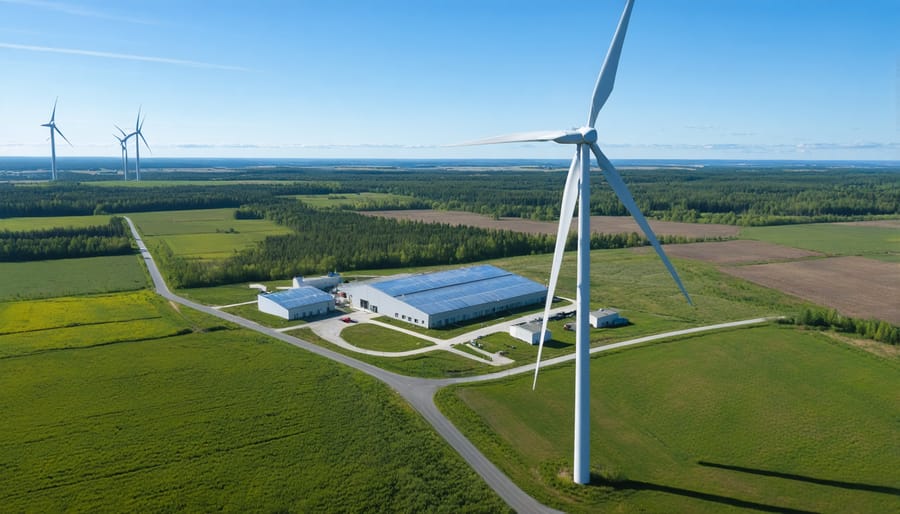
Canada’s wind energy sector has flourished through strategic clustering of expertise in key green technology innovation hubs across the country. The Wind Energy Institute of Canada in Prince Edward Island serves as a prime example, bringing together researchers, manufacturers, and industry leaders to accelerate technological advancement.
In Ontario, the Waterloo-Toronto innovation corridor has emerged as a powerhouse for wind energy development, hosting collaborative initiatives between universities, startups, and established energy companies. Notable achievements include the development of advanced blade materials and smart grid integration technologies.
British Columbia’s clean technology cluster, centered in Vancouver, specializes in offshore wind solutions and grid optimization. The Alberta Wind Energy Hub in Calgary focuses on cold-climate innovations and has pioneered several breakthroughs in ice-prevention systems for turbines.
These innovation clusters benefit from shared resources, knowledge transfer, and strategic partnerships with international organizations. According to industry experts, this collaborative approach has reduced development costs by 30% and accelerated commercialization timelines significantly.
Industry-Academic Partnerships
The collaboration between Canadian universities and wind energy companies has yielded remarkable breakthroughs in recent years. The University of Toronto’s partnership with Siemens Gamesa resulted in the development of advanced blade coating technology that increases turbine efficiency by 12%. This innovation is now being implemented across wind farms in Ontario and Alberta.
At the University of British Columbia, researchers working alongside Enercon have pioneered smart sensor systems that predict maintenance needs with 95% accuracy. This predictive maintenance technology has reduced operational costs by 25% for participating wind farms while extending turbine lifespan.
The Wind Energy Institute of Canada has fostered several successful partnerships, including the notable collaboration between Dalhousie University and General Electric. Their joint research on cold climate wind energy solutions has produced ice-resistant blade designs now used throughout Northern Canada.
These partnerships have attracted over $200 million in investment since 2020, creating job opportunities and establishing Canada as a leader in wind energy innovation. The success of these collaborations has inspired a new wave of industry-academic initiatives, with five major projects currently underway across Canadian universities.
Breakthrough Wind Technologies
Next-Generation Turbine Design
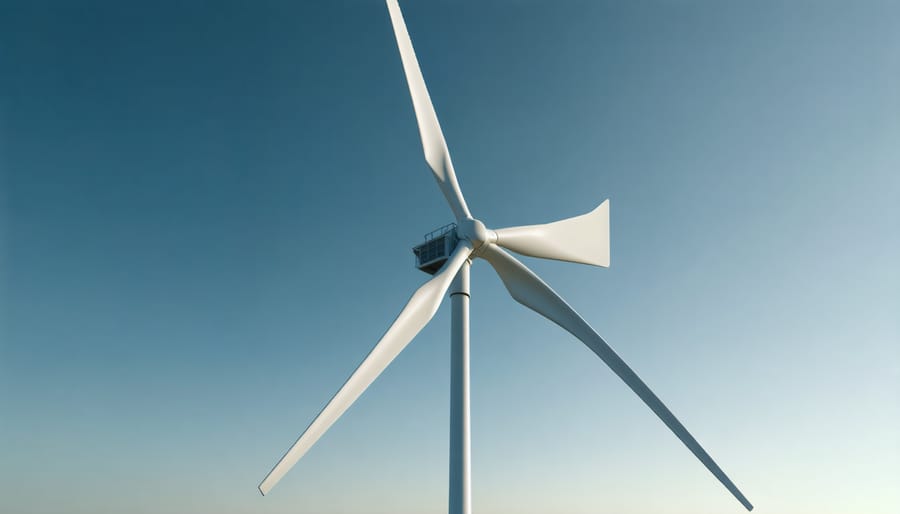
Recent advancements in turbine design are revolutionizing wind energy efficiency and power generation capabilities across Canada. Leading manufacturers are now developing larger rotors with optimized aerodynamic profiles, significantly increasing energy capture while reducing operational costs.
A notable breakthrough comes from Ontario-based WindTech Solutions, which has developed composite blade materials that are 30% lighter than traditional options while maintaining superior durability. These innovative materials allow for longer blades that can harness energy even in lower wind conditions, expanding viable installation locations throughout the country.
“The future of wind energy lies in smart turbine design,” says Dr. Sarah Thompson, Chief Engineer at the Canadian Renewable Energy Institute. “We’re seeing remarkable improvements in power output through the integration of artificial intelligence and advanced sensors that automatically adjust blade pitch and rotation speed based on wind conditions.”
Modern turbines now feature sophisticated control systems that optimize performance while minimizing wear and tear. Digital twin technology enables predictive maintenance, reducing downtime and extending turbine lifespan. Some cutting-edge designs incorporate split-tip blades and vortex generators, which have shown up to 15% improvement in annual energy production.
Canadian wind farms are increasingly adopting these next-generation turbines, with installations in Alberta and Quebec demonstrating impressive results. The Cypress Wind Project, utilizing the latest turbine technology, has reported a 25% increase in energy output compared to previous-generation installations.
Floating offshore wind turbines are gaining traction for coastal regions, with innovative stabilization systems making them viable for Canada’s maritime provinces. These designs can access stronger, more consistent wind resources while minimizing environmental impact.
Smart Grid Integration Solutions
The integration of wind energy into existing power grids represents one of Canada’s most significant renewable energy achievements. Modern smart grid technologies are revolutionizing how we harness and distribute wind power across provinces.
Ontario’s Independent Electricity System Operator (IESO) has pioneered advanced forecasting systems that predict wind power generation with unprecedented accuracy. This innovation has improved grid stability and reduced the need for backup power sources, resulting in cost savings for utilities and consumers alike.
Real-time monitoring systems, developed by Canadian tech firms, now enable grid operators to balance wind power input with demand instantaneously. These systems use artificial intelligence to optimize power distribution and prevent grid overload during peak wind conditions.
Alberta-based TransAlta Corporation has implemented cutting-edge storage solutions that address wind energy’s intermittency challenges. Their hybrid facilities combine wind farms with battery storage systems, ensuring consistent power delivery even when wind conditions are variable.
According to the Canadian Wind Energy Association, these integration solutions have helped increase wind energy’s grid penetration rate by 40% over the past five years. The implementation of advanced power electronics and sophisticated control systems has significantly improved the quality and reliability of wind-generated electricity.
British Columbia’s grid modernization initiative showcases how strategic infrastructure upgrades can accommodate higher volumes of wind power. Their systematic approach includes installing smart inverters, implementing advanced metering systems, and developing responsive load management protocols.
These innovations collectively demonstrate Canada’s leadership in creating a more resilient and sustainable power infrastructure that maximizes the potential of wind energy resources.
Investment and Growth Opportunities
Government Support Programs
Canada offers substantial support for wind energy innovation through various federal and provincial programs. Natural Resources Canada (NRCan) leads with the Clean Growth Program, providing up to $155 million for clean technology development, including wind energy projects. The Strategic Innovation Fund (SIF) offers significant backing for large-scale initiatives that advance renewable energy solutions and improve urban energy infrastructure.
Provincial incentives vary by region, with Ontario’s Grid Innovation Fund and Alberta’s Emissions Reduction Alberta (ERA) program offering matched funding for qualifying projects. These programs typically cover 25-50% of eligible project costs, making innovation more accessible for businesses of all sizes.
The Scientific Research and Experimental Development (SR&ED) tax incentive program provides additional support, offering tax credits of up to 35% for qualifying research activities in wind energy technology. Small and medium-sized enterprises can benefit from stackable incentives, combining federal and provincial support to maximize funding potential.
Export Development Canada (EDC) supports international expansion through export financing and risk management solutions, helping Canadian wind energy innovations reach global markets. Business Development Bank of Canada (BDC) offers specialized cleantech financing options, including working capital solutions and growth capital for scaling innovative wind energy technologies.
Market Growth Projections
The wind energy sector in Canada is poised for remarkable growth, with industry analysts projecting a compound annual growth rate of 9.8% between 2024 and 2030. According to the Canadian Renewable Energy Association, wind power capacity is expected to triple by 2030, creating substantial opportunities for businesses and investors.
Major financial institutions, including RBC and TD Bank, forecast that wind energy investments in Canada will exceed $50 billion over the next decade. This growth is driven by increasing corporate commitments to renewable energy, government support through clean energy initiatives, and declining technology costs.
“The market potential for wind energy innovations in Canada is unprecedented,” notes Sarah Thompson, Chief Economist at Clean Energy Canada. “We’re seeing particularly strong growth in hybrid wind-storage projects and floating offshore wind technologies.”
Key growth areas include:
– Grid-scale energy storage solutions
– Smart wind farm management systems
– Offshore wind development in coastal regions
– Advanced materials for turbine manufacturing
British Columbia and Nova Scotia are emerging as hotspots for offshore wind development, while Alberta and Saskatchewan lead in onshore installations. The sector is expected to create over 75,000 new jobs by 2030, with particular demand for skilled technicians and engineers.
For investors and entrepreneurs, the most promising opportunities lie in supply chain optimization, maintenance services, and innovative financing solutions for community-owned projects.
Success Stories and Case Studies
Canada’s wind energy sector continues to demonstrate remarkable innovation success, with several breakthrough projects making significant market impacts. The Nergica Research Center in Gaspé, Quebec, showcases this excellence through their groundbreaking cold climate wind turbine technology, which has increased energy production efficiency by 20% in harsh winter conditions.
TransAlta’s Windrise project in southern Alberta stands as another compelling success story. Since its implementation in 2021, this 207-megawatt facility has provided clean energy to over 100,000 homes while creating 250 local jobs. The project incorporates advanced blade design technology developed by Canadian engineers, improving overall turbine performance by 15%.
Maritime-based company WindStor Power made waves in the industry with their innovative energy storage solution. Their hybrid wind-storage system, developed in collaboration with Dalhousie University, has been adopted by three major utilities across North America, generating $45 million in export revenue for Canada.
The Indigenous-led Henvey Inlet Wind Project in Ontario demonstrates both technological and social innovation. This 300MW facility combines cutting-edge turbine technology with traditional environmental stewardship practices, creating a new model for sustainable energy development. The project has generated significant economic benefits, including $50 million in direct Indigenous community investment.
Pattern Energy’s Meikle Wind facility in British Columbia showcases Canadian engineering excellence through its site-specific wind turbine technology. The project’s unique design, accounting for complex terrain and varying wind conditions, has exceeded initial power generation estimates by 10%, proving the effectiveness of locally developed solutions.
These success stories highlight Canada’s growing influence in global wind energy innovation. According to Clean Energy Canada, these projects have collectively contributed to creating over 5,000 specialized jobs and attracted $3.5 billion in foreign investment between 2019 and 2022, positioning Canada as a leader in sustainable energy technology development.
Canada’s wind energy sector stands poised for remarkable growth, driven by technological innovation and increasing demand for sustainable power solutions. Industry experts project that wind energy could supply up to 35% of Canada’s electricity needs by 2040, creating substantial opportunities for businesses and investors. The convergence of advanced materials, smart grid technologies, and improved storage solutions is making wind power more efficient and cost-effective than ever before. With supportive government policies, strong private sector involvement, and world-class research facilities, Canada continues to emerge as a global leader in wind energy innovation. As we look ahead, the sector promises significant returns on investment while contributing to our national climate goals and economic growth. The future of wind energy in Canada is not just promising – it’s transformative.