

Mastering global supply chains has become a game-changing imperative for Canadian businesses in today’s interconnected economy. From Vancouver’s bustling ports to Toronto’s manufacturing hubs, companies are revolutionizing their operations through strategic international partnerships and digital transformation. The convergence of advanced technology, shifting trade agreements, and evolving consumer demands has created unprecedented opportunities for Canadian enterprises to optimize their supply networks across borders.
Recent data from Statistics Canada shows that businesses leveraging global supply chains experience 23% higher growth rates than those operating solely within domestic markets. Leading Canadian manufacturers like Bombardier and Magna International demonstrate how strategic supply chain globalization can drive innovation, reduce costs, and accelerate market expansion.
For Canadian business leaders, understanding and implementing effective global supply chain strategies isn’t just about survival – it’s about seizing competitive advantages in an increasingly complex marketplace. Whether you’re a growing tech startup in Waterloo or an established manufacturer in Montreal, the ability to navigate international supply networks effectively has become fundamental to sustainable business success. This comprehensive guide explores practical approaches to building resilient, efficient global supply chains while managing risks and leveraging Canada’s unique position in international trade.
The Evolution of Global Supply Chains in Canada
Technology’s Role in Modern Supply Chains
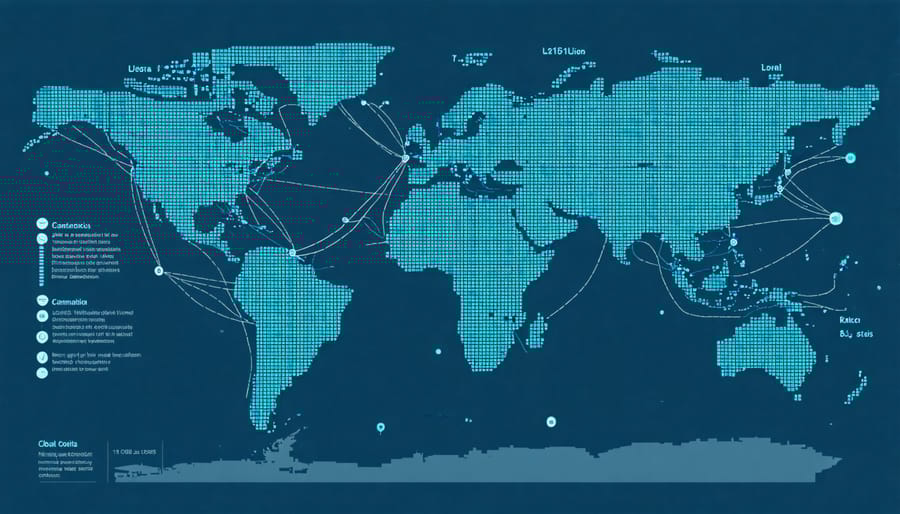
Modern supply chains are being revolutionized by digital transformation in trade, with emerging technologies reshaping how businesses manage their global operations. Cloud-based platforms, artificial intelligence, and Internet of Things (IoT) sensors are enabling real-time tracking, predictive analytics, and automated decision-making across supply networks.
Canadian companies like Shopify have demonstrated how technology can streamline inventory management and order fulfillment across borders. Their success shows how digital solutions can help businesses of all sizes compete globally. Supply chain visibility tools now allow managers to monitor shipments, inventory levels, and potential disruptions from anywhere in the world.
Blockchain technology is enhancing transparency and security in supply chain documentation, while machine learning algorithms optimize routing and predict maintenance needs. According to the Canadian Supply Chain Sector Council, companies implementing these technologies report up to 20% improvement in operational efficiency.
These innovations are particularly valuable for Canadian businesses dealing with vast geographic distances and cross-border trade. By embracing digital tools, companies can reduce costs, improve customer satisfaction, and build more resilient supply networks.
Canadian Success Stories in Global Trade
Canadian companies have demonstrated remarkable success in navigating global supply chains, setting benchmarks for international trade excellence. Lululemon Athletica, founded in Vancouver, has masterfully expanded its athletic wear empire across Asia, Europe, and the Americas through strategic supplier relationships and efficient distribution networks. Their success stems from carefully cultivated partnerships with manufacturers in multiple regions, ensuring production flexibility and market responsiveness.
Another standout example is McCain Foods, which has grown from a small New Brunswick potato processing plant into the world’s largest manufacturer of frozen potato products. Their success lies in establishing local farming partnerships and production facilities across six continents, effectively reducing transportation costs while maintaining consistent quality standards.
Bombardier Transportation exemplifies how Canadian manufacturers can succeed in complex global markets. Despite fierce competition, they’ve secured major contracts worldwide by developing an intricate network of suppliers and assembly facilities strategically positioned near key markets.
These companies share common success factors: investment in relationship building with international partners, adoption of advanced supply chain technologies, and maintenance of high-quality standards while managing costs effectively. Their achievements demonstrate how Canadian businesses can thrive in the global marketplace through strategic supply chain management.
Optimizing Your Supply Chain for Global Markets

Risk Management Strategies
Effective risk management is crucial for Canadian businesses navigating global supply chains. Successful organizations typically employ a multi-layered approach to mitigate potential disruptions and protect their operations.
Diversification stands as a cornerstone strategy, with companies maintaining relationships with multiple suppliers across different geographic regions. Canadian manufacturer Magna International exemplifies this approach, sourcing components from various global partners while maintaining strong domestic connections.
Real-time monitoring and visibility systems help organizations track shipments, inventory levels, and potential disruptions. These technologies enable quick responses to challenges and support informed decision-making. Regular supplier audits and performance assessments help maintain quality standards and identify potential risks before they materialize.
Insurance coverage specifically designed for international trade provides financial protection against various risks, including shipping delays, cargo damage, and political instability. Many Canadian businesses combine traditional insurance with innovative financial instruments to create comprehensive risk protection.
Building strong relationships with logistics partners and maintaining open communication channels across the supply chain network enhances resilience. Regular scenario planning and crisis management drills prepare teams to handle unexpected disruptions effectively.
Digital transformation initiatives, including blockchain technology and artificial intelligence, are increasingly being adopted to strengthen supply chain security and transparency. These tools help Canadian businesses maintain compliance with international regulations while optimizing their operations.
Maintaining adequate safety stock and establishing alternative transportation routes provides additional security against supply chain disruptions, ensuring business continuity in challenging times.
Cost Optimization Techniques
Cost optimization in global supply chains requires a strategic balance between efficiency and resilience. Leading Canadian companies have successfully implemented several key techniques to reduce operational costs while maintaining quality standards.
Bulk purchasing and consolidation of shipments remain fundamental strategies, allowing businesses to leverage economies of scale. Canadian manufacturer Magna International demonstrates this approach by coordinating purchases across multiple facilities, resulting in 15-20% cost savings on raw materials.
Strategic supplier relationships play a crucial role in cost management. Developing long-term partnerships with reliable suppliers often leads to preferential pricing and payment terms. Many successful Canadian exporters maintain a diverse supplier network across multiple regions to minimize risk while maximizing cost benefits.
Technology adoption has become increasingly important for cost optimization. Implementation of advanced inventory management systems and predictive analytics helps companies reduce carrying costs and prevent stockouts. According to Supply Chain Canada, businesses using such technologies report an average of 12% reduction in operational costs.
Transportation optimization through multi-modal shipping solutions and route planning helps minimize logistics expenses. Canadian businesses are increasingly using AI-powered logistics platforms to identify the most cost-effective shipping routes and consolidation opportunities.
Nearshoring and regional clustering have gained popularity as cost-effective alternatives to distant sourcing. Many Canadian companies are establishing strategic partnerships in Mexico and other Americas-based locations, reducing transportation costs while maintaining quality control.
By implementing these techniques thoughtfully, Canadian businesses can build more cost-efficient global supply chains while maintaining competitive advantages in international markets.
Building Resilient Supplier Networks
Building resilient supplier networks requires a strategic approach that balances risk management with opportunity maximization. Canadian businesses have found success by implementing a multi-supplier strategy, where key components or materials are sourced from different geographical regions to minimize disruption risks.
Toronto-based manufacturer Atlas Solutions demonstrates this approach effectively. “We maintain relationships with suppliers across three continents,” says CEO Sarah Thompson. “This diversity has proven invaluable during recent global disruptions, allowing us to maintain consistent production levels.”
To develop strong international supplier relationships, consider these proven strategies:
1. Conduct thorough due diligence on potential suppliers, including financial stability, production capacity, and compliance records
2. Establish clear communication protocols and regular check-ins
3. Invest in digital platforms for real-time inventory tracking and order management
4. Create contingency plans for each critical supplier
5. Build personal relationships through regular visits when possible
Vancouver-based tech firm Northern Digital has successfully implemented a supplier rating system that tracks performance metrics, quality standards, and delivery reliability. This data-driven approach helps identify potential issues before they become critical problems.
Remember to consider cultural nuances when building international relationships. Many Canadian companies find success by appointing dedicated relationship managers who understand local business practices and customs. Regular supplier audits, combined with collaborative improvement initiatives, help maintain high standards while strengthening partnerships.
Leveraging Canadian Trade Advantages
Government Support Programs
Canadian businesses venturing into global supply chains can access numerous government support programs designed to facilitate international trade success. Through trade facilitation measures, organizations like Export Development Canada (EDC) and the Trade Commissioner Service (TCS) offer comprehensive assistance packages.
The CanExport program provides funding of up to $75,000 to help businesses explore new export opportunities. This initiative covers market research, trade show participation, and business travel expenses. Similarly, the Business Development Bank of Canada (BDC) offers specialized loans and advisory services tailored to companies expanding their global supply chain operations.
Regional development agencies across Canada provide location-specific support, including the Western Economic Diversification Canada and Atlantic Canada Opportunities Agency. These organizations offer funding, mentorship, and networking opportunities to help businesses establish international partnerships.
The Strategic Innovation Fund (SIF) supports large-scale projects that strengthen supply chain resilience and innovation. For small and medium-sized enterprises, the Canada Small Business Financing Program helps secure loans for equipment and facilities needed for global operations.
Business owners can access these resources through a single window at the Canada Business Network, which streamlines the application process and provides expert guidance on program selection. Regular workshops and webinars hosted by these agencies help businesses stay informed about emerging opportunities and best practices in global supply chain management.
Strategic Trade Partnerships
Canada’s position in global trade is strengthened by its extensive network of strategic trade partnerships, offering businesses unprecedented access to international markets. The Comprehensive Economic and Trade Agreement (CETA) with the European Union has opened doors for Canadian companies to engage with a market of over 500 million consumers. Similarly, the Comprehensive and Progressive Agreement for Trans-Pacific Partnership (CPTPP) provides preferential access to fast-growing Asia-Pacific economies.
These agreements have particularly benefited Canadian manufacturers and exporters. For instance, Vancouver-based tech firm Northern Gateway Technologies increased its revenue by 40% after expanding into EU markets through CETA-enabled opportunities. The North American Free Trade Agreement’s successor, the CUSMA, continues to facilitate seamless trade with our largest trading partners, the United States and Mexico.
To maximize these opportunities, Canadian businesses should:
– Research market-specific requirements and regulations
– Develop relationships with local distributors and partners
– Utilize government trade resources and support programs
– Consider joining industry associations for networking opportunities
– Stay informed about upcoming trade missions and exhibitions
The Trade Commissioner Service (TCS) offers valuable support for businesses looking to leverage these agreements, providing market intelligence, funding programs, and connection to international business networks. With careful planning and strategic execution, Canadian businesses can effectively utilize these trade partnerships to build resilient global supply chains.
Future-Proofing Your Global Supply Chain
Sustainability Initiatives
In today’s global marketplace, sustainability has become a crucial differentiator for successful supply chain operations. Canadian companies are increasingly integrating environmental and social responsibility into their international operations, recognizing that sustainable practices not only benefit the planet but also drive long-term business success.
Leading Canadian retailers like Lululemon and Mountain Equipment Co-op have implemented comprehensive sustainability programs, including responsible sourcing initiatives and carbon footprint reduction strategies. These companies work closely with international suppliers to ensure ethical labour practices, minimize environmental impact, and maintain transparency throughout their supply chains.
Key sustainability initiatives include adopting renewable energy in warehousing operations, optimizing transportation routes to reduce emissions, and implementing waste reduction programs. Many Canadian businesses are also investing in sustainable packaging solutions and exploring circular economy principles to minimize their environmental impact.
The adoption of technology plays a vital role in sustainability efforts. Digital tracking systems help monitor environmental compliance across global supply networks, while blockchain technology enables better traceability of sustainable materials and ethical sourcing practices.
Industry experts recommend starting with small, measurable sustainability goals and gradually expanding initiatives across the supply chain. Companies can begin by conducting sustainability audits, establishing supplier codes of conduct, and partnering with local environmental organizations to develop effective strategies.
As global consumers increasingly prioritize sustainability, Canadian businesses that embrace environmental and social responsibility in their supply chains position themselves for long-term success while contributing to a more sustainable future.

Digital Innovation and Integration
The integration of emerging technologies continues to revolutionize global supply chains, with Canadian businesses leading the way in digital supply chain optimization. Artificial Intelligence (AI) and Machine Learning are transforming inventory management and demand forecasting, enabling businesses to make data-driven decisions with unprecedented accuracy.
Internet of Things (IoT) sensors now provide real-time tracking and monitoring of shipments, temperature conditions, and inventory levels. This enhanced visibility allows companies to respond quickly to disruptions and maintain product integrity throughout the supply chain. Blockchain technology is improving transparency and traceability, with Canadian firms like Vancouver-based DLT Labs pioneering solutions for major retailers.
Cloud-based platforms are facilitating seamless collaboration between supply chain partners, while advanced analytics tools help identify inefficiencies and optimization opportunities. Canadian technology provider Kinaxis, for instance, offers AI-powered supply chain planning solutions used by global enterprises.
Robotics and automation are streamlining warehouse operations and last-mile delivery, with autonomous vehicles and drones becoming increasingly common. These innovations are particularly valuable in Canada’s vast geography, helping businesses serve remote communities more efficiently.
As these technologies mature, they’re becoming more accessible to small and medium-sized enterprises, leveling the playing field in global trade. Government initiatives like the Digital Technology Supercluster are supporting Canadian businesses in adopting these innovations, ensuring they remain competitive in the global marketplace.
As Canadian businesses navigate the complexities of global supply chains, success lies in embracing innovation while maintaining resilience. Forward-thinking companies are leveraging digital technologies, fostering strong international partnerships, and diversifying their supplier networks to stay competitive. To thrive in this evolving landscape, businesses should focus on developing robust risk management strategies, investing in supply chain visibility tools, and building relationships with reliable global partners. The Canadian government continues to support international trade through various programs and agreements, creating opportunities for businesses of all sizes. By staying informed about market trends, maintaining operational flexibility, and prioritizing sustainable practices, Canadian companies can position themselves effectively in the global marketplace while contributing to our nation’s economic growth.