

Laboratory water purification transforms tap or raw water purification feedstock into precision-grade water meeting ASTM, ISO, or CLSI specifications through combinations of filtration, deionization, reverse osmosis, and UV treatment. The right system selection hinges on matching your application requirements (Type I, II, or III water) with throughput needs, budget constraints, and compliance mandates.
Canadian laboratories operate under strict water quality protocols that directly impact research validity, equipment longevity, and regulatory approval. A pharmaceutical QC lab in Montreal discovered this reality when trace organic contamination from an undersized purification system invalidated three months of stability testing. The subsequent $180,000 loss and delayed product launch underscored why proper system specification matters from day one.
Today’s laboratory water purification market offers solutions ranging from basic reverse osmosis units at $3,500 to comprehensive Type I ultrapure systems exceeding $45,000. The technology landscape has matured significantly, with Canadian facilities now accessing real-time conductivity monitoring, automated sanitization cycles, and predictive maintenance alerts that weren’t standard even five years ago.
For procurement officers and lab managers navigating this investment, understanding the distinction between water grades proves essential. Type III water (resistivity 4 MΩ·cm minimum) suits glassware rinsing and media preparation. Type II water (1 MΩ·cm) handles general analytical work and buffer preparation. Type I ultrapure water (18.2 MΩ·cm at 25°C) remains non-negotiable for HPLC, spectroscopy, cell culture, and molecular biology applications where even parts-per-billion contamination skews results.
This guide examines the core technologies driving laboratory water purification, provides selection frameworks for Canadian facilities, and profiles successful implementations across research, clinical, and industrial laboratory environments throughout 2026.
Why Water Purity Determines Your Lab’s Success
A single contaminated water sample can invalidate months of research, trigger regulatory violations, and cost your laboratory hundreds of thousands of dollars in lost productivity and remediation. Yet many Canadian labs operate without fully understanding how water impurities compromise their work at every level.
In pharmaceutical manufacturing, water quality failures consistently rank among the top FDA inspection findings. Trace metals in analytical water skew quantitative results, leading to batch rejections and costly investigations. A 2025 study of Canadian pharmaceutical facilities found that 23% of unexpected analytical results traced back to laboratory water contamination, impurities that standard monitoring had missed. When your HPLC baseline drifts or your mass spectrometry readings become inconsistent, contaminated water is often the silent culprit.
Biotechnology labs face different but equally serious consequences. Endotoxins in cell culture water trigger false inflammatory responses, destroying weeks of experimental work. Nucleases contaminate molecular biology reagents, degrading RNA and DNA samples. Academic researchers at Canadian universities have reported losing grant funding after published results proved unreproducible, investigations revealed that bacterial biofilms in aging purification systems had compromised their water supply for months.
The financial impact extends beyond failed experiments. A Toronto pharmaceutical company faced a $2.1 million recall in 2024 after trace organic compounds in their laboratory water went undetected during quality control testing. The FDA guidance on water use requires pharmaceutical manufacturers to validate their water systems continuously, and Canadian facilities exporting to US markets must meet these standards regardless of domestic regulations.
Reputational damage proves harder to quantify but lasts longer. Clinical diagnostic labs that report incorrect patient results due to water contamination face legal liability and loss of accreditation. Research institutions struggle to attract top talent when their infrastructure can’t guarantee reliable results.
Your laboratory’s credibility rests on a foundation of pure water. Get it wrong, and everything built on top becomes questionable.
Understanding Laboratory Water Grades and Standards
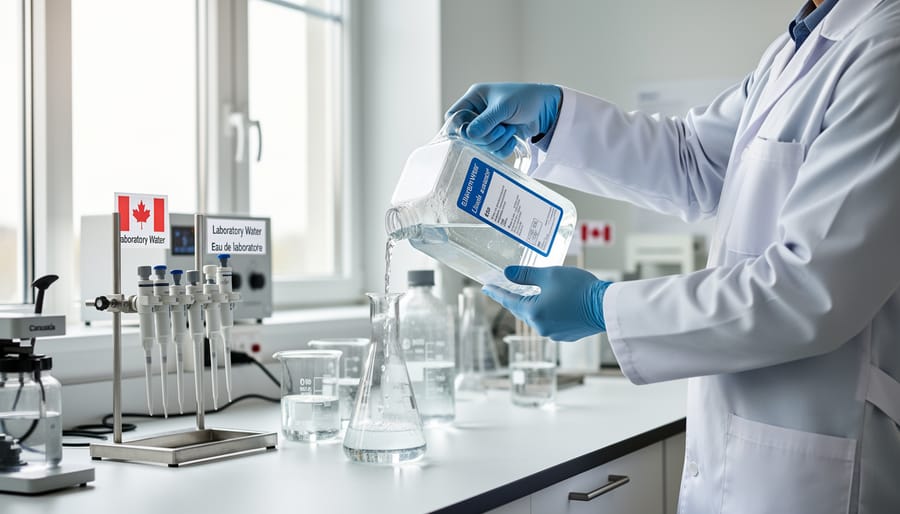
Laboratory water isn’t a single product, it’s a tiered system where purity determines what you can reliably accomplish. International standards, primarily ISO 3696 and ASTM D1193, classify laboratory water into three distinct grades based on measurable quality parameters. Getting this wrong means your analytical results become suspect, your regulatory submissions get rejected, or your manufacturing processes fail validation.
Type I water represents ultrapure water with resistivity of 18.2 MΩ·cm at 25°C, total organic carbon (TOC) below 10 ppb, and virtually no bacterial contamination. Canadian pharmaceutical manufacturers preparing injectable solutions need this grade, as do university research labs running high-performance liquid chromatography, mass spectrometry, or molecular biology applications where trace contaminants compromise results. One microgram of dissolved silica can ruin an immunoassay; Type I water eliminates that risk.
Type II water, with resistivity around 1-15 MΩ·cm and TOC under 50 ppb, serves as the workhorse for general laboratory applications. Quality control labs in Canadian food processing plants use this grade for routine chemical analysis, buffer preparation, and equipment rinsing. It’s pure enough for most spectroscopy work and standard microbiological testing but doesn’t carry the cost premium of ultrapure systems.
Type III water (resistivity 0.05-1 MΩ·cm) handles non-critical applications: glassware rinsing, water baths, autoclaves, and media preparation where slight contamination won’t affect outcomes. Most Canadian laboratories source Type III water from reverse osmosis systems or distillation as a cost-effective starting point.
| Water Type | Resistivity | TOC Limit | Typical Applications |
|---|---|---|---|
| Type I | 18.2 MΩ·cm | <10 ppb | HPLC, mass spec, cell culture, molecular biology |
| Type II | 1-15 MΩ·cm | <50 ppb | General chemistry, buffers, reagent prep, spectroscopy |
| Type III | 0.05-1 MΩ·cm | <200 ppb | Glassware washing, autoclaves, media prep |
Canadian biotechnology firms developing biosimilars typically maintain Type I systems for critical formulation work while using Type II for stability testing and routine quality checks. Mining laboratories analyzing ore samples often find Type II sufficient for atomic absorption work, whereas environmental testing labs measuring parts-per-trillion contaminants in water samples need Type I to avoid introducing false positives from the purification water itself. The grade you choose directly determines which analyses you can credibly perform and which regulatory pathways remain open to your facility.
Core Purification Technologies Explained
Reverse Osmosis and Ultrafiltration
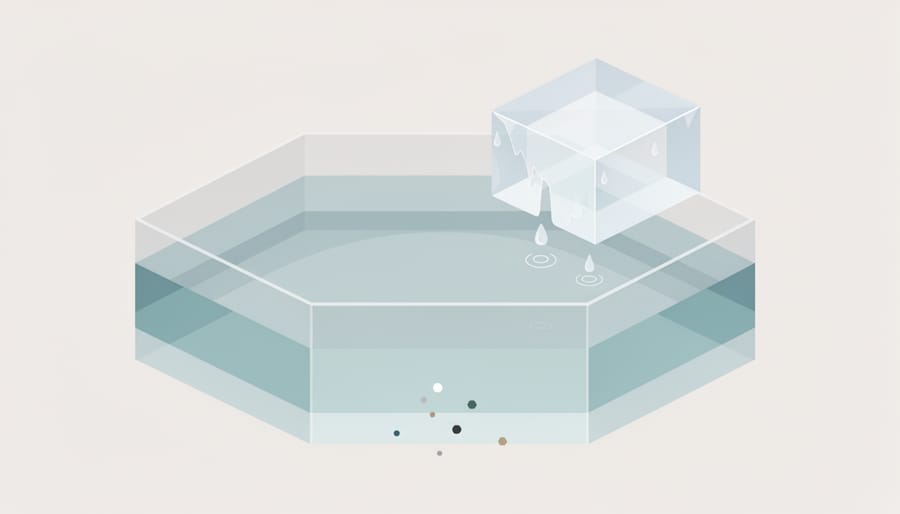
Reverse osmosis (RO) forms the backbone of most laboratory water systems, using semi-permeable membranes to block 95-99% of dissolved salts, organic molecules, and particles larger than 0.0001 microns. Feed water passes under pressure against these membranes, forcing pure water molecules through while rejecting contaminants into a waste stream. This purification process typically reduces total dissolved solids from 200-500 ppm in municipal water to under 10 ppm, creating a clean baseline for downstream polishing stages.
Ultrafiltration operates similarly but targets larger molecules and microorganisms, removing bacteria, endotoxins, and colloids between 0.001-0.1 microns. Many Canadian labs combine both technologies: RO handles the bulk removal of dissolved contaminants, while ultrafiltration provides an additional barrier against biological contamination. Together, these membrane systems reduce the burden on more expensive final purification stages and extend the life of ion exchange resins. The key advantage is consistent, predictable performance regardless of seasonal variations in municipal water quality that affect facilities across provinces like Ontario and Quebec.
Ion Exchange and Deionization
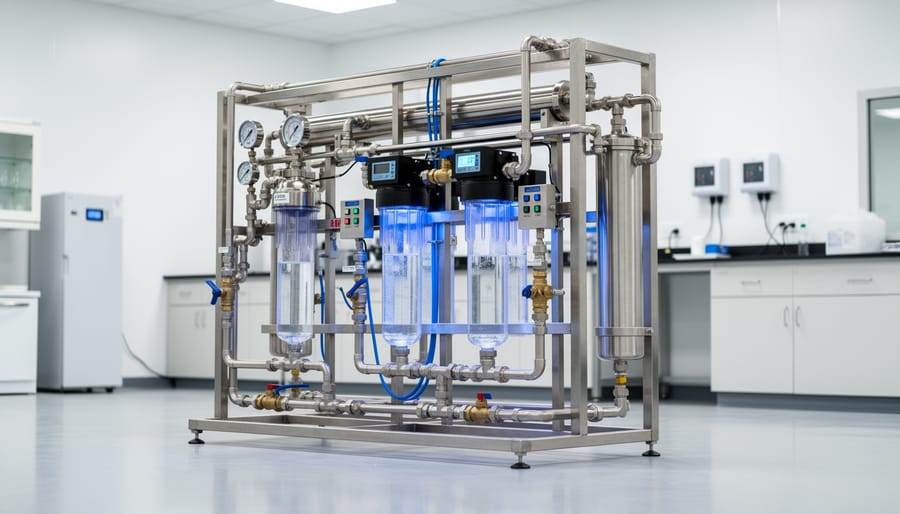
Ion exchange and deionization systems form the backbone of achieving ultra-pure water for analytical applications. These resin-based technologies remove dissolved ionic contaminants that reverse osmosis alone cannot eliminate, pushing water resistivity to the 18.2 MΩ·cm level that Type I water demands.
The process uses two types of synthetic resins packed into columns or cartridges. Cation exchange resins swap positively charged ions like calcium, magnesium, and sodium for hydrogen ions. Anion exchange resins simultaneously replace negatively charged ions such as chloride, sulfate, and nitrate with hydroxide ions. The hydrogen and hydroxide ions combine to form pure water molecules.
Mixed-bed deionization combines both resin types in a single vessel, maximizing contact efficiency and producing the highest purity water. This configuration is standard in polishing loops that maintain Type I water quality for sensitive techniques like mass spectrometry and chromatography.
Resin exhaustion occurs as binding sites fill with contaminants. Most Canadian laboratories use disposable cartridges that eliminate regeneration complexity, though larger facilities may justify regenerable systems that restore resin capacity using acid and caustic solutions. Monitoring resistivity in real-time signals when replacement is needed, preventing quality degradation that compromises analytical accuracy.
UV Oxidation and Sterilization
UV oxidation and sterilization represents a crucial dual-purpose technology in laboratory water purification systems. This method employs ultraviolet light at specific wavelengths to address two distinct contamination challenges that other purification stages cannot fully resolve.
UV light at 254 nanometers effectively inactivates bacteria, viruses, and other microorganisms by damaging their DNA structure, preventing reproduction and ensuring microbiologically safe water. Canadian pharmaceutical laboratories particularly rely on this sterilization function to meet stringent microbial contamination limits.
At 185 nanometers, UV light performs oxidation by generating hydroxyl radicals that break down organic molecules into carbon dioxide and water. This process eliminates trace organic contaminants that would otherwise interfere with sensitive analytical techniques like chromatography or mass spectrometry.
Most modern laboratory water systems incorporate both wavelengths to deliver comprehensive protection. The technology operates continuously without introducing chemicals, produces no byproducts, and requires minimal maintenance beyond annual lamp replacement. For facilities conducting trace analysis or cell culture work, UV treatment provides the final barrier against biological and organic contamination that could compromise results.
Activated Carbon and Final Polishing
Activated carbon filtration serves as a critical polishing step in laboratory water systems, targeting trace organic compounds that earlier purification stages might miss. These specially prepared carbon materials possess enormous surface areas, often exceeding 1,000 square meters per gram, that trap chlorine, pesticides, dissolved organic molecules, and taste- and odour-causing substances through adsorption.
Canadian laboratories typically employ two carbon configurations. Granular activated carbon (GAC) handles bulk organic removal and protects downstream components, while specialized carbon blocks or coconut-shell carbon provides final polishing before the water enters Type I purification stages. The carbon must be replaced regularly, usually every 6-12 months depending on source water contamination levels, because saturated carbon loses effectiveness and can actually release accumulated contaminants back into the water stream.
Advanced systems now integrate oxidizing media or catalytic carbon that extends the range of compounds removed, including chloramines that standard carbon struggles with. Some newer installations combine carbon filtration with 0.2-micron absolute filters as the final barrier against particulates and bacteria, delivering water that consistently meets the sub-parts-per-billion organic carbon specifications required for liquid chromatography-mass spectrometry and other sensitive analytical techniques.
Choosing the Right System for Your Canadian Laboratory
Selecting the right laboratory water purification system requires a methodical assessment of your facility’s specific needs rather than simply purchasing the most advanced technology available. Canadian laboratories face unique considerations that influence equipment selection, from extreme temperature variations affecting storage and distribution to regional differences in municipal water quality that determine pre-treatment requirements.
Start by quantifying your actual water consumption patterns. A molecular biology lab running daily PCR protocols requires significantly different capacity than a pharmaceutical quality control facility performing occasional wet chemistry tests. Track your usage over several weeks to identify peak demand periods, not just average daily consumption. Systems sized too small create workflow bottlenecks when multiple researchers need water simultaneously, while oversized units waste energy and accelerate consumable depletion through unnecessary cycling.
Your application requirements directly dictate the water grade specifications you must achieve. Critical genomics work, HPLC analysis, and cell culture demand Type I ultrapure water with resistivity above 18 megohm-cm and total organic carbon below 5 parts per billion. General glassware rinsing, media preparation, and equipment cleaning typically function adequately with Type II water. Facilities supporting diverse research programs often benefit from systems producing multiple water grades on demand rather than purifying all water to the highest specification.
Four primary factors shape your equipment selection decision:
- Daily water consumption volume and peak flow rate requirements
- Required water grade specifications for your specific applications
- Available laboratory space for equipment installation and storage tanks
- Total cost of ownership including consumables, maintenance, and energy consumption
Canadian municipal water quality varies dramatically by region, making source water analysis essential before specifying equipment. Prairie facilities drawing from groundwater high in dissolved minerals need robust reverse osmosis pre-treatment. Coastal labs using surface water sources face different contamination profiles requiring specialized filtration. Request a detailed water quality report from your municipality and share it with potential equipment suppliers to ensure proper system configuration.
Budget considerations extend beyond initial purchase price. Compare the lifecycle costs of consumables like deionization cartridges, UV lamps, and membrane replacements across competing systems. A lower-priced unit requiring frequent cartridge changes often costs substantially more over five years than a premium system with extended consumable life. Factor in service availability within Canada as well; equipment requiring specialized technicians flown in from overseas creates costly downtime that disrupts research schedules and compromises productivity.
Canadian Success Stories in Lab Water Management
Across Canada, leading laboratories have transformed their operations through strategic water purification investments, delivering measurable improvements in research quality and cost efficiency.
The University of British Columbia’s Faculty of Pharmaceutical Sciences upgraded its central water system in 2024, installing a networked purification infrastructure serving 47 research labs. The new system reduced water-related experimental variability by 63% within the first year, allowing researchers to achieve tighter control over analytical methods and drug formulation studies. Operating costs dropped 28% through improved efficiency and predictive maintenance protocols. Perhaps most significantly, the reliable Type I water supply accelerated grant-funded research timelines, enabling the faculty to secure an additional $4.2 million in competitive funding by demonstrating enhanced technical capabilities.
Montreal-based biopharmaceutical manufacturer Repare Therapeutics restructured its quality control laboratory water infrastructure to support expanded production capacity. The company replaced aging point-of-use systems with a centralized purification loop feeding multiple testing stations. This shift eliminated inconsistencies between testing locations that had previously complicated method validation. Production downtime related to water quality investigations decreased from 127 hours annually to just 18 hours, while consumable costs fell 34%. The investment paid for itself in 22 months through improved operational efficiency and reduced regulatory compliance costs.
Saskatchewan’s Global Institute for Food Security implemented an advanced water purification system supporting agricultural genomics research. The facility requires ultra-pure water for DNA sequencing, protein analysis, and mass spectrometry applications. By selecting equipment matched precisely to their workflow demands and feedwater characteristics, the institute achieved 99.7% system uptime while maintaining sub-ppb contaminant levels. These purification breakthroughs enabled researchers to detect previously unmeasurable trace compounds in crop samples, opening new research directions in plant disease resistance and climate adaptation.
Regulatory Compliance and Quality Assurance in 2026
Canadian laboratories operate under a rigorous framework where water quality standards directly determine operational legitimacy. Health Canada’s Good Manufacturing Practice requirements mandate that pharmaceutical facilities maintain comprehensive documentation proving their laboratory water systems consistently produce water meeting specified quality parameters. Clinical laboratories must align with ISO 15189 accreditation standards, which require validated water purification processes and regular quality monitoring.
Understanding the regulatory landscape requires familiarity with key frameworks:
- Health Canada GMP Guidelines
- Canadian regulations requiring pharmaceutical manufacturers to validate and document all aspects of water production, including system design, monitoring procedures, and corrective actions. These guidelines form the basis for inspection compliance.
- USP (United States Pharmacopeia) Standards
- Internationally recognized specifications for purified water and water for injection that Canadian pharmaceutical laboratories commonly adopt alongside domestic requirements. Defines chemical and microbiological limits for various water grades.
- CLSI (Clinical and Laboratory Standards Institute)
- Organization providing evidence-based standards for clinical laboratory water quality, including guidelines for reagent water types and routine monitoring protocols used across Canadian healthcare facilities.
- ISO 3696
- International standard classifying analytical laboratory water into three grades based on conductivity, organic content, and other parameters. Widely referenced in Canadian research and industrial laboratories.
Compliance in 2026 centres on continuous monitoring rather than periodic testing. Canadian pharmaceutical operations typically implement online conductivity meters, total organic carbon analyzers, and microbial monitoring systems that provide real-time data. Documentation requirements have evolved beyond paper logbooks, regulatory bodies now expect electronic records with audit trails showing monitoring frequency, out-of-specification events, and corrective actions taken.
The Canadian Standards Association and provincial regulators conduct regular inspections where water system validation documentation becomes critical evidence. Laboratories must demonstrate they’ve established alert and action levels, performed routine preventive maintenance, and qualified their systems through installation, operational, and performance qualification protocols. Missing documentation or inadequate monitoring records consistently rank among the top deficiencies cited during regulatory audits. Quality assurance programs should include annual system reviews, periodic revalidation, and staff training records proving competency in water system operation and troubleshooting.
Investment Considerations and ROI
Laboratory water purification systems represent a significant capital investment, but understanding the complete financial picture helps Canadian facilities make decisions that deliver long-term value rather than just minimizing upfront costs.
Initial equipment costs for lab water systems range from $8,000 for basic point-of-use units to $75,000 or more for centralized Type I water production systems serving multiple laboratories. The purchase price depends primarily on daily water volume requirements, desired purity levels, and feed water quality. A mid-sized pharmaceutical QC lab typically needs $25,000 to $40,000 for a system producing 50-100 liters daily of Type I water.
Consumables and maintenance constitute the largest ongoing expense. Replacement cartridges, membranes, and resin packs cost between $1,500 and $6,000 annually depending on source water quality and usage volume. Systems processing municipal water with moderate hardness generally fall at the lower end, while facilities treating well water with high mineral content face higher consumable costs. Most manufacturers recommend professional service visits twice yearly at $500 to $1,200 per visit, though some newer systems include remote monitoring that reduces service frequency.
Energy consumption varies considerably. A typical benchtop system draws 200-400 watts during operation, translating to roughly $150-$300 annually in electricity costs for standard lab usage patterns. Larger central systems can consume 2-3 kilowatts during peak production but often feature energy-efficient standby modes.
When calculating ROI, compare these ownership costs against purchasing bottled reagent-grade water, which runs $8-$15 per liter. A lab using just 10 liters weekly spends $4,000-$7,800 annually on bottled water. An in-house system typically achieves payback within 18-30 months while eliminating supply chain dependencies and storage space requirements.
Several Canadian programs support laboratory infrastructure investments. The Strategic Innovation Fund offers grants and repayable contributions for research facility improvements. Provincial programs like Ontario’s Regional Development Program and Quebec’s ESSOR provide funding specifically for industrial and research equipment. The Scientific Research and Experimental Development tax credit covers equipment costs for qualifying research activities, potentially recovering 15-35% of capital expenses.
The Canada Foundation for Innovation funds research infrastructure at universities and colleges, often covering 40% of eligible equipment costs including water purification systems essential to funded research programs.
Maintenance and Operational Best Practices
A laboratory water purification system represents a significant investment, but its value degrades rapidly without proper care. Canadian facilities that establish consistent maintenance routines see fewer system failures, maintain water quality specifications, and extend equipment lifespan by years. The difference between a system that delivers reliable performance and one plagued by costly interruptions comes down to disciplined operational practices.
Daily monitoring forms the foundation of effective maintenance. Check resistivity readings at the point of use each morning before critical work begins. Record the values even when they fall within specification, trends matter more than single measurements. A gradual decline in resistivity over weeks signals consumable depletion or membrane fouling before quality falls below acceptable limits. Temperature readings and flow rates deserve the same attention. Sharp drops in flow often indicate filter blockages or pump issues that worsen quickly if ignored.
Consumable replacement schedules should follow manufacturer guidelines but adapt to your source water conditions and usage patterns. Toronto facilities drawing from municipal water may replace prefilters every three months, while labs in rural Alberta dealing with harder water might need monthly changes. Track actual performance rather than blindly following calendar dates. When resistivity drops below your operating threshold or pressure differentials across filters exceed specifications, replace consumables regardless of schedule.
A systematic preventive maintenance checklist keeps teams accountable and catches problems early:
- Inspect all tubing connections and fittings weekly for leaks or discoloration that indicates chemical degradation
- Clean dispenser nozzles and reservoir outlets monthly to prevent biofilm formation at critical points
- Sanitize the entire distribution system quarterly using manufacturer-approved protocols
- Test UV lamp intensity every six months and replace lamps annually even if intensity readings remain acceptable
- Document all maintenance activities with dates, observations, and any corrective actions taken
Staff training makes or breaks operational consistency. New team members need hands-on instruction in proper dispensing techniques, basic troubleshooting, and when to escalate concerns. A technician who understands why resistivity matters will catch anomalies that someone simply following a checklist might miss. Annual refresher sessions keep everyone aligned on protocols and introduce updates to procedures or equipment.
When issues arise, resist the urge to adjust multiple parameters simultaneously. Change one variable, monitor results for 24 hours, then proceed. This methodical approach identifies root causes rather than masking symptoms. Keep manufacturer support contacts readily available and maintain detailed logs of system performance, these records prove invaluable when technical support needs to diagnose complex problems remotely.
Laboratory water purification stands as a critical infrastructure investment that directly shapes the quality, reliability, and competitiveness of Canadian research and industrial operations. The evidence is clear: facilities that prioritize water quality systems position themselves for sustained excellence in a marketplace where precision matters and regulatory scrutiny continues to intensify.
Canadian laboratories cannot afford to treat water purification as an afterthought or a simple utility expense. Every analytical result, every pharmaceutical batch, every research breakthrough depends on the foundational quality of the water flowing through your systems. The facilities achieving the most impressive outcomes consistently invest in robust purification infrastructure and maintain it as a strategic priority.
Now is the time to honestly assess your current water purification setup. Ask whether your systems meet the actual demands of your applications, not just minimum specifications. Consider whether you’re truly optimizing total cost of ownership or simply deferring necessary upgrades. Evaluate if your monitoring protocols catch quality issues before they compromise your work.
Canada’s position as a global leader in life sciences, biotechnology, and advanced manufacturing depends on laboratories that refuse to compromise on quality fundamentals. The government programs and industry support networks exist to help facilities upgrade their infrastructure. Connect with water purification specialists who understand Canadian regulatory requirements and can assess your specific needs. Explore available funding programs that reduce the financial barriers to system improvements.
Quality laboratory water isn’t a luxury. It’s the foundation that makes everything else possible.