

Canada’s e-liquid market stands at the forefront of North American vaping growth, with the global sector poised to expand from USD 5.25 billion in 2026 to USD 6.89 billion by 2031 at a compound annual growth rate of 7.69%. For business owners and investors evaluating entry points or expansion strategies, understanding the Canadian segment of this North American-dominated market offers concrete opportunities in both retail and online channels.
The market’s evolution centers on three critical drivers: the shift toward refillable vaping systems, the acceleration of e-commerce adoption, and diverse consumer preferences across Canadian vape flavours nicotine strengths, and bottle formats. These factors create distinct competitive segments where value-focused retailers can establish profitable positions.
Smart market entry requires analyzing the intersection of product categories (flavored versus unflavored), packaging formats (below 30ml, 30-60ml, and above 60ml), and nicotine formulations (with or without). Distribution strategy matters equally: retailers who balance physical presence with digital reach capture broader customer segments in Canada’s geographically dispersed market.
This analysis unpacks verified market data, examines strategic positioning opportunities for value-oriented retailers, and identifies the product and channel decisions that separate growing businesses from stagnant ones. Whether you’re launching your first vape shop or optimizing an existing operation, the Canadian e-liquid landscape rewards those who match inventory strategy to documented consumer trends rather than assumptions.
The Canadian E-Liquid Market Landscape in 2026
The Canadian e-liquid market sits at the heart of a substantial growth opportunity. The global e-liquid market projections show the sector reaching USD 5.25 billion in 2026, with forecasts indicating growth to USD 6.89 billion by 2031. That represents a compound annual growth rate of 7.69%, signaling steady expansion rather than explosive volatility, exactly the kind of environment where well-positioned retailers can build sustainable businesses.
North America holds the distinction of being the largest market for e-liquid globally, which positions Canadian businesses advantageously. You’re not trying to create demand in an emerging market; you’re tapping into established consumer behavior with room for growth. The 7.69% CAGR matters because it’s high enough to accommodate new entrants without being so rapid that it attracts unsustainable competition or regulatory backlash.
For domestic retailers and entrepreneurs, these numbers translate to concrete opportunity. A market expanding by roughly $1.64 billion over five years means there’s space for value-focused retailers to carve out profitable niches without necessarily displacing established players. The growth is being driven by two practical factors: the shift toward refillable vaping systems (which creates recurring purchase patterns) and e-commerce expansion (which lowers barriers to entry for smaller operators).
What matters most isn’t just the total market size, it’s Canada’s position within the dominant North American segment. You’re operating in the largest regional market, with proximity to U.S. demand, established regulatory frameworks, and a consumer base that’s already familiar with vaping products. That combination reduces the educational burden on retailers and allows you to focus on competitive positioning rather than market development.
How Value Retail is Reshaping E-Liquid Distribution
The Economics Behind Value Positioning
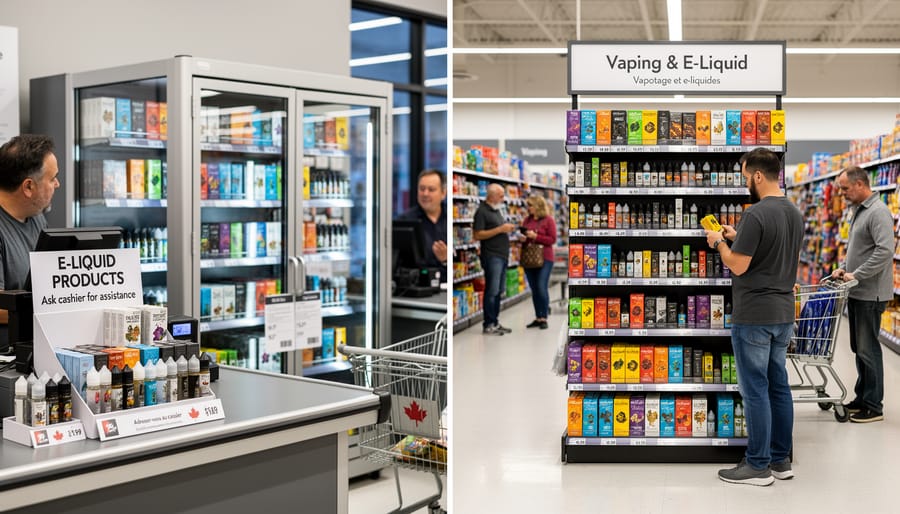
Value retailers succeed in the e-liquid market through operational efficiency rather than premium margins. By purchasing larger volumes directly from manufacturers and minimizing intermediary costs, these retailers reduce per-unit expenses without compromising product standards. The key lies in streamlined supply chains and lean operational models that eliminate unnecessary overhead while maintaining product quality through established supplier relationships.
Canadian retailers benefit from proximity to both domestic production facilities and major North American distribution networks, reducing shipping costs and import complexities. This geographic advantage allows value-focused businesses to offer competitive pricing while still sourcing from reputable manufacturers who meet Canadian regulatory standards. Bargain E-Juice, for instance, operates as the cheapest legal place to buy vape juice in Canada, offering lab-made e-liquid through direct distribution channels. The result is market accessibility for price-conscious consumers who might otherwise turn to unregulated sources.
The mathematics are straightforward: when operational costs decrease, retailers can pass savings to customers while maintaining sustainable margins. This pricing structure opens the market to a broader demographic, particularly as the sector is expected to grow from USD 5.25 billion in 2026 to USD 6.89 billion by 2031, driven by refillable vaping systems and e-commerce expansion. For Canadian entrepreneurs, this model proves especially viable given the country’s position within North America, the largest market for e-liquid globally, where established infrastructure and regulatory clarity reduce the cost barriers that challenge retailers in emerging markets.
Distribution Channel Evolution
E-commerce channels have fundamentally altered how value retailers access the e-liquid market, removing traditional barriers that once favored established brick-and-mortar chains. Canadian e-commerce infrastructure now enables smaller retailers to compete directly with larger players by eliminating expensive physical storefronts and regional inventory requirements.
The shift toward online purchasing creates natural advantages for value-positioned retailers. Lower overhead costs translate directly into competitive pricing, while digital platforms allow precise inventory management that matches real-time demand. Retailers can test new product lines and bottle sizes without committing to full shelf space, reducing financial risk and enabling faster response to consumer preferences.
This channel evolution works particularly well for refillable system users who understand what they want and prioritize consistent supply over in-store browsing. Value retailers leverage this by offering subscription models and bulk purchasing options that traditional retail formats struggle to match. The economics favor both parties: customers secure better per-unit pricing, while retailers build predictable revenue streams and reduce customer acquisition costs.
The distribution model is no longer about geographic coverage through physical locations. It’s about fulfillment efficiency, competitive pricing, and building direct customer relationships through digital touchpoints that traditional wholesaler-retailer chains can’t replicate.
Key Market Segments Driving Growth
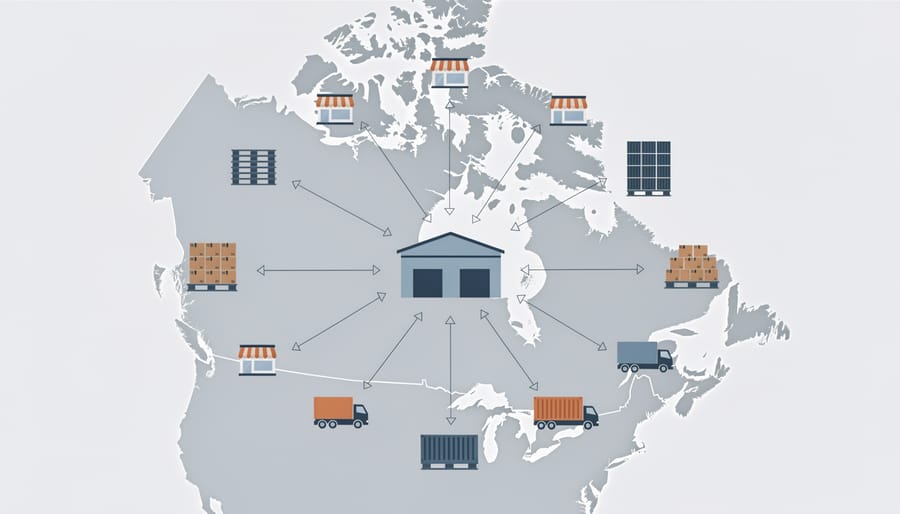
Understanding the market segments driving Canada’s e-liquid sector helps retailers identify where to focus their product mix and inventory investments. The market naturally divides along four key dimensions: flavor profile, container capacity, nicotine content, and sales channel.
Flavor segmentation creates the most visible product differentiation. Flavored e-liquids command the majority of retail shelf space and consumer preference, offering everything from fruit and dessert profiles to beverage-inspired options. Unflavored alternatives serve a smaller but stable segment of users who prefer simplicity or want to create custom blends. For Canadian retailers, carrying a curated selection of popular flavor categories generates consistent turnover without requiring excessive inventory depth in every subcategory.
Bottle size segmentation directly impacts both pricing strategy and customer purchase frequency. The below-30ml category serves trial users and those seeking variety, the 30ml-to-60ml range represents the sweet spot for regular consumers balancing cost and convenience, while above-60ml bottles appeal to committed users prioritizing value per milliliter. Value retailers often find their competitive advantage in the mid-range capacity, where they can offer better unit economics than convenience stores while maintaining accessible price points that encourage repeat purchases.
| Segment Category | Options | Retail Considerations |
|---|---|---|
| Flavor Type | Flavored, Unflavored | Stock popular flavor families; unflavored serves niche demand |
| Bottle Capacity | Below 30ml, 30-60ml, Above 60ml | 30-60ml range offers best margin and turnover balance |
| Nicotine Content | With Nicotine, Without Nicotine | Nicotine-free growing but nicotine variants drive volume |
| Distribution Channel | Retail stores, E-commerce | Omnichannel approach captures both convenience and value shoppers |
Nicotine content segmentation reflects evolving consumer behavior. E-liquids containing nicotine still drive the bulk of sales volume, but the nicotine-free segment is expanding as some users transition toward reduced dependency or use vaping purely for the sensory experience. Retailers benefit from stocking both options to serve the full customer spectrum, though inventory weighting should favor nicotine-containing products where sales velocity remains higher.
Distribution channel segmentation has become increasingly critical as e-commerce growth reshapes how Canadians purchase e-liquids. Physical retail stores still capture significant share through convenience and immediate availability, but online channels are growing faster, enabling value retailers to reach customers across geographic markets without proportional overhead increases. The strongest Canadian retailers are adopting hybrid models, using physical locations for brand presence and immediate fulfillment while building e-commerce platforms that expand their effective market reach beyond their brick-and-mortar footprint.
The Refillable System Advantage for Retailers

Refillable vaping systems represent a fundamental shift in how Canadian retailers approach the e-liquid business model. Unlike disposable devices that generate one-time transactions, refillable systems create ongoing customer relationships built around regular e-liquid purchases. This recurring revenue structure transforms value retailers from competing on individual product margins to building predictable income streams through customer retention.
The economics work in the retailer’s favour. Once a customer invests in a refillable device, whether a basic pod system or more advanced mod, they’re committed to purchasing compatible e-liquid regularly. For value retailers, this means lower customer acquisition costs spread across multiple transactions. A shopper who buys a 30ml bottle every two weeks generates substantially more lifetime value than someone purchasing disposables sporadically, and the relationship creates opportunities for upselling across different flavors and nicotine strengths.
Inventory management becomes more strategic under this model. Rather than stocking dozens of disposable SKUs with varying flavour profiles and nicotine levels, value retailers can focus on core e-liquid offerings that serve their refillable customer base. This concentration allows better purchasing power with suppliers, reduced waste from expired inventory, and more efficient shelf space utilization. The predictable consumption patterns of refillable users also enable smarter forecasting, retailers can track which bottle sizes and flavours move consistently and adjust orders accordingly.
Customer retention strengthens naturally when shoppers rely on your store for their regular refill needs. Value retailers who maintain competitive pricing, stock popular flavours reliably, and offer knowledgeable service create sticky customer relationships that withstand competitive pressure. This loyalty becomes particularly valuable as the market grows at 7.69% annually through 2031, positioning established retailers to capture expanding demand from their existing customer base rather than constantly chasing new buyers.
Strategic Opportunities for Canadian Businesses
Entry Points for New Market Participants
New entrants should first understand that the e-liquid retail opportunity doesn’t require massive capital outlays to start. Smaller retailers can begin with focused inventory, concentrating on high-turnover bottle sizes (30ml to 60ml) and popular flavor categories rather than attempting comprehensive coverage. This approach minimizes initial stock investment while testing local demand patterns through thorough market analysis.
Supplier relationships determine your cost structure and reliability. Canadian manufacturers often offer better terms for domestic retailers compared to international suppliers, particularly for businesses committing to consistent ordering volumes. Establish relationships with 2-3 suppliers initially to ensure product availability and negotiate better pricing as your volume grows.
Positioning strategy matters more than product breadth. Value-focused retailers succeed by becoming the go-to source for specific customer segments, whether that’s budget-conscious consumers, flavor enthusiasts, or those seeking larger bottle formats. Your positioning should align with your location demographics and competitive landscape.
Understanding the regulatory roadmap before launch prevents costly compliance issues. Provincial licensing requirements, packaging standards, and advertising restrictions vary significantly across Canada. Factor compliance costs into your startup budget and operational planning from day one, not as an afterthought once you’re already committed to a location or supplier agreements.
Leveraging Canadian Advantages
Canadian businesses sit at a natural crossroads advantage in the North American e-liquid market. Geographic proximity to the United States, the continent’s largest consumer base, positions domestic manufacturers and retailers to serve cross-border demand with minimal logistics overhead. Shorter shipping routes translate to faster delivery times and lower freight costs, creating competitive pricing opportunities that distant suppliers cannot match.
Regulatory clarity gives Canadian operators another edge. The country’s established framework for nicotine products provides businesses with predictable compliance requirements, reducing the legal uncertainty that complicates market entry in less-defined jurisdictions. This stability attracts investment and allows companies to focus resources on growth rather than navigating regulatory ambiguity.
Domestic manufacturing capabilities are maturing. Local production facilities reduce supply chain vulnerabilities and import dependencies, particularly important given recent global shipping disruptions. When you source or produce domestically, you control quality oversight, maintain inventory flexibility, and respond faster to market shifts in flavor preferences or nicotine strengths.
The combination creates a strategic advantage: Canadian retailers can offer competitive pricing through efficient distribution while maintaining product consistency through domestic or regional sourcing. This positioning is particularly valuable in the value retail segment, where cost control and reliability determine market share. Businesses that capitalize on these structural advantages position themselves to capture growth as North America continues leading global e-liquid market expansion through 2031.
Investment and Growth Support Resources
Canadian businesses entering the e-liquid retail market can access substantial support through federal and provincial programs designed to accelerate growth in emerging sectors. The Canada Small Business Financing Program provides loans up to $1 million for equipment and leasehold improvements, making it particularly valuable for retailers establishing physical locations or warehouse operations. Regional development agencies like FedDev Ontario and PacifiCan offer sector-specific funding that can cover market research, technology adoption, and expansion initiatives relevant to e-liquid distribution.
Export Development Canada supports retailers looking to source products internationally or expand beyond domestic markets, offering trade finance solutions and credit insurance that reduce risk in cross-border transactions. The Industrial Research Assistance Program provides both funding and expert advisory services for businesses implementing innovative retail technologies or developing proprietary product lines. Many retailers overlook these programs despite their direct applicability to inventory management systems, e-commerce platforms, and supply chain optimization.
Provincial programs complement federal support, with Ontario’s Business Growth Initiative and British Columbia’s Small Business Venture Capital Tax Credit offering region-specific advantages. The Canadian Vaping Association provides industry-specific guidance on regulatory compliance, supplier networks, and market trends that prove invaluable during market entry. Their member network includes established retailers willing to share operational insights with newcomers.
Angel investor networks and venture capital firms focused on consumer retail increasingly view value-positioned e-liquid retailers as attractive opportunities given the market’s 7.69% projected growth rate. The National Angel Capital Organization connects entrepreneurs with investors familiar with retail distribution models, while government grants through programs like the Canada Job Grant can offset training costs as you build your retail team. Community Futures Development Corporations offer both capital and mentorship in smaller markets where value retail models often thrive.
The Canadian e-liquid market presents a compelling opportunity for informed business owners and investors willing to approach it strategically. With North America leading the global market, projected to reach USD 6.89 billion by 2031 at a 7.69% CAGR, Canada’s position offers both proximity to the largest consumer base and a regulatory framework that rewards compliance and quality.
Value retailers have demonstrated that competitive pricing and market accessibility aren’t at odds with sustainable business models. The shift toward refillable systems creates predictable revenue streams, while e-commerce infrastructure enables efficient distribution without prohibitive overhead. These aren’t temporary advantages; they’re structural shifts that favour agile, well-positioned Canadian businesses.
The path forward requires clear-eyed assessment of your competitive position, realistic capital planning, and commitment to regulatory adherence. Whether you’re evaluating market entry or expansion, the fundamentals are straightforward: understand your target segments, establish reliable supplier relationships, and build operations that can scale profitably.
Canada’s domestic market strength, combined with access to North American distribution networks, positions local businesses to capture growth in both home and export markets. The retailers succeeding in 2026 are those who recognized the opportunity early, invested in understanding their customers, and built operations designed for long-term viability rather than short-term gains.
The market will continue evolving, but the core opportunity remains: delivering quality products at accessible price points to a growing consumer base. That’s a foundation worth building on.