

Local SEO helps Canadian businesses appear in Google’s Map Pack, local search results, and “near me” queries by optimizing your Google Business Profile, building location-specific citations, and earning reviews from customers in your service area. For most small businesses, implementing a focused local SEO strategy takes 4-6 weeks to show measurable improvements in local rankings and can increase foot traffic by 30-50% within the first quarter.
The stakes are high. Nearly 80% of Canadian consumers use search engines to find local products and services before making a purchase decision, yet over 60% of small businesses still lack a properly optimized Google Business Profile. That gap represents both a challenge and an opportunity. When your competitors ignore local search, a well-executed strategy gives you direct access to customers actively looking for what you offer right now in your city or neighbourhood.
Local SEO differs from broader digital marketing in one critical way: geography becomes your competitive advantage. A bakery in Kelowna doesn’t compete with every bakery in Canada; it competes with the handful of bakeries Google shows to someone searching “bakery near me” from a Kelowna address. You win by proving to search engines that your business is relevant, trustworthy, and physically present in the locations you serve.
Canadian businesses face unique considerations. Bilingual content requirements in some provinces, NAP consistency across .ca domains, and region-specific directories all shape your approach. Meanwhile, Google’s algorithm changes continue to prioritize genuine customer engagement over shortcuts, making authentic reviews and accurate business information more valuable than ever.
This guide walks you through the complete process: which tools to set up first, how to avoid the penalties that harm local rankings, and the exact step-by-step actions that move your business up in local search results. Whether you handle optimization yourself or work with specialists like Grizzly Agency you’ll understand what works, why it matters, and how to measure real progress.
Essential Tools and Platforms for Local SEO Success
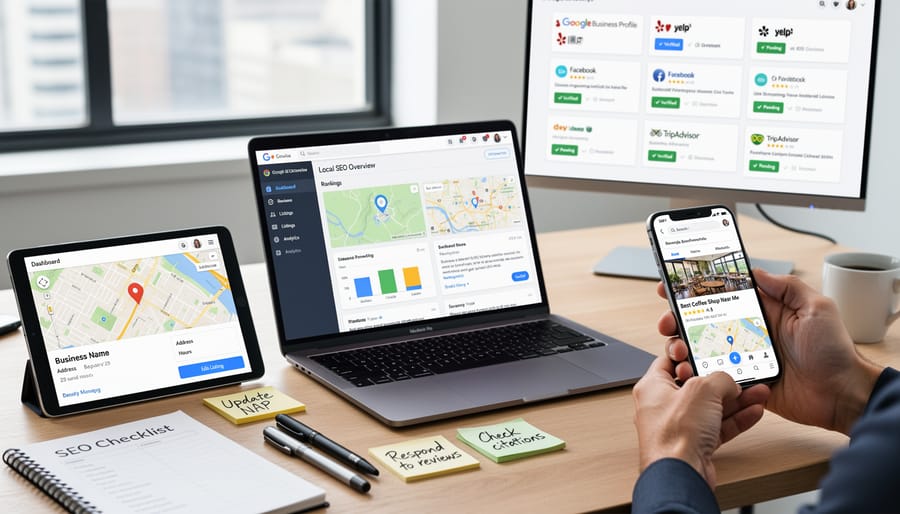
Before you implement any local SEO tactics, you need the right foundation in place. Think of these platforms and tools as your digital infrastructure, without them, even the best optimization efforts won’t deliver results. Canadian businesses specifically need accounts and access to several key platforms that work together to establish your local presence and help customers find you.
Google Business Profile sits at the centre of local SEO success. This free platform controls how your business appears in Google Search and Google Maps, which together account for over 90% of search traffic in Canada. Your Google Business Profile directly influences whether you appear in the local pack (those top three map results) and provides essential information like your hours, photos, and customer reviews.
Bing Places for Business and Apple Maps deserve attention despite smaller market shares. Bing powers voice search through devices like Amazon Alexa, while Apple Maps comes pre-installed on every iPhone, and iPhone usage remains strong across Canadian demographics. Setting up these profiles takes minimal time but ensures you don’t miss potential customers using these platforms.
Local citation directories serve as verification points that search engines use to confirm your business legitimacy. For Canadian businesses, these include:
- Yellow Pages Canada (), Canada’s most recognized business directory
- High-authority Canadian directory with strong local search integration
- Yelp Canada, Important for consumer-facing businesses and reputation management
- Facebook Business Page, Social presence that appears in search results
- Industry-specific directories, Trade associations and professional listings relevant to your sector
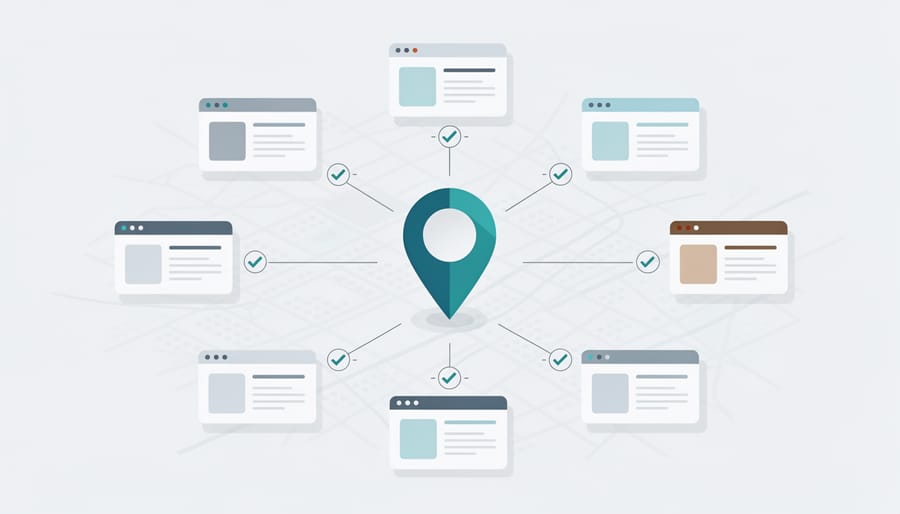
These directories work together to build what SEO professionals call citation consistency. When Google sees your business name, address, and phone number matching across dozens of trusted sources, it increases confidence in your legitimacy and boosts local rankings.
Analytics and tracking tools let you measure what’s working. Google Analytics 4 shows how local searchers interact with your website, while Google Search Console reveals which local keywords drive traffic. Your Google Business Profile includes built-in insights showing search queries, customer actions, and photo views. Together, these tools transform local SEO from guesswork into data-driven strategy, helping you understand where to focus your optimization efforts for maximum impact.
Common Pitfalls and What to Avoid

Local SEO offers tremendous opportunities, but certain mistakes can set you back months or even trigger penalties from search platforms. Understanding these pitfalls before you start helps you build a sustainable strategy that grows your visibility without risking your business reputation.
Inconsistent NAP Data Across Listings
Name, Address, and Phone number inconsistencies remain the most common, and damaging, error Canadian businesses make. When your business appears as “Bob’s Pizza” on Google but “Bob’s Pizzeria Inc.” on Bing, search engines struggle to verify your legitimacy. Spelling your street name as “Avenue” on one platform and “Ave” on another, or listing different phone numbers across directories, fragments your authority signals. Every inconsistency dilutes trust and confuses potential customers trying to reach you.
Keyword Stuffing and Unnatural Optimization
Cramming your business name with keywords (“Toronto SEO Expert Plumber Near Downtown Toronto”) violates Google’s guidelines and damages credibility with actual customers. Your business name should be exactly what appears on your storefront and legal documents. Similarly, stuffing service descriptions or business categories with every possible keyword variation triggers spam filters. Write naturally for humans, incorporate location terms where they genuinely fit, and maintain local compliance with platform standards rather than gaming the system.
Duplicate Business Listings
Multiple listings for the same location create confusion and split your review equity. This often happens during ownership changes, rebranding, or when different marketing agencies create new profiles instead of claiming existing ones. Regularly audit your presence across platforms and consolidate duplicates through proper channels, merging on Google Business Profile or requesting removals from directory sites.
Wrong Business Categories
Selecting categories based on keywords you want to rank for rather than your actual business type backfires. A general contractor choosing “Home Builder” when they primarily do renovations misaligns with user intent and reduces relevance. Choose your primary category based on your main revenue source, then add secondary categories that accurately reflect additional services you offer.
Step-by-Step: Implementing Local SEO for Your Canadian Business
Step 1: Claim and Verify Your Google Business Profile
Start by navigating to and signing in with the Google account you want to manage your business profile. Search for your business name and address, if a listing already exists, you’ll need to claim and verify your profile rather than create a new one. If no listing appears, click “Add your business” and enter your legal business name exactly as registered in Canada, your complete street address including postal code, and your primary phone number with area code.
Google will prompt you to choose a verification method. Most Canadian businesses receive a postcard by mail containing a five-digit code, which typically arrives within five to seven business days. Some established businesses may qualify for instant verification through Search Console, email, or phone verification. Once you receive your code, return to your Business Profile dashboard and enter it to complete verification.
After verification, fill out every available field. Select the most specific business category that describes what you do, this single choice significantly impacts which searches you appear in. Add a second category if your business legitimately operates in multiple areas. Set your business hours accurately, including statutory Canadian holidays when you’re closed. Upload high-quality photos of your storefront, products, team, and interior. Write a concise business description (750 characters maximum) that naturally mentions your location and services without keyword stuffing.
Enable messaging so customers can contact you directly through your profile, and add attributes like “Black-owned,” “Indigenous-owned,” or “wheelchair accessible” where applicable. Update your profile immediately if your hours, address, or phone number changes, outdated information directly harms local rankings and customer trust.
Step 2: Optimize Your Business Information Across All Platforms
Once your Google Business Profile is claimed and verified, replicate that information word-for-word across every platform where your business appears. Search engines cross-reference your Name, Address, and Phone number against dozens of sources, and even minor discrepancies, “Street” versus “St.”, a suite number present on one listing but missing on another, can dilute your local rankings. consistent NAP information acts as a trust signal; conflicting data raises red flags.
Start with the major platforms: Bing Places for Business and Apple Maps Connect both require manual submission and verification. Use identical formatting for your business name, complete street address including postal code, and phone number with area code. Next, audit your presence on Canadian directories like Yellow Pages Canada, Canada411, and Yelp Canada. Log into each account, update outdated information, and delete duplicate listings that split your authority.
Category selection matters more than most business owners realize. Choose the single most accurate primary category, Google allows one, Bing up to three, that precisely describes what you do, not what you want to rank for. A plumbing company should select “Plumber”, not the broader “Home Services”. Add secondary categories only if they genuinely reflect services you provide daily.
Complete every available attribute field. Hours of operation, accepted payment methods, accessibility features, and service areas all contribute to how platforms match your business to relevant searches. For multi-location businesses, create separate listings for each physical location rather than one generic profile.
Step 3: Build and Manage Local Citations
Local citations are online mentions of your business name, address, and phone number on directory sites, review platforms, and industry databases. These citations signal to search engines that your business is legitimate and established in your location.
Start with Canada’s major general directories. Create detailed listings on Yellow Pages Canada and, ensuring your NAP information matches exactly what appears on your Google Business Profile. Include your website URL, business description, hours of operation, and payment methods accepted.
Next, identify industry-specific directories relevant to your sector. A Toronto restaurant should list on OpenTable and Zomato, while a Vancouver law firm belongs on Canadian Law List and . Research where your competitors appear and prioritize those platforms.
Before creating new citations, audit your existing ones. Search for your business name plus city name in Google to discover current listings. Use a spreadsheet to track each citation’s URL, NAP data, and whether corrections are needed. Contact directory sites directly to update outdated information or request removal of duplicate listings.
Check your citations quarterly. Business moves, phone changes, or service expansions require updates across all platforms. Inconsistent information confuses search engines and potential customers, undermining your local rankings. Set calendar reminders to review and refresh your citation portfolio regularly.
Step 4: Create Location-Optimized Website Content
Your website’s on-page content signals to search engines where you operate and what communities you serve. Start by integrating location-specific keywords naturally throughout your existing pages, instead of generic phrases like “best accounting services,” use “best accounting services in Mississauga” or “Vancouver small business tax preparation.” Include your city, province, and relevant neighbourhoods in page titles, meta descriptions, headings, and body copy where they genuinely fit the context.
Create dedicated location pages if you serve multiple areas. Each page should offer unique, substantive content about that specific location, not duplicated text with only the city name swapped. Describe the neighbourhoods you serve, mention local landmarks or business districts, address location-specific customer needs, and include a Google Map embed showing your service area. For brick-and-mortar stores, feature directions, parking information, and photos of each location.
Implement LocalBusiness schema markup on every location page. This structured data tells search engines your business name, address, phone number, hours, accepted payments, and geographic coordinates in a format they can easily parse. Use Google’s Structured Data Markup Helper or documentation to add the code to your site’s HTML. Include additional schema types relevant to your business, Restaurant, MedicalBusiness, LegalService, for enhanced search visibility.
Write location-focused blog content that demonstrates local expertise: neighbourhood guides, community event coverage, regional industry insights, or solutions to location-specific challenges your customers face. This content builds topical authority while naturally incorporating local keywords and connecting your business to the communities you serve.
Step 5: Generate and Manage Customer Reviews
Customer reviews are the most powerful form of social proof for local businesses, directly influencing both search rankings and purchase decisions. Google’s algorithm prioritizes businesses with recent, authentic reviews, while potential customers read them before visiting your location or making a purchase.
Build a systematic approach to review generation:
- Ask at the right moment, request reviews immediately after a positive interaction, successful transaction, or resolved service issue when satisfaction is highest.
- Make it easy, send direct links to your Google Business Profile review page via email, text message, or printed cards with QR codes.
- Personalize your request, train staff to ask verbally and send individual follow-up messages rather than mass emails.
- Never incentivize, offering discounts, free products, or contest entries for reviews violates platform policies and fake reviews will be removed.
- Respond to every review within 48 hours, thank positive reviewers by name and address negative feedback professionally with solutions, not defensiveness.
Monitor reviews across all platforms, not just Google. Respond publicly to demonstrate you value customer feedback and privately resolve serious complaints. Use insights from reviews to improve service and showcase common praise points in your marketing. A steady stream of 3-5 authentic reviews monthly signals active business engagement and builds trust with searchers evaluating your company.
Step 6: Leverage Local Link Building and Community Engagement
Building local authority requires earning backlinks from reputable Canadian organizations and actively engaging with your community. These signals tell search engines your business is a trusted, established local presence.
Start by joining your local chamber of commerce and industry-specific business associations. Most provide member directories with backlinks to your website. The Canadian Chamber of Commerce network spans every province, offering immediate credibility and directory inclusion.
Pursue partnerships with complementary local businesses. Co-hosting events, cross-promotions, or collaborative content naturally generates backlinks while expanding your reach. A bakery partnering with a local coffee roaster creates mutual linking opportunities that benefit both businesses.
Sponsor community events, youth sports teams, or charity initiatives. Sponsorships typically include website recognition and backlinks from event pages or organization sites. These demonstrate community involvement while building your local link profile.
Pitch story ideas to local news outlets and business publications. Expert commentary on industry trends, unique business milestones, or community contributions can earn media coverage with valuable backlinks from high-authority local domains.
Focus on quality over quantity, one link from a respected Canadian news site outweighs dozens from low-quality directories.
Measuring Results and Ongoing Optimization

Local SEO isn’t a one-time task, it requires continuous monitoring and refinement. Start by tracking your local pack rankings for your primary keywords and location terms. Use tools like Google Search Console’s Performance report filtered by geographic location to see which local queries drive clicks. Check your positions for searches like “plumber in Calgary” or “accountant near me Toronto” weekly during the first three months, then monthly once your strategy stabilizes.
Your Google Business Profile Insights dashboard reveals how customers find and interact with your listing. Monitor search queries people use to discover you, the ratio of discovery searches (people who don’t know your business) to direct searches (people searching your name), and actions taken, calls, website visits, direction requests, and photo views. A healthy profile shows growing discovery searches and increasing actions month over month. Canadian businesses should see spikes during local peak seasons relevant to their industry.
Website analytics tell the complete story. In Google Analytics 4, create segments for users from your city or province, then examine their behaviour: pages viewed, time on site, and crucially, conversions. Set up conversion tracking for phone calls, form submissions, and online bookings to quantify revenue generated from local search traffic. Compare conversion rates from local organic traffic against other sources, local visitors typically convert at higher rates because they have immediate purchase intent.
Watch for ranking volatility and competitor movement. If your position drops suddenly, audit your citations for inconsistencies, check for new negative reviews requiring responses, and ensure your Google Business Profile remains fully optimized. Local algorithms favour recency, so add fresh posts and photos every two weeks. Review your strategy quarterly: if certain location pages underperform, enhance their content with neighbourhood-specific details and local backlinks. Successful local SEO compounds over time, with established profiles earning trust that newer competitors struggle to match.
Frequently Asked Questions About Local SEO in Canada
Local SEO raises specific questions for Canadian business owners navigating regional market dynamics and bilingual considerations. These answers address the most common concerns we hear from businesses implementing local search strategies across Canada.
How long does it take to see results from local SEO efforts?
Most Canadian businesses notice initial improvements within 4-8 weeks after claiming and optimizing their Google Business Profile, with more substantial ranking gains appearing after 3-6 months of consistent optimization. Competitive markets like Toronto or Vancouver may require longer timeframes than smaller cities.
What’s the typical cost of local SEO for a Canadian small business?
DIY local SEO requires only time investment for basic optimizations, while professional services typically range from $500-$2,000 monthly depending on market competitiveness and business size. Multi-location businesses or those in highly competitive sectors should expect higher investment levels.
Do I need separate strategies for English and French-speaking markets?
Yes, businesses targeting Quebec or bilingual regions should create separate, culturally appropriate content and listings in both languages rather than relying on translations alone. This includes maintaining French-language Google Business Profiles and building citations in francophone directories.
How does local SEO differ from traditional SEO?
Local SEO prioritizes geographic relevance and proximity to searchers, focusing on Google Business Profile optimization, local citations, and reviews, while traditional SEO emphasizes broader keyword rankings and domain authority without location constraints.
Beyond these fundamentals, Canadian businesses often wonder whether they should prioritize Google over other platforms. Google dominates Canadian search with over 90% market share, making it the primary focus. However, don’t ignore Bing Places and Apple Maps, they require minimal additional effort once your information is consistent and serve users who default to those platforms.
Another frequent concern involves review velocity and authenticity. You don’t need hundreds of reviews immediately. A steady stream of 2-4 genuine reviews monthly typically outperforms sudden spikes that trigger platform scrutiny. Quality matters more than quantity, and detailed reviews mentioning specific services or products carry more weight than brief ratings.
Seasonal businesses face unique challenges in maintaining consistent local visibility. Keep your Google Business Profile active year-round by updating special hours, posting off-season content about preparations or planning services, and maintaining review responses. This sustained activity signals ongoing business operations even during slower periods.
Finally, businesses expanding to multiple Canadian locations should create individual Google Business Profiles for each physical location rather than listing all addresses under one profile. Each location needs its own optimization strategy, localized content, and citation building to perform effectively in its specific market.
Local SEO offers Canadian businesses a powerful competitive edge in an increasingly digital marketplace. When customers in your community search for products or services you provide, appearing in those local results can mean the difference between a thriving business and being overlooked. The strategies outlined in this guide are not theoretical concepts but proven methods that Canadian businesses across all industries use successfully every day.
The foundational steps matter most. Start by claiming and optimizing your Google Business Profile today. Ensure your NAP information remains consistent across every platform. Build a review generation process into your customer experience. These actions alone will position you ahead of competitors who neglect local search.
Local SEO is not a one-time project but an ongoing commitment. Market conditions change, competitors adjust their strategies, and search algorithms evolve. Regular monitoring and refinement keep your business visible to customers actively searching in your area.
Business and Industry Canada connects you with resources, expert guidance, and a network of professionals who understand the Canadian business landscape. Whether you need technical assistance, strategic advice, or industry-specific insights, our community supports your local SEO success. Take action on what you have learned, measure your results, and watch your local visibility grow.