

Power engineers in Canada are commanding salaries between $65,000 and $120,000 annually as of 2026, with demand surging across oil and gas, manufacturing, utilities, and mining sectors driven by infrastructure expansion, an aging workforce, and stricter regulatory standards. These certified professionals operate, maintain, and supervise boilers, pressure vessels, refrigeration systems, and auxiliary equipment in industrial facilities, ensuring safety and compliance with provincial codes. The profession requires tiered certification from Fourth Class through First Class, with each level unlocking higher responsibility and compensation.
Canada’s industrial sector faces a critical shortage of qualified power engineers. Retirements are accelerating while fewer young workers pursue the trade, creating a supply gap that pushes salaries upward and opens opportunities for skilled candidates. Alberta, Saskatchewan, and British Columbia report the highest compensation, reflecting their resource-heavy economies and competitive labor markets. Entry-level Fourth Class engineers start near $65,000, while experienced First Class engineers in supervisory roles often exceed $100,000, particularly in remote or high-complexity operations.
The path to certification combines technical training, practical experience, and provincial examinations administered by authorities such as the Technical Safety Authority of Ontario or the Alberta Boilers Safety Association. Aspiring engineers typically complete a recognized program at a polytechnic institute, accumulate hands-on hours under supervision, and advance through progressive licensing tiers.
Understanding what power engineers earn in Canada helps job seekers evaluate career potential and assists employers in benchmarking competitive offers to attract talent in this tightening market.
What Power Engineers Are and Their Role in Canada’s Industrial Sector

Power engineers, known officially as stationary engineers in some provinces, are skilled professionals who operate, maintain, and repair the systems that power Canada’s industrial facilities. They work with high-pressure boilers, steam systems, refrigeration units, HVAC equipment, and other industrial machinery critical to manufacturing plants, power generation stations, hospitals, universities, and commercial buildings. Unlike other engineering disciplines focused on design or project management, power engineers handle the hands-on, real-time operation of equipment that keeps facilities running safely and efficiently.
The profession operates under a four-tier certification system that determines the scope and complexity of equipment an engineer can legally operate. Fourth Class power engineers represent entry-level certification, qualified to operate smaller boiler systems and equipment found in apartment buildings, small manufacturing facilities, and institutional buildings like schools. Third Class certification expands authority to mid-sized industrial operations, including many food processing plants, smaller hospitals, and manufacturing facilities with moderate-capacity boilers and refrigeration systems.
Second Class power engineers can operate larger, more complex systems typical of major hospitals, universities, petrochemical facilities, and substantial manufacturing operations. These professionals often supervise lower-class engineers and manage multiple interconnected systems simultaneously. First Class power engineers, sometimes called Chief Engineers, hold the highest certification level and can operate any industrial plant in Canada, regardless of size or complexity. They typically work in oil refineries, large power generation stations, pulp and paper mills, mining operations, and major petrochemical facilities where equipment failure could have catastrophic safety or economic consequences.
Each certification level requires progressively more training, practical operating hours, and demonstrated competency through rigorous examinations. Provincial regulatory bodies such as Alberta Boilers Safety Association (ABSA), Technical Standards and Safety Authority (TSSA) in Ontario, and Technical Safety BC oversee certification standards, ensuring power engineers meet stringent safety and operational requirements before assuming responsibility for industrial systems.
Current Salary Ranges for Power Engineers Across Canada

Power engineering offers competitive compensation that scales significantly with certification level and experience. In 2026, Fourth Class power engineers typically earn between $45,000 and $65,000 annually in their first positions. These entry-level operators work under supervision in smaller facilities, gaining the practical hours needed to advance.
Third Class certified engineers see substantial salary increases, earning $60,000 to $85,000 annually. At this level, professionals can operate independently in medium-sized facilities and supervise Fourth Class engineers. Second Class certification pushes compensation into the $75,000 to $105,000 range, with these engineers managing larger, more complex plants and overseeing entire shifts.
First Class and Chief power engineers command the highest salaries, typically earning $95,000 to $130,000 base pay, with total compensation packages reaching $150,000 or more when overtime, bonuses, and benefits are included. These senior professionals hold ultimate responsibility for plant operations and safety compliance.
| Certification Class | Typical Salary Range | High-Demand Provinces | Common Industries |
|---|---|---|---|
| Fourth Class | $45,000, $65,000 | Alberta, Saskatchewan | Manufacturing, hospitals |
| Third Class | $60,000, $85,000 | Alberta, Ontario, BC | Utilities, processing plants |
| Second Class | $75,000, $105,000 | Alberta, Saskatchewan | Oil & gas, mining, pulp & paper |
| First Class/Chief | $95,000, $130,000+ | Alberta, BC, Ontario | Refineries, power generation, large industrial |
Regional variations reflect local demand and cost of living. Alberta consistently offers the highest compensation, with Fourth Class engineers often starting near $55,000 and First Class engineers exceeding $140,000 in oil sands and petrochemical facilities. Saskatchewan’s resource sector provides similarly strong wages, particularly in potash and uranium processing operations.
Ontario and British Columbia offer competitive salaries in urban centres like Toronto and Vancouver, though the higher cost of living in these cities affects purchasing power. BC’s industrial heartland in the Interior and North offers premium wages to attract talent to remote locations.
Overtime significantly boosts total earnings. Many power engineers work rotating shifts covering 24/7 operations, with time-and-a-half or double-time for evenings, nights, weekends, and holidays. Engineers in remote camps or turnaround projects can add $20,000 to $40,000 annually through overtime alone. Total compensation packages also include pension contributions, health benefits, and professional development allowances that add substantial value beyond base salary.
Why Demand for Power Engineers Is Rising

Industry Growth and Infrastructure Investment
Canada’s industrial landscape is undergoing significant expansion, directly fueling demand for certified power engineers. Major liquefied natural gas (LNG) facilities in British Columbia, ongoing oil sands operations in Alberta, and new mining developments across Saskatchewan and Quebec all require qualified operators to maintain boilers, pressure vessels, and process equipment around the clock.
The federal government’s infrastructure modernization initiatives are accelerating this trend. Public utilities are upgrading aging power generation stations, hospitals are replacing outdated heating systems, and municipalities are expanding district energy networks. Each project demands power engineers to commission equipment and oversee operations once facilities go live.
Manufacturing resurgence, particularly in Ontario’s automotive sector and food processing across the Prairies, is creating additional positions. These essential industries recognize that reliable operation of steam systems, refrigeration plants, and industrial machinery depends entirely on skilled power engineering professionals.
Industry analysts point to consistent industry growth averaging 3-4% annually in energy-intensive sectors, translating to hundreds of new power engineer positions yearly. Companies are competing aggressively for talent, pushing compensation packages higher to attract and retain certified operators for these critical roles.
The Retirement Wave and Skills Gap
Canada’s power engineering workforce faces a critical demographic challenge. An estimated 40% of currently certified power engineers are over age 55, positioning the industry for a massive wave of retirements through 2030. These experienced operators hold irreplaceable institutional knowledge about legacy systems, troubleshooting protocols, and facility-specific quirks that can’t be learned from textbooks alone.
The skills gap hits hardest in resource-heavy provinces. Alberta, with its concentrated oil sands and petrochemical operations, projects needing 2,500 new power engineers by 2028 just to replace retirees. Saskatchewan’s mining and agricultural processing sectors face similar pressures. British Columbia’s pulp mills and manufacturing plants report difficulty filling even entry-level Fourth Class positions.
This generational turnover creates opportunities but also risks. Facilities running 24/7 operations can’t afford certification gaps, provincial regulations mandate minimum staffing levels based on equipment capacity and complexity. Companies now compete aggressively for qualified candidates, driving up starting salaries and signing bonuses. The shortage also accelerates career progression: newer engineers advance through certification levels faster than previous generations as employers invest heavily in training to build bench strength before senior operators retire.
Who Qualifies to Become a Power Engineer
The path to becoming a power engineer in Canada is more accessible than many people realize, with relatively straightforward eligibility requirements that open the field to a broad range of candidates. Unlike traditional engineering disciplines requiring four-year university degrees, power engineering certification starts with a high school diploma or equivalent, making it an attractive option for recent graduates, career changers, and anyone seeking stable employment in the industrial sector.
Most provincial regulatory bodies require candidates to be at least 18 years old and possess a high school diploma with credits in mathematics (typically Grade 11 or 12 math), physics, and basic sciences. Some programs accept mature students without formal diplomas if they can demonstrate equivalent knowledge through assessment tests. The focus is on practical aptitude rather than academic credentials, technical schools and colleges want students who can understand mechanical systems, solve problems methodically, and apply mathematical concepts to real-world equipment operation.
- High school diploma or equivalent, with Grade 11-12 mathematics
- Minimum age of 18 years
- Strong mechanical aptitude and problem-solving skills
- Physical ability to work in industrial environments (climbing, lifting, confined spaces)
- Comfort with technical math including algebra, geometry, and basic physics
- Good communication skills for shift handovers and safety documentation
Physical fitness matters because power engineers work in demanding environments, climbing ladders to inspect equipment, entering confined spaces for maintenance, and standing for extended periods during rounds. You don’t need exceptional strength, but reasonable mobility and comfort working around heat, noise, and heavy machinery are essential.
Career changers from other trades (welders, electricians, millwrights) often transition successfully because they already understand industrial settings and mechanical principles. Recent high school graduates find the structured apprenticeship model appealing, combining classroom learning with paid work experience. Women remain underrepresented but are increasingly entering the field, with employers actively recruiting diverse candidates to address workforce shortages. If you’re detail-oriented, enjoy hands-on technical work, and want a career where safety and precision matter, you likely have what it takes to pursue power engineering certification.
How to Become a Certified Power Engineer in Canada
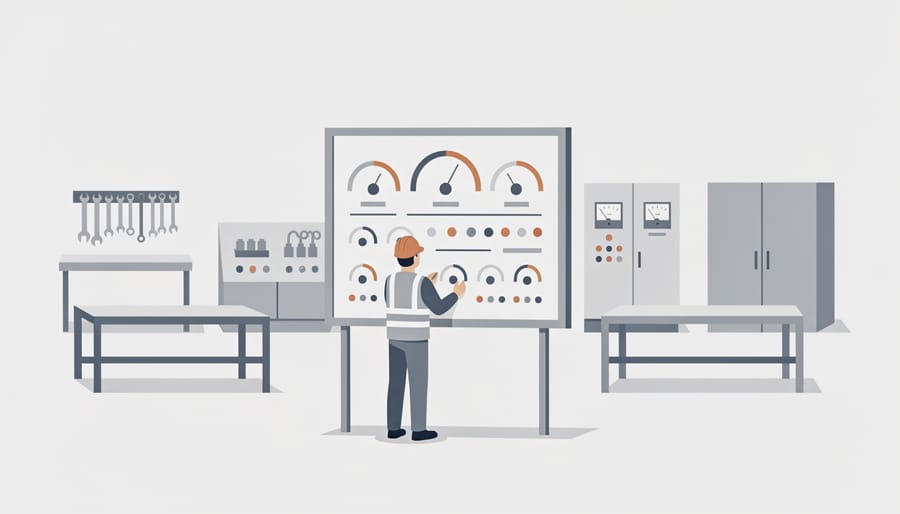
Training Programs and Educational Pathways
Canada offers multiple educational routes to power engineering certification, each designed to fit different learning styles and career timelines.
Technical Colleges and Institutes
Most provinces maintain accredited power engineering programs through their technical college systems. The Southern Alberta Institute of Technology (SAIT), British Columbia Institute of Technology (BCIT), and Humber College in Ontario operate well-established programs with both full-time and part-time options. Full-time Fourth Class certification programs typically run 8-12 months, combining classroom theory with hands-on lab work on actual boiler systems, refrigeration equipment, and control panels.
Apprenticeship Programs
Many aspiring power engineers choose apprenticeship routes that blend paid employment with structured learning. You work at an industrial facility under a certified engineer while completing coursework through evening or distance education. This path takes longer, often 18-24 months for Fourth Class, but you earn while you learn and gain the operating hours required for certification simultaneously.
Distance and Part-Time Learning
Several institutions offer correspondence and online courses for candidates already employed in related roles. These flexible programs let you maintain your current job while gradually completing certification requirements, though practical components still require in-person lab sessions.
Examination and Certification Requirements
The examination process varies by province but follows a consistent national framework. Provincial regulatory bodies, Technical Safety BC, the Alberta Boilers Safety Association (ABSA), and Ontario’s Technical Standards and Safety Authority (TSSA), administer written and practical examinations at each certification level.
For Fourth Class certification, candidates complete a multi-hour written exam covering thermodynamics, safety regulations, equipment operation, and provincial codes. Pass rates hover around 60-70% for first-time test takers. Upon passing, you receive a certificate of competency allowing supervised operation.
Advancing to Third Class requires 4,000 documented operating hours plus passing another rigorous exam. Second Class demands 6,000 additional hours and expanded technical knowledge. First Class certification needs another 6,000 hours and mastery of complex systems management.
Each province sets specific hour requirements and exam schedules. Exams typically cost $200-400 per attempt, with results delivered within two weeks.
Re-certification isn’t mandatory in most provinces once you hold a certificate, but many employers require continuing education credits. Some facilities mandate refresher courses every three to five years, particularly for refrigeration endorsements or specialized systems. Maintaining professional development through industry seminars and technical updates keeps your skills current and enhances career mobility.
Career Advancement Through Certification Levels
Advancing from Fourth Class to Chief Engineer typically takes 8-15 years of dedicated work and study, though motivated individuals can progress faster with strategic career planning.
Fourth to Third Class requires 12-18 months of operating experience after obtaining your Fourth Class certificate. During this period, you’ll earn $45,000-$60,000 annually while working under supervision and preparing for the Third Class exam. Most engineers study part-time through evening courses or online modules while accumulating the necessary operating hours.
Third to Second Class demands another 18-24 months of progressively responsible operating time. At the Third Class level, your salary jumps to $65,000-$85,000 as you take on more independent shifts and complex equipment troubleshooting. This stage builds the technical depth needed for supervisory roles.
Second to First Class requires 24-36 months of senior operating experience. Second Class engineers earn $85,000-$110,000 and often supervise shifts or act as relief chief engineers. The First Class examination covers advanced thermodynamics, regulatory compliance, and plant management.
First Class to Chief positions depend more on facility size and complexity than a fixed timeline. Chief engineers command $110,000-$140,000+ and hold ultimate responsibility for plant safety and operations.
Rights, Responsibilities, and Professional Obligations
Power engineers operate under strict legal frameworks that govern every aspect of their work. Provincial regulatory bodies, ABSA in Alberta, TSSA in Ontario, Technical Safety BC, and equivalent authorities in other provinces, set comprehensive safety standards that certified operators must follow without exception. These regulations cover everything from boiler operation procedures to pressure vessel inspections, refrigeration system management, and emergency response protocols. Violating these standards can result in fines, certification suspension, or criminal charges in cases of negligence leading to injury or property damage.
Daily responsibilities include conducting pre-shift equipment inspections, maintaining detailed operating logs, monitoring system performance against specifications, and executing preventive maintenance schedules. You must report equipment malfunctions, safety hazards, or code violations to facility management and, when required, directly to provincial authorities. Falsifying logs or failing to report critical issues constitutes professional misconduct that can permanently end your career. Regulatory compliance extends to staying current with code updates and industry bulletins affecting your equipment class.
Continuing education is mandatory, most provinces require documented professional development hours to maintain certification. This includes refresher courses on new technologies, updated safety procedures, and changes to provincial codes. You’re also expected to mentor junior engineers and apprentices, sharing practical knowledge that textbooks can’t teach.
Your rights as a power engineer include fair compensation reflecting your certification level and responsibilities. Many facilities operate under union contracts guaranteeing overtime pay, shift premiums, and pension contributions. You’re entitled to safe working conditions, proper personal protective equipment, and the authority to shut down unsafe equipment without employer retaliation. The Canadian Labour Code and provincial occupational health laws protect your right to refuse dangerous work when legitimate safety concerns exist.
Where to Get Help, Training, and Career Support
Aspiring and current power engineers have access to a solid network of support across Canada. Start with provincial regulatory bodies that oversee certification and safety standards. In Alberta, ABSA (Alberta Boilers Safety Association) administers exams and maintains operator registries. Ontario’s Technical Standards and Safety Authority (TSSA) handles certification and compliance. British Columbia relies on Technical Safety BC for the same functions. Saskatchewan’s regulator is the Saskatchewan Safety Authority, while Manitoba works through the Manitoba Office of the Fire Commissioner.
For training, contact technical schools directly: SAIT in Calgary, NAIT in Edmonton, Lakeland College in Vermilion, Georgian College in Ontario, and BCIT in British Columbia all offer accredited power engineering programs. Your provincial apprenticeship office can help you find employers willing to hire trainees while you study. Many provinces also offer skills funding and workforce support programs that cover tuition or provide wage subsidies during training periods.
Professional associations provide career guidance and networking. The Power Engineers Association operates chapters in Alberta, Saskatchewan, Manitoba, and British Columbia. These groups host technical seminars, publish job postings, and advocate for the profession. For job searches, check specialized boards like, Indeed’s industrial trades section, and provincial government employment sites. Union halls in your area may also list openings at facilities with collective agreements.
How to Apply or Complete the Process
Applying for power engineering certification in Canada follows a province-specific process administered by your local regulatory authority. Start by contacting the body governing your province, ABSA in Alberta, Technical Safety BC in British Columbia, or TSSA in Ontario, for example, to obtain the current application package and fee schedule.
You’ll need to submit proof of your completed training from an accredited program, including course transcripts showing you’ve passed the required technical subjects. Attach certified copies of your high school diploma or equivalent educational credentials. Most provinces require a completed medical examination form signed by a licensed physician, verifying you meet the physical standards for operating industrial equipment.
Pay the application and examination fees when you submit your documents. Processing typically takes four to eight weeks, after which you’ll receive authorization to write your Fourth Class examination. Once you pass, you must log your required operating hours under a certified engineer’s supervision before applying for higher classes.
Keep copies of all submitted documents and correspondence. Each certification level requires a separate application with updated logbook records demonstrating your accumulated experience hours.
Frequently Asked Questions About Power Engineering Careers
How long does it take to become certified as a Fourth Class power engineer?
Most students complete Fourth Class certification in 8 to 12 months through full-time technical training, followed by accumulating the required 2,000 hours of practical operating experience. Part-time programs while working can extend the classroom portion to 18-24 months.
Can I work while training to become a power engineer?
Yes. Many people start as apprentices or operator assistants in industrial facilities, earning a salary while gaining practical hours and attending classes part-time or in block releases. This approach takes longer but provides income and hands-on experience throughout your training.
Do power engineers typically work shift schedules?
Most positions involve rotating shifts since industrial facilities operate around the clock. Typical patterns include 12-hour day and night rotations, continental shifts (two days, two nights, four off), or 8-hour rotating schedules, often with premium pay for evenings, nights, and weekends.
What’s the difference between power engineers and other engineering disciplines?
Power engineers (stationary engineers) are hands-on operators who run and maintain industrial equipment, requiring technical certification rather than a university engineering degree. Professional engineers (mechanical, electrical, chemical) design systems and require bachelor’s degrees, while power engineers keep those designed systems operating safely and efficiently.
The power engineering field continues attracting people from diverse backgrounds because the career path is clear and accessible. Women remain underrepresented but are increasingly entering the profession, supported by targeted apprenticeship programs and industry initiatives promoting inclusion in skilled trades. Employers facing worker shortages actively recruit women and offer mentorship to help them succeed in what has historically been a male-dominated field.
Job prospects through 2031 remain exceptionally strong. Retirements will create thousands of openings while industrial expansion adds new positions across resource extraction, manufacturing, utilities, and institutions. Fourth Class holders find entry-level work readily available, and those advancing to higher certification levels command premium compensation and have their choice of employers in most regions.
Power engineering stands out as one of Canada’s most promising industrial careers in 2026. With salaries ranging from $55,000 for entry-level Fourth Class positions to over $120,000 for Chief Engineers, the financial rewards match the profession’s critical importance. The combination of competitive compensation, steady demand across multiple sectors, and clear advancement pathways makes this field especially attractive for those seeking long-term career stability.
Canada’s industrial infrastructure depends on skilled power engineers to operate safely and efficiently. As experienced professionals retire and new energy projects come online, opportunities will only expand. The pathway to certification is structured and accessible, whether you’re fresh out of high school or considering a career change, accredited training programs across the country provide entry points.
If you’re mechanically inclined, detail-oriented, and interested in hands-on technical work, power engineering deserves serious consideration. Start by researching programs at technical schools in your province, connecting with your local power engineering association, and speaking with professionals already in the field. The investment in training pays substantial dividends in job security, earning potential, and the satisfaction of maintaining the systems that power Canadian industry.