

Regenerative agriculture is a farming and ranching approach that restores soil health, increases biodiversity, and improves water cycles by working with natural systems rather than against them. Unlike conventional methods that deplete soil over time, regenerative practices rebuild organic matter, sequester carbon, and create resilient ecosystems that support long-term productivity.
For Canadian agricultural businesses, regenerative agriculture represents a shift in how farms generate value. The system focuses on building biological wealth in the soil through practices like cover cropping, reduced tillage, diverse crop rotations, and integrated livestock management. These methods create compounding returns over time as healthier soils require fewer external inputs and become more drought-resistant.
The business case extends beyond the farm gate. Regenerative operations can access premium markets as food companies seek suppliers committed to sustainable practices. Carbon credit programs now compensate farmers for sequestering atmospheric carbon in their soils. Rural communities benefit from reduced chemical runoff, improved water quality, and stronger local economies built on resilient farming systems.
This shift requires upfront investment in knowledge, equipment adjustments, and patience during transition periods. However, Canadian producers from Saskatchewan grain farmers to Ontario vegetable growers have demonstrated that regenerative systems can match or exceed conventional yields while substantially reducing input costs over time. The question for many agricultural businesses isn’t whether regenerative practices work, but how to implement them strategically within existing operations.
This article examines what regenerative agriculture means in practical terms, how the core practices function, the different approaches available, and the economic implications for Canadian farms and agricultural enterprises.
What Regenerative Agriculture Means for Canadian Farms
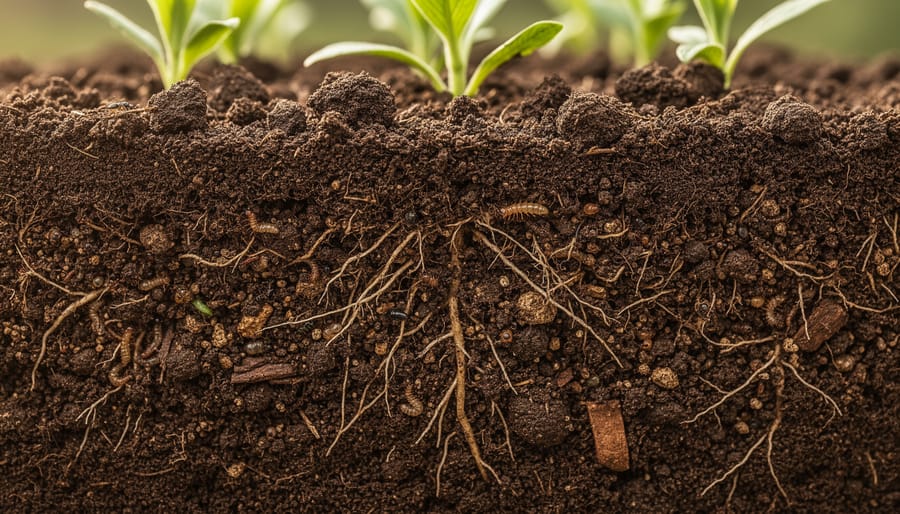
Regenerative agriculture represents a shift from extractive farming toward practices that actively improve the land. At its core, this approach rebuilds soil health, restores water cycles, increases biodiversity, and strengthens entire farm ecosystems rather than simply maintaining them or slowing their decline.
The philosophy centres on working with natural systems instead of against them. Where conventional agriculture often relies heavily on synthetic inputs to force productivity from depleted soils, regenerative farming focuses on creating living, biologically active soil that sustains crops with fewer external amendments. The goal is to leave the land in better condition than you found it, building fertility and resilience over time.
Several core principles define regenerative agriculture in practice:
- No-till farming
- Planting crops without plowing or turning the soil, preserving soil structure, preventing erosion, and protecting the underground ecosystem of microorganisms and fungi.
- Cover cropping
- Growing plants specifically to cover bare soil between cash crops, adding organic matter, preventing nutrient loss, and feeding soil biology year-round.
- Rotational grazing
- Moving livestock frequently through paddocks to mimic natural grazing patterns, allowing pasture recovery time and building soil carbon through plant regrowth cycles.
- Composting
- Returning organic matter to fields through composted plant residues and manure, feeding soil microbes and improving water retention capacity.
- Reduced chemical inputs
- Minimizing synthetic fertilizers and pesticides as soil health improves, relying instead on biological processes to cycle nutrients and manage pests.
Regenerative agriculture differs from both conventional and organic systems. Conventional farming typically prioritizes yield maximization through chemical inputs, often at the expense of long-term soil quality. Organic farming eliminates synthetic chemicals but doesn’t necessarily rebuild soil or enhance biodiversity; some organic operations still use intensive tillage that damages soil structure.
Regenerative practices go further, actively restoring ecological function. A regenerative farm might be organic, but organic certification alone doesn’t guarantee regenerative outcomes. The distinction lies in the commitment to continuous improvement of land health, measured through soil tests, water infiltration rates, and biodiversity indicators rather than simply avoiding prohibited substances.
How Regenerative Agriculture Works in Practice
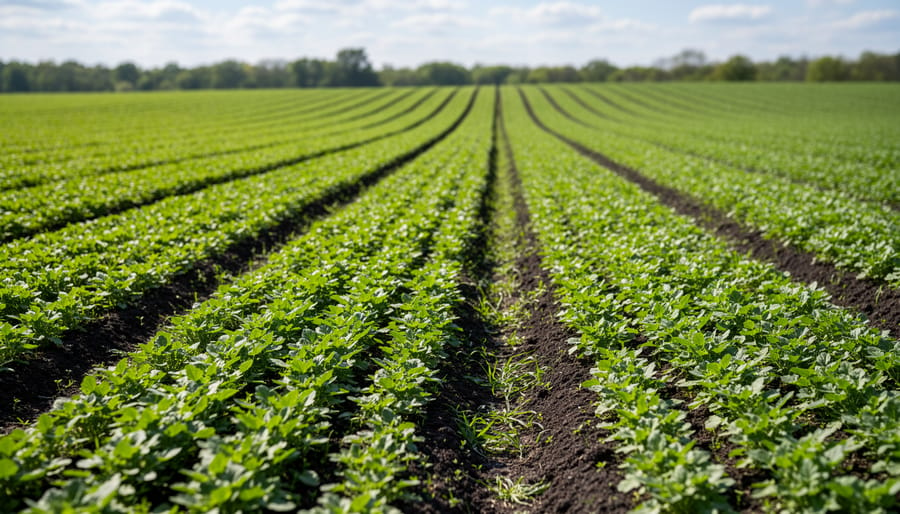
Regenerative agriculture rebuilds soil ecosystems through practices that reverse decades of depletion. At its core, the approach works by feeding soil biology rather than bypassing it. When farmers minimize tillage, they preserve the fungal networks and microbial communities that convert organic matter into stable nutrients. These organisms create soil aggregates, clumps of minerals and organic material bound together, that give healthy soil its crumbly structure.
The carbon sequestration process happens when plants pull CO₂ from the atmosphere through photosynthesis, then transfer a portion of that carbon into the soil through their roots. Living roots feed soil microbes, which build carbon into long-lasting organic compounds. Fields with diverse cover crops and perennial plants sequester more carbon because they maintain living roots year-round. Research has quantified soil carbon sequestration gains across various regenerative systems, demonstrating measurable atmospheric carbon removal.
Several field practices form the regenerative toolkit:
- Minimal or zero tillage to protect soil structure and microbial habitat
- Diverse crop rotations that break pest cycles and feed varied soil organisms
- Strategic integration of livestock to cycle nutrients and stimulate plant growth
- Permanent soil cover through crops, residues, or mulch to prevent erosion
- Composting and organic amendments to rebuild soil organic matter
Water retention improves as soil organic matter increases. Each percentage point of organic matter gained allows soil to hold roughly an additional 75,000 litres of water per hectare. That storage capacity helps crops survive drought and can reduce runoff and erosion during heavy rainfall. Canadian producers in the Prairies particularly value this buffering effect given increasingly variable precipitation patterns.
Biodiversity enhancement extends beyond the soil. Multi-species cover crop mixes attract beneficial insects that control pests naturally. Hedgerows and buffer strips provide habitat for pollinators and predators of crop-damaging insects. Farmers moving away from monoculture often discover that ecological complexity reduces their pest management costs while trials have shown systems can improve soil health without yield loss. The approach connects naturally to circular food waste initiatives, where compost from urban centres returns nutrients to farms in a closed-loop system.
Common Regenerative Farming Approaches

Canadian producers implement regenerative agriculture through several distinct approaches, each suited to different landscapes, production goals, and operational scales. Most farms combine multiple practices rather than adopting a single method, creating systems tailored to local conditions and market opportunities.
Holistic grazing management transforms how livestock interact with pastureland. Ranchers move cattle frequently through planned paddock rotations, allowing grasses extended recovery periods between grazing events. This mimics historical bison migration patterns across the prairies, building soil organic matter while maintaining productive grasslands. The approach works particularly well across Alberta and Saskatchewan’s extensive rangelands, where proper timing and stocking density determine success.
Agroforestry integrates trees and shrubs into crop or livestock systems. Windbreaks protect fields and animals while sequestering carbon, while alley cropping places row crops between tree rows. In Ontario and Quebec, farmers plant nuts, fruits, or timber species alongside traditional crops, creating diversified income streams and wildlife habitat. The practice requires patience, tree establishment takes years, but offers long-term economic and ecological returns.
Intercropping grows two or more crops simultaneously in the same field. Prairie farmers might plant legumes alongside cereals, fixing nitrogen while suppressing weeds. This reduces synthetic fertilizer dependency and spreads production risk across multiple crops. Companion planting also confuses pests and attracts beneficial insects, cutting pesticide requirements.
Perennial cropping systems replace annual crops with long-lived species like kernza, hazelnut, or perennial grains. Roots penetrate deep into soil profiles year-round, preventing erosion and building stable carbon stores. These systems suit marginal lands where annual crops struggle, though limited market infrastructure currently constrains adoption.
Integrated crop-livestock operations cycle animals through crop fields during fallow periods. Cattle graze cover crops, depositing manure while trampling residue into soil. This closed-loop approach reduces purchased fertilizer and builds soil fertility through biological activity rather than synthetic inputs.
Farmers select approaches based on existing infrastructure, labor availability, climate patterns, and proximity to processing facilities or markets that value regeneratively produced goods.
Economic Benefits for Canadian Producers
Reduced Input Costs and Operational Savings
Regenerative practices reshape farm economics by addressing one of the most significant pressure points in conventional agriculture: ongoing input dependency. As soil biology recovers and ecosystem function improves, farms often see reduced reliance on purchased fertilizers, chemical pest controls, and intensive irrigation.
Healthy soil, rich in organic matter and active microbial life, cycles nutrients more efficiently. Nitrogen-fixing cover crops and diverse rotations can gradually reduce the need for synthetic nitrogen applications. Similarly, improved soil structure enhances water infiltration and retention, which can lower irrigation demands in many regions. Farms practicing holistic grazing or diversified crop rotations frequently report less pressure from persistent pests and diseases, reducing pesticide expenditures.
Fuel savings emerge from simplified field operations. No-till systems eliminate multiple passes for tillage, cutting diesel consumption directly. These operational shifts compound over time as soil health strengthens.
The trajectory and scale of savings vary considerably. Farms transitioning from intensive tillage see different patterns than operations moving from conventional grazing to adaptive multi-paddock systems. Regional climate, soil type, crop mix, and the specific practices adopted all influence outcomes. Early transition years may show modest changes as systems stabilize, while mature regenerative operations often experience more pronounced cost reductions.
Canadian producers should expect gradual, uneven progress rather than immediate expense elimination. The financial benefit builds as soil function improves, typically becoming more visible several growing seasons into the transition.
Revenue Opportunities and Market Access
Several revenue streams are emerging for Canadian farms that adopt regenerative practices, though the financial landscape remains fluid and highly variable across regions and markets.
Premium pricing represents one potential advantage. Some retailers and food companies now seek regeneratively produced grain, meat, and dairy, offering higher prices to secure supply. These premiums exist in certain markets, particularly organic and specialty channels, but they’re inconsistent. One farm might secure a premium contract while a neighbour struggles to find buyers willing to pay more. The market for regenerative products is growing, but it hasn’t matured into a reliable pricing structure that all producers can access.
Carbon credit programs present another evolving opportunity. Federal and provincial initiatives, along with private carbon markets, are creating pathways for farmers to monetize sequestered carbon. Programs vary widely in their payment structures, verification requirements, and contract terms. Some require multi-year commitments and detailed documentation. Early participants report mixed experiences: some find the administrative burden manageable and the payments worthwhile, while others conclude the programs don’t yet justify the paperwork. The carbon market infrastructure in Canada is still taking shape, with program rules and payment levels shifting as the sector develops.
Corporate supply chain initiatives are expanding as well. Major food processors and retailers are establishing regenerative sourcing goals, creating procurement channels for farms that can meet their standards. These partnerships often involve technical support and longer-term purchase agreements, providing revenue stability beyond spot market sales. Access depends on farm location, crop type, and the ability to meet specific verification or certification requirements that vary by company.
Broader Economic Impact on Rural Communities
Regenerative agriculture strengthens rural economies well beyond individual farm gates. When multiple producers in a region adopt these practices, the cumulative effects reshape local business landscapes and community prosperity.
Labour requirements shift under regenerative systems. Operations need skilled workers who understand soil biology, rotational grazing patterns, and ecosystem management. This creates employment opportunities for agronomists, range managers, and farm technicians with specialized knowledge. Farm supply businesses adapt their product lines to serve regenerative producers, stocking diverse seed mixes, biological inputs, and pasture infrastructure. Equipment dealers increasingly offer tools designed for minimal soil disturbance and precision application.
Local processing facilities benefit when regenerative farms produce diverse crops and livestock. A region growing various cover crops, pulses, and heritage grains can support specialty mills, seed cleaning operations, and value-added processing ventures. These businesses employ community members and keep more revenue circulating locally rather than flowing to distant input suppliers.
Watershed-scale improvements emerge as regenerative practices spread across farms. Enhanced water infiltration on one property benefits downstream neighbours through steadier stream flows and reduced flooding risks. Improved soil structure across multiple operations means less sediment entering waterways, protecting municipal water supplies and recreational fisheries.
Climate resilience becomes a shared advantage. Farms with healthy, carbon-rich soils maintain productivity during drought periods that devastate conventional operations. This stability supports local grain elevators, livestock buyers, and agricultural service providers even during challenging weather years. The integration of green technology monitoring systems and advances in eco-innovation help farmers track soil health metrics and optimize regenerative practices.
Communities anchored by resilient farms maintain tax bases, support schools and services, and attract young families seeking stable rural livelihoods.
Canadian Success Stories
Across Canada, a growing number of farms are demonstrating how regenerative practices can transform both business viability and land health. These success stories reveal practical pathways and real outcomes that other producers can learn from.
In Saskatchewan’s grain belt, several multi-generation family operations have rebuilt severely degraded soil through extended crop rotations and cover cropping. Producers report that after several years of transition, their fields now hold moisture better during dry spells and require less fertilizer as soil biology recovers. The improved resilience has helped these farms maintain stable production even when neighbours face weather-related setbacks, strengthening their long-term financial position.
Alberta’s foothills region has seen ranchers adopt adaptive grazing systems that mimic natural bison movement patterns. By moving cattle frequently across smaller paddocks, these operations have revitalized pastures that were once overgrazed and compacted. Ranchers describe healthier livestock, extended grazing seasons, and the ability to run more animals on the same land without degrading it. Some have diversified revenue by hosting farm tours and educational workshops, creating new income streams while building community connections.
In Ontario, several vegetable growers have integrated livestock into crop rotations, using sheep or chickens to manage cover crops and build fertility between vegetable plantings. This approach has reduced their dependence on purchased inputs while creating additional revenue from meat and egg sales. These farms often attract committed customers through their regenerative story, building loyalty that supports direct marketing efforts.
These examples illustrate that regenerative agriculture offers multiple pathways to improved farm economics, with benefits extending well beyond the balance sheet to encompass soil recovery, operational flexibility, and stronger community ties.
Common Questions About Regenerative Agriculture
How long does it take to transition to regenerative agriculture?
Transition timelines vary widely depending on starting soil conditions, climate, and the practices you adopt. Most farms see measurable soil improvements within three to five years, though building deep soil health can take a decade or more. Financial breakeven depends on your specific costs, market access, and how quickly natural fertility reduces your input needs.
What kind of upfront investment is required?
Initial costs depend on which practices you implement. Some approaches, like reducing tillage or planting cover crops, require modest seed and equipment adjustments. Others, such as installing livestock infrastructure for rotational grazing or establishing agroforestry systems, demand more significant capital. Many producers start with low-cost trials on a portion of their land before scaling up.
Is certification necessary to benefit from regenerative agriculture?
Certification isn’t required to implement regenerative practices or realize operational benefits like improved soil health and reduced input costs. However, if you’re targeting premium markets or participating in corporate supply chain programs, third-party verification may strengthen your positioning and unlock specific revenue opportunities.
What technical support is available for Canadian producers?
Resources range from provincial agricultural extension services and conservation authorities to private agronomists specializing in soil health. Farmer networks, regional regenerative agriculture groups, and commodity organizations increasingly offer workshops, field days, and peer mentoring. Federal and provincial programs periodically provide cost-share funding for soil testing, equipment, or conservation practices.
Evaluating whether regenerative agriculture fits your operation starts with understanding your current profitability drivers and risk exposure. If input costs represent a large share of expenses, or if soil degradation threatens long-term productivity, regenerative approaches may offer meaningful improvements. Consider your market access: are buyers willing to pay for verified sustainable practices, or are you primarily competing on commodity pricing? Assess your available labor and management capacity, since many regenerative systems require different skills and more frequent decision-making than conventional operations.
Begin with a clear-eyed review of your land’s condition and climate challenges. Farms already experiencing erosion, declining yields, or drought vulnerability often see quicker returns from practices that rebuild water-holding capacity and soil structure. Talk with neighboring producers who’ve adopted similar practices to learn what worked in your region and what didn’t. Testing regenerative methods on a field or two lets you gather data, adjust your approach, and build confidence before committing your entire operation.
Regenerative agriculture represents more than an environmental commitment for Canadian producers, it’s a strategic business decision with measurable economic implications. The practices outlined throughout this guide demonstrate how farms can reduce operating costs, access new revenue streams, and build resilience against market volatility and climate unpredictability, all while restoring the natural systems their long-term viability depends on.
The transition requires patience and upfront investment, but the financial trajectory generally improves as soil health rebuilds and ecosystem functions strengthen. Whether you manage a grain operation in Saskatchewan, a mixed farm in Ontario, or a ranch in Alberta, regenerative approaches offer pathways to strengthen your bottom line while positioning your operation for the evolving demands of 2026 and beyond.
For Canadian farmers and agricultural investors evaluating these practices, the next step is connection. Regional regenerative agriculture networks, provincial extension services, and industry associations provide technical guidance, peer learning opportunities, and access to emerging programs. Assess how regenerative principles align with your operation’s specific conditions, risk tolerance, and market position, then explore the resources and community support available to make informed implementation decisions.